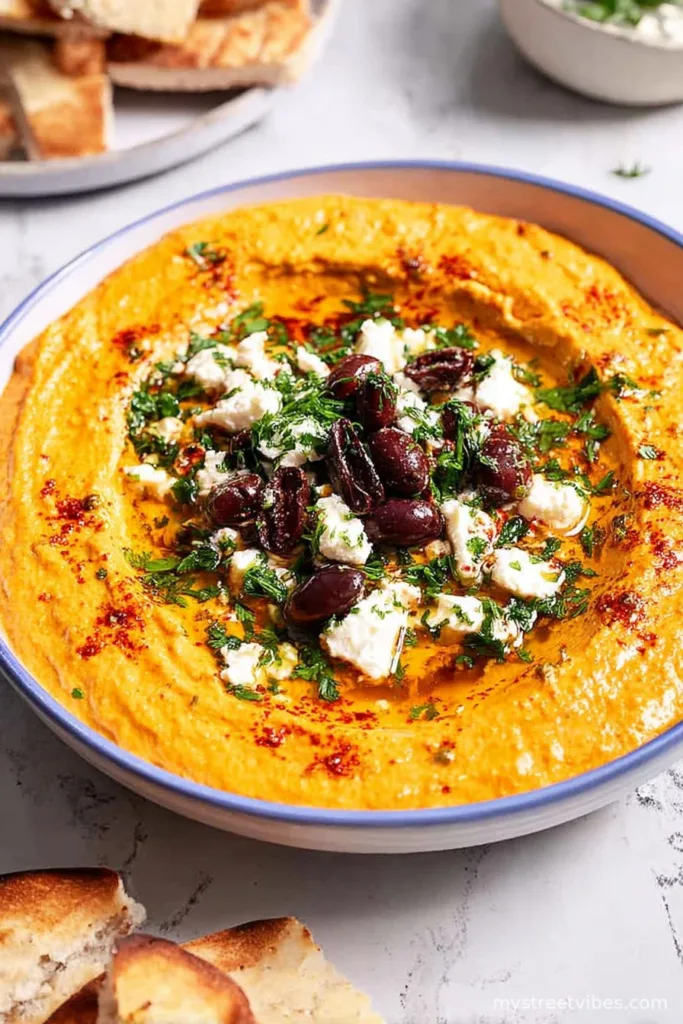
Let’s Talk About Tirokafteri (a.k.a. Greek Spicy Feta Dip)
You know how some recipes just sort of sneak into your life and suddenly you’re making them all the time? Yeah, that’s exactly what happened with Tirokafteri for me. I tasted it once at a slightly questionable taverna (the chairs were wobbly but the food—oh, the food) on vacation, and even though the waiter barely spoke English, he did manage to make me promise I wouldn’t leave without trying “the spicy cheese thing.” He was right to insist. I’ve been chasing that bold, tangy, fiery flavor ever since. Sometimes I make it for friends just to watch their eyebrows shoot up at the first bite.

And honest truth? Even if you mess up a little, it’s nearly impossible to ruin. The “secret” is just, well, boldness—and unapologetic amounts of feta.
Why You’ll Love This Dip
I usually make this when I’m expecting folks who love to nibble and chatter more than they love a big sit-down meal. It’s the one dip my family will actually fight over, especially if I set it out with tons of pita chips (gone in five minutes, no exaggeration—except maybe a little). There’s something about creamy feta and a bit of heat that just makes people linger in the kitchen, taking “one more scoop.”
And you know what’s funny? I spent ages messing around with how spicy to make it. At first it was basically molten lava; but over time, I settled on a sort of Goldilocks level (for us, anyway). If you like it fiery, toss in a little more roasted chili. If you’re feeling timid, just dial it back. Nobody’s watching.
What You’ll Need (and a Few Options)
- 200g (about 7oz) good-quality Greek feta cheese (sometimes I just grab supermarket stuff and it’s still amazing)
- 1 small red chili, roasted and peeled (or use jarred roasted red pepper in a pinch—been there, did that when the fridge was empty)
- 2-3 tablespoons Greek yogurt (Grandma says sheep’s milk yogurt is best, but the usual tub from my corner shop works fine)
- 1 tablespoon extra-virgin olive oil (sometimes a drizzle more)
- 1 teaspoon red wine vinegar (I’ve swapped in a little lemon juice if I ran out, honestly haven’t noticed much difference)
- 1 small clove garlic (I go with small here because, wow, it gets garlicky fast—use half if you’re feeling shy)
- ½ teaspoon dried oregano
- Pepper, to taste (lately I just grind it in until it feels right)
How To Make Tirokafteri (Wobbly Instructions Included)
- First, crumble your feta into a mixing bowl. No worries if it clumps up. It all blends out in the end.
- Add the roasted chili (or pepper), yogurt, olive oil, vinegar, garlic, oregano, and a few good cracks of pepper. This is the messy stage; it won’t look pretty yet (it never does the first time!).
- Use a fork or, if you’re fancy, a food processor to blend everything together. I usually just mash it and call it a day, but if you like it super smooth, the processor’s your friend.
- This is where I sneak a taste. If you want more kick, toss in another bit of chili or a shake of chili flakes. And if it feels too thick, just add a bit more yogurt (honestly, there’s no such thing as too creamy, in my book).
- Spoon it into a serving bowl and drizzle with a little more olive oil. Sprinkle a bit of extra oregano if you’re feeling cheffy. Maybe add a curl of chili on top so folks know what to expect!
Notes from my Not-So-Perfect Test Kitchen
Honestly, the only way I’ve ever really messed this up is by using feta that’s too dry (it gets weirdly grainy). Also, let it sit out for 10-ish minutes before serving; the flavors sort of get to know each other that way. And, I did once try it with ricotta (don’t—it just turns bland, lesson learned).
One oddball trick: if you blend it in a food processor, go in short bursts, or it’ll turn weirdly runny. No one likes feta soup.
Variations I’ve Tried (Good and Not-So-Great)
- Swapped the chili for a bit of smoked paprika once; it was… fine. Not the magic I expected.
- Added chopped fresh mint on top—surprisingly good, especially if you’ve got a pile of cucumbers handy.
- Tried whipping it with less yogurt and more olive oil for a richer, almost spreadable version. Still good, just a little heavier (great for sandwiches actually).

What If I Don’t Have a Food Processor?
I mean, I’ve gone full rustic and just used a big fork. Elbow grease! It might be chunkier, but honestly, that’s not a crime in my house. Or use a stick blender if you’ve got one, though beware—the kitchen walls are in the splash zone.
How Do You Store This Stuff? (Here’s the truth)
Covered in the fridge, it’ll last about three days—but I can say with complete honesty that it’s never survived that long here. I think this tastes even better the next day as the flavors cozy up together. Stir it up if the oil separates (doesn’t bother me, but some people get twitchy about it).
How We Serve Tirokafteri—Not That You Need Rules
Pita triangles are the classic (warmed up, please, cold pita is just sad) but thin breadsticks, bagel chips, or fresh-cut veggies totally work. We once had it as a spread inside grilled cheese sandwiches and it was the stuff of legend. My cousin dips in raw sweet peppers and swears it’s the best.
Here’s What I Learned—The Hard Way
Tip: don’t use super salty feta, or skip extra salt. I once overloaded the salt and everyone basically had to drink a gallon of water. Oh—and don’t rush the mixing when using a fork—some feta lumps are fine, but big boulders aren’t very dip-friendly.
FAQ (Because People Ask Me These. A Lot.)
Q: Can I use cow’s milk feta?
Sure! It’s a bit milder and creamier. I think the tang isn’t quite as sharp, but it still works a charm.
Q: Is it really spicy?
Not unless you want it that way. I go mild for my mom, then add chili for everyone else. Sometimes I overdo it, but that’s what extra yogurt’s for, right?
Q: What if I don’t have Greek yogurt?
Good thick plain yogurt is fine. On second thought, even sour cream works—the flavor changes, but it’s still very tasty.
Q: Can I make it ahead?
Absolutely. Actually, I find it works better if it sits in the fridge overnight. Boom—more time for you to tidy up or do literally anything else.
Oh! One last thing—never underestimate how much your friends will bug you for the recipe. Just send them this. Or, you know, invite them over and keep it “top secret.” Up to you.
Ingredients
- 200g (about 7oz) good-quality Greek feta cheese (sometimes I just grab supermarket stuff and it’s still amazing)
- 1 small red chili, roasted and peeled (or use jarred roasted red pepper in a pinch—been there, did that when the fridge was empty)
- 2-3 tablespoons Greek yogurt (Grandma says sheep’s milk yogurt is best, but the usual tub from my corner shop works fine)
- 1 tablespoon extra-virgin olive oil (sometimes a drizzle more)
- 1 teaspoon red wine vinegar (I’ve swapped in a little lemon juice if I ran out, honestly haven’t noticed much difference)
- 1 small clove garlic (I go with small here because, wow, it gets garlicky fast—use half if you’re feeling shy)
- ½ teaspoon dried oregano
- Pepper, to taste (lately I just grind it in until it feels right)
Instructions
-
1First, crumble your feta into a mixing bowl. No worries if it clumps up. It all blends out in the end.
-
2Add the roasted chili (or pepper), yogurt, olive oil, vinegar, garlic, oregano, and a few good cracks of pepper. This is the messy stage; it won’t look pretty yet (it never does the first time!).
-
3Use a fork or, if you’re fancy, a food processor to blend everything together. I usually just mash it and call it a day, but if you like it super smooth, the processor’s your friend.
-
4This is where I sneak a taste. If you want more kick, toss in another bit of chili or a shake of chili flakes. And if it feels too thick, just add a bit more yogurt (honestly, there’s no such thing as too creamy, in my book).
-
5Spoon it into a serving bowl and drizzle with a little more olive oil. Sprinkle a bit of extra oregano if you’re feeling cheffy. Maybe add a curl of chili on top so folks know what to expect!
CLICK FOR NUTRITION INFO
↑
Approximate Information for One Serving
Serving Size:
1 serving
Calories:
160cal
Protein:
7 gg
Fat:
13 gg
Saturated Fat:
0g
Trans Fat:
0g
Cholesterol:
0mg
Sodium:
0mg
Potassium:
0mg
Total Carbs:
3 gg
Fiber:
0g
Sugar:
0g
Net Carbs:
0g
Vitamin A:
0
Vitamin C:
0mg
Calcium:
0mg
Iron:
0mg
Nutrition Disclaimers
Number of total servings shown is approximate. Actual number of servings will depend on your preferred portion sizes.
Nutritional values shown are general guidelines and reflect information for 1 serving using the ingredients listed, not including any optional ingredients. Actual macros may vary slightly depending on specific brands and types of ingredients used.
To determine the weight of one serving, prepare the recipe as instructed. Weigh the finished recipe, then divide the weight of the finished recipe (not including the weight of the container the food is in) by the desired number of servings. Result will be the weight of one serving.
Did you make this recipe?
Please consider Pinning it!