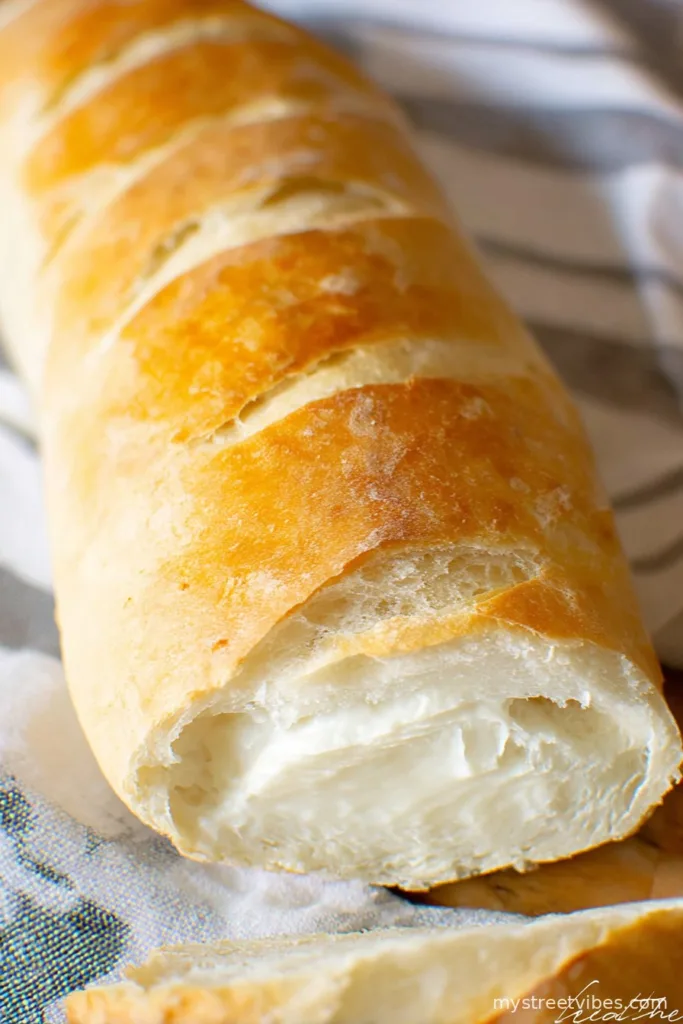
The First Time I Made This French Bread (And Laughed At Myself)
Alright, friend, here’s the deal: the first time I tried to make French bread at home, I basically ended up with some oddly-shaped lumps that looked more like fat caterpillars than actual bread. My husband actually tried to politely choke down a slice before just saying, “let’s call this focaccia, eh?” But since then, I’ve gotten a bit better—okay, much better—and now I bang out this bread whenever the mood hits (or, more likely, when I forget to pick up an actual baguette at the store, which is… pretty much always).
Also, a quick digression: if anyone ever tells you that you have to do a fancy overnight rise for good bread, don’t believe them for a second. This recipe is my proof that you really don’t. I’ll get distracted sometimes, forget the timer, and it still comes out just fine. It’s kind of forgiving, which is lucky for me.
Why I Keep Coming Back To This French Bread
I make this whenever I want something homemade but don’t fancy investing half the day. My family tears into it while it’s still warm (I’d say I’m embarrassed, but honestly, it’s a compliment). It’s just so much better than the weirdly chewy supermarket loaves, and—confession—I sometimes use the leftovers for French toast if I actually have any left over, which isn’t often. Oh, and I used to be scared of yeast, but you can pretty much get away with “close enough” measuring here.
The only thing that trips me up sometimes is the shaping—one time it came out looking like a rugby ball, but the taste makes up for any misshape. I promise!
What You’ll Need (And What I Actually Use)
- 3 to 3 1/2 cups all-purpose flour (sometimes I swap in a cup of bread flour if I have it lying around—makes a slightly chewier crust, but no stress if you don’t have it)
- 1 cup warm water—not hot, just barely warm to the touch (if you can stick your finger in comfortably, you’re good)
- 2 1/4 tsp instant yeast (one little packet, or a heaping spoonful if you’ve got the jar, really)
- 2 tbsp sugar (honestly, sometimes I use honey instead, gives it a fancier vibe, but not necessary)
- 1 1/2 tsp salt (I use good old table salt, but my friend swears by sea salt, try it if you fancy)
- 1 tbsp olive oil or melted butter (my grandma always insisted on butter but olive oil works just fine too)
How To Make It (Don’t Sweat The Small Stuff)
- Mixing it Up: In a big bowl, toss in your warm water, yeast, and sugar (or honey) and give it a quick mix. Let it hang out for a few minutes until it looks a bit foamy on top—unless you’re using instant yeast, then you can skip this waiting part, to be honest.
- Dough Time: Add in the salt, oil or melted butter, and about 2 1/2 cups flour to start. Mix it with a spoon or your hand until it’s all shaggy. If it’s sticking like mad, add another handful of flour until it’s just a tad sticky but not soupy. Sometimes I have to stop here and clean flour off the cat. Don’t ask.
- Knead Away: Turn it onto a floured countertop. Knead for about 6-8 minutes, until it feels smooth-ish. I usually put on a podcast and lose track of time, but honestly, if you knead it for a song or so, it’s probably fine. If it looks weird or rips a bit, just carry on.
- First Rise: Dump back into your bowl, cover with a tea towel (clean, if you’re feeling fancy), and let it rise somewhere warm for about 45 minutes until doubled. If you forget and let it go 90 minutes, it’ll survive. This is when I usually regret not prepping my soup yet.
- Shape It: Punch down the dough (don’t be shy), then shape it kind of like a submarine sandwich. If you want two smaller loaves, cut in half and shape both, your call! Place on a parchment-lined baking tray. Slash the top a few times with a sharp knife to get those bakery-style lines (I think it looks cool, anyway).
- Final Rise: Cover and let it puff up about 20 minutes while you preheat the oven to 400°F (200°C). No one’s counting minutes, by the way. If it spreads sideways, don’t panic, it’ll still taste great.
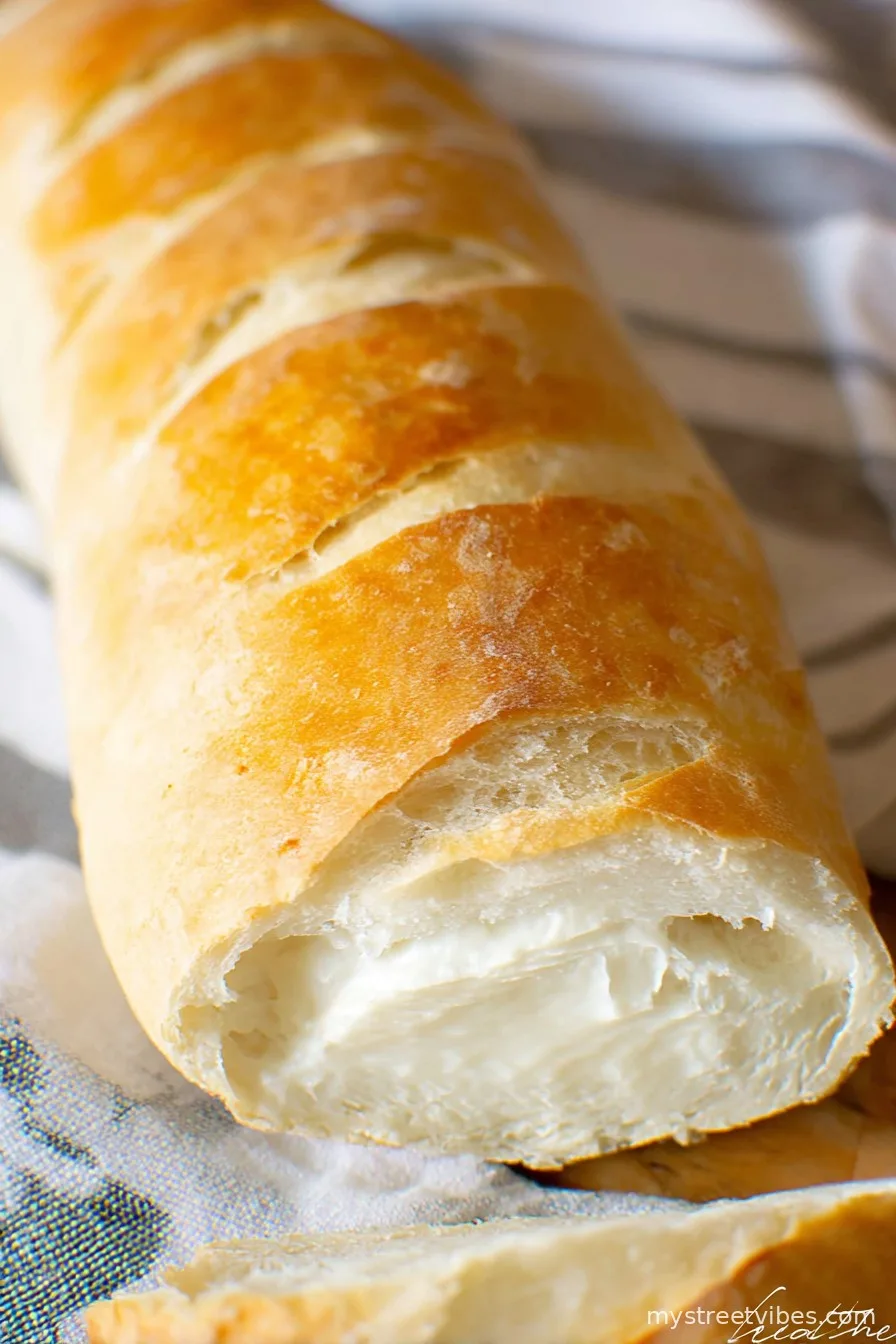
- Bake: Pop it in the oven for 20-24 minutes, until nicely golden brown. Tap the bottom, it should sound a bit hollow. And yes, this is usually the point where I have to keep my family from picking at the crust.
- Cool—Well, At Least Try: Let it cool on a wire rack if you have one. In reality, we usually tear off the ends right away. I say let it cool, but life’s too short, right?
Little Notes I’ve Learned The Hard Way
- The crust can dry out if you let it sit uncovered—so I just wrap it in a kitchen towel instead of plastic, and leave it on the counter.
- Don’t skimp on kneading; once I only did a few minutes and the crumb was oddly dense.
- Actually, using honey instead of sugar does give a subtle flavor bump, but it’ll brown a tad faster.
- If you accidentally use too much flour, just keep going; your bread will be great for soup dipping.
Bread Experiments (A Couple Worked, One Didn’t!)
- I’ve mixed in garlic powder or dried herbs—makes it feel fancy, especially if you want something to go with pasta.
- Once I tried to do a cheese-stuffed version—total mess, cheese everywhere. Maybe don’t try that. Or do, if you love a bit of chaos.
- I’ve brushed the top with olive oil and dusted sea salt before baking, which gives a lovely salty bite.

Do You Need Any Fancy Gear?
Honestly, I just use a big bowl and my (slightly battered) baking tray. Technically a stand mixer with a dough hook makes this all easier, but your hands do the job just as well. If you don’t have parchment paper, grease the pan and hope for the best—that’s what I did before I found the parchment buried behind my slow cooker.
How To (Try To) Store It
Wrap in a kitchen towel or pop in a paper bag if you want that crust to stick around. It’ll go a bit soft if you use a plastic bag, though sometimes I do anyway, for lazy reasons. But honestly, it never lasts past breakfast the next day in this house—my teenager claims it’s “fuel for thinking” before school; I’m not convinced.
The Best Ways To Eat It (According To Me)
Slice it thick, slather on real butter (the stuff in the foil paper, if you can swing it), or dip into a bowl of soup—tomato is classic. My mom used to slice, sprinkle with cinnamon sugar, and toast it under the grill for a midnight snack—try it sometime, just don’t blame me if you get hooked.
If I Had To Give Any Pro Tips…
- I tried rushing the first rise once—bread was sad, sort of brickish. Don’t do that, just wait it out, have a cuppa or something.
- Keep an eye on the baking time the first go. Some ovens run hot (mine’s as reliable as a weather forecast in April), so look for that deep golden color.
- Oh, and don’t be shy with the slashing! Once I only did wee nicks and it didn’t open up at all—looked odd, tasted fine.
Questions People (Actually) Ask Me
- Can I use whole wheat flour? You sure can—swap out up to half, but it’ll be a bit denser. I did all wholewheat once and it was, well, hearty. Maybe too hearty.
- What’s up with the water temperature? Not boiling, not cold, just nicely warm; if it feels like bathwater for a baby, you’re good. Too hot and your yeast will just give up.
- It’s not rising, what did I do? Probably your yeast is old (mine expired once, oops). Try the foamy test with new yeast.
- How do I slice it so it doesn’t squish? Let it cool, then use a serrated knife. Although, I usually just hack at it with whatever’s handy—the ends taste best anyway.
- Can I freeze it? Absolutely—slice first, wrap tight. Just don’t forget about it in the freezer for six months (guilty).
If you try this quick and easy French bread recipe, let me know how it goes (or what creative messes you make of it—seriously, we’ve all been there)!
Ingredients
- 3 1/4 cups all-purpose flour
- 1 cup warm water (110°F/45°C)
- 2 tablespoons granulated sugar
- 1 tablespoon active dry yeast
- 1 1/2 teaspoons salt
- 1 tablespoon olive oil
- 1 egg white (for brushing)
- 1 tablespoon cornmeal (for dusting baking sheet)
Instructions
-
1In a large bowl, dissolve the sugar in warm water, then sprinkle the yeast over the top. Let it stand for 5 minutes until foamy.
-
2Add olive oil, salt, and 2 cups of flour to the yeast mixture. Stir to combine, then gradually add the remaining flour until a soft dough forms.
-
3Turn the dough out onto a floured surface and knead for about 4–5 minutes, until smooth and elastic.
-
4Shape the dough into two equal loaves and place on a baking sheet dusted with cornmeal. Cover and let rise in a warm place for 15 minutes.
-
5Preheat the oven to 400°F (200°C). Slash tops of loaves with a sharp knife. Brush tops with beaten egg white for a shiny crust.
-
6Bake for 20–25 minutes or until golden brown and loaves sound hollow when tapped. Cool on a wire rack before serving.
CLICK FOR NUTRITION INFO
↑
Approximate Information for One Serving
Serving Size:
1 serving
Calories:
160 caloriescal
Protein:
5gg
Fat:
2gg
Saturated Fat:
0g
Trans Fat:
0g
Cholesterol:
0mg
Sodium:
0mg
Potassium:
0mg
Total Carbs:
32gg
Fiber:
0g
Sugar:
0g
Net Carbs:
0g
Vitamin A:
0
Vitamin C:
0mg
Calcium:
0mg
Iron:
0mg
Nutrition Disclaimers
Number of total servings shown is approximate. Actual number of servings will depend on your preferred portion sizes.
Nutritional values shown are general guidelines and reflect information for 1 serving using the ingredients listed, not including any optional ingredients. Actual macros may vary slightly depending on specific brands and types of ingredients used.
To determine the weight of one serving, prepare the recipe as instructed. Weigh the finished recipe, then divide the weight of the finished recipe (not including the weight of the container the food is in) by the desired number of servings. Result will be the weight of one serving.
Did you make this recipe?
Please consider Pinning it!!