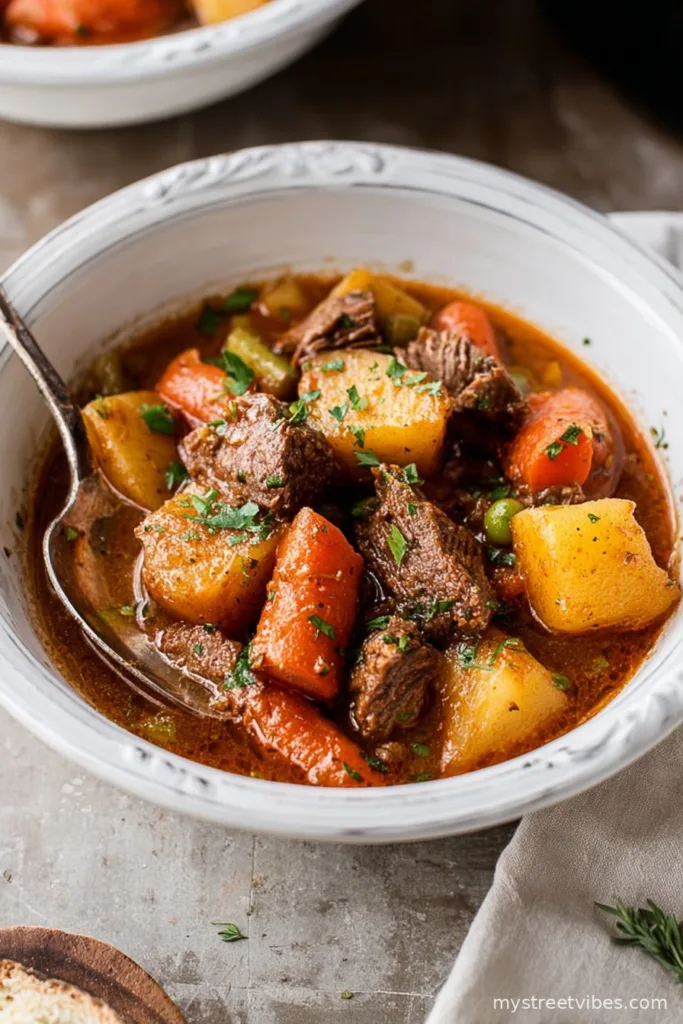
Let Me Tell You About This Paleo Beef Stew
You know, every time the weather gets that stubborn bit chillier (like when you have to hunt for that sock with the hole just to keep from freezing), there’s one thing I always crave: my good old Paleo Beef Stew. No kidding, I first made this on a day the dog dragged mud everywhere and dinner seemed a distant possibility. But there it was, simmering away, filling the whole house with that cozy, homey smell (the kind that makes you forget your laundry mountain for five minutes). And I still laugh remembering the time I dropped a carrot in the dog’s water bowl—oops. Anyway, here’s a stew that’s as forgiving as it is hearty—and trust me, that’s saying something.

Why You’ll Love Making This
I make this whenever I want a dinner that basically cooks itself. My family goes wild for it, especially since it’s so thick, you can practically stand your spoon up in it (seriously—my husband tried). Also, it’s a great way to sneak in a mountain of veggies; and if I’m honest, I once forgot the thyme and nobody said a word, so it’s a pretty chill recipe. The best part? You just throw things in, stir occasionally, and it never complains (unlike my youngest when I try to make her eat brussels sprouts… which, side note, do NOT put in here. Trust me.)
What You’ll Need (And Some Cheats & Substitutions)
- 2 pounds beef chuck, cut into chunky cubes (sometimes I use stew meat from the butcher, or brisket if that’s what’s lying around—my grandma swore by only using chuck, but honestly anything works in a pinch)
- 2 tablespoons olive oil (or avocado oil if that’s your jam; I’ve even used bacon fat when I felt cheeky)
- 1 big yellow onion, chopped (red works too, but it makes things a weird color, just saying)
- 3 cloves garlic, minced
- 3 large carrots, cut into thick wobbling chunks (okay, baby carrots if you’re in a rush—been there)
- 3 parsnips, chopped (no shame if you skip these; sweet potato works too)
- 2 celery stalks, sliced
- 1 pound gold potatoes, cubed (I know, some Paleo folks skip potatoes—swap for rutabaga or just double the carrots if that’s you)
- 3 cups beef broth (homemade is fab, but box stuff is fine—actually, I find it works better if you go half broth, half water)
- 1 can (14 oz) diced tomatoes (sometimes I just crush fresh ones by hand—messy, but fun)
- 2 tablespoons tomato paste
- 1 teaspoon dried thyme
- 1 teaspoon dried rosemary (fresh is great if you’ve got it—otherwise, don’t sweat)
- 2 bay leaves (I once forgot them and the world did not end)
- Salt and pepper to taste (I go heavy on pepper, but you do you)
- A handful of fresh parsley, chopped (optional, but pretty)
How I Actually Make It (Messy Bits Included)
- First, get yourself a big heavy pot (Dutch oven or whatever you’ve got). Heat up the olive oil, and brown the beef cubes in batches—don’t crowd the pan! Beef should get a nice crust. If it sticks, that’s flavor, not failure.
- Toss the beef onto a plate for a sec and, in the same pot, throw in the onions and garlic. Sauté till they’re soft and smell amazing—give it, what, 3 minutes?
- Add the tomato paste right in with the onions, and stir till it starts going a little rusty. Actually, I find it brings out a sweeter flavor if you let it go a bit longer than you think it should.
- Now, dump the carrots, parsnips, celery, and potatoes into the pot. Mix it all around like you’re prepping for a veggie parade.
- Time for the beef to make a comeback: toss it back in along with any juices it left behind (don’t skip the juices, that’s the good stuff).
- Pour in the beef broth and diced tomatoes—don’t worry if it looks a bit swampy; it always does now. Bring to a simmer, scraping the bottom with a wooden spoon (you know, for all those browned bits).
- Sprinkle in the thyme, rosemary, bay leaves, and a generous pinch of salt and pepper. Give it a stir. Lower the heat and let it bubble away gently (lid mostly on). I go for at least 90 minutes, but closer to 2 hours if you’ve got the patience—it really gets better the longer you wait.
- You’ll want to check a couple times, maybe sneak a taste (I always do, even though it’s boiling hot and I regret it half the time).
- Just before serving, yank out the bay leaves (it’s like a treasure hunt), sprinkle over parsley, and check the salt—adjust if you fancy.
- Ladle into big bowls. Grin. Eat. Probably go back for seconds.

Notes from My (Accidental) Test Kitchen
- If you leave it overnight, the flavors actually cozy up and taste even better on day two. Not scientific, but I’m convinced.
- I’ve tried adding mushrooms—didn’t bring much to the party, honestly.
- If the stew gets too thick, just add a splash of water or broth. Or wine, if no one’s looking.
- I once burnt the bottom a bit and, oddly enough, people said it tasted “rustic.” Don’t stress.
Variations I Have (Mostly) Survived
- Sometimes, instead of parsnips, I use turnips, but my daughter claims they’re “spicy” (not true, just controversial texture)
- With lamb instead of beef – surprisingly good and a bit posher
- Oh, and one time I tried coconut milk instead of broth—ehhh, that was a step too far for me, but maybe that’s your thing?

Equipment: Don’t Sweat the Small Stuff
I use a Dutch oven because it heats evenly and makes me feel fancy. But honestly, if all you have is a big soup pot, that’s fine. Lid not tight? Just use some foil or even an upside-down baking tray—I’ve done both when in a pinch.
Storing Your Stew (Not That You’ll Have Much Left)
This keeps for up to 3 days in the fridge in a tight container though honestly, in my house, it never lasts more than a day. Freezes really well too—just drop in a Ziploc, label it, and forget it till next week.
How I Actually Serve It
I like this with some fresh parsley on top, and if I’m having a rebellious moment, a squeeze of lemon right at the end. My uncle swears by eating it with a big hunk of roasted sweet potato on the side (bit weird, but it works). Oh, and always in giant bowls. Cups are for amateurs.
Pro Tips From Painful Experience
- I once tried rushing the browning step and, boy, the flavor just wasn’t there. Take your time; a boring minute here saves the whole stew.
- If you ever get too enthusiastic with the salt, throw in a raw potato and let it simmer; it kind of soaks up some (not a miracle, but worth a shot).
FAQ (Because Apparently This Stew Gets People Talking)
- Can I make this in a slow cooker? Absolutely—just brown your beef and onions first, then dump everything in the slow cooker for about 7 hours on low. I’ve skipped the browning part before (bad idea, flavor’s not the same!), so don’t make that shortcut.
- What about the potatoes—are they Paleo? Ah, the infamous debate. I tend to think if you tolerate potatoes, throw them in; otherwise use rutabaga or extra carrots. Nobody’s checking, promise.
- Do I have to use beef? Nope! I’ve made it with lamb, bison, and once venison. Each gives its own twist (venison’s got a gamey edge—my nephew pulled a face).
- Can I freeze leftovers? Oh yes, and I do—except, like I said, leftovers are a rare breed around here.
- Is there a veggie version? Actually, swap in more hearty vegetables and use mushroom broth (no, it won’t really taste the same, but if you’re feeling feisty, go for it).
Right, I almost forgot—don’t wear a white shirt when you make this. Ask me how I know…
Ingredients
- 2 pounds beef chuck, cut into chunky cubes (sometimes I use stew meat from the butcher, or brisket if that’s what’s lying around—my grandma swore by only using chuck, but honestly anything works in a pinch)
- 2 tablespoons olive oil (or avocado oil if that’s your jam; I’ve even used bacon fat when I felt cheeky)
- 1 big yellow onion, chopped (red works too, but it makes things a weird color, just saying)
- 3 cloves garlic, minced
- 3 large carrots, cut into thick wobbling chunks (okay, baby carrots if you’re in a rush—been there)
- 3 parsnips, chopped (no shame if you skip these; sweet potato works too)
- 2 celery stalks, sliced
- 1 pound gold potatoes, cubed (I know, some Paleo folks skip potatoes—swap for rutabaga or just double the carrots if that’s you)
- 3 cups beef broth (homemade is fab, but box stuff is fine—actually, I find it works better if you go half broth, half water)
- 1 can (14 oz) diced tomatoes (sometimes I just crush fresh ones by hand—messy, but fun)
- 2 tablespoons tomato paste
- 1 teaspoon dried thyme
- 1 teaspoon dried rosemary (fresh is great if you’ve got it—otherwise, don’t sweat)
- 2 bay leaves (I once forgot them and the world did not end)
- Salt and pepper to taste (I go heavy on pepper, but you do you)
- A handful of fresh parsley, chopped (optional, but pretty)
Instructions
-
1First, get yourself a big heavy pot (Dutch oven or whatever you’ve got). Heat up the olive oil, and brown the beef cubes in batches—don’t crowd the pan! Beef should get a nice crust. If it sticks, that’s flavor, not failure.
-
2Toss the beef onto a plate for a sec and, in the same pot, throw in the onions and garlic. Sauté till they’re soft and smell amazing—give it, what, 3 minutes?
-
3Add the tomato paste right in with the onions, and stir till it starts going a little rusty. Actually, I find it brings out a sweeter flavor if you let it go a bit longer than you think it should.
-
4Now, dump the carrots, parsnips, celery, and potatoes into the pot. Mix it all around like you’re prepping for a veggie parade.
-
5Time for the beef to make a comeback: toss it back in along with any juices it left behind (don’t skip the juices, that’s the good stuff).
-
6Pour in the beef broth and diced tomatoes—don’t worry if it looks a bit swampy; it always does now. Bring to a simmer, scraping the bottom with a wooden spoon (you know, for all those browned bits).
-
7Sprinkle in the thyme, rosemary, bay leaves, and a generous pinch of salt and pepper. Give it a stir. Lower the heat and let it bubble away gently (lid mostly on). I go for at least 90 minutes, but closer to 2 hours if you’ve got the patience—it really gets better the longer you wait.
-
8You’ll want to check a couple times, maybe sneak a taste (I always do, even though it’s boiling hot and I regret it half the time).
-
9Just before serving, yank out the bay leaves (it’s like a treasure hunt), sprinkle over parsley, and check the salt—adjust if you fancy.
-
10Ladle into big bowls. Grin. Eat. Probably go back for seconds.
CLICK FOR NUTRITION INFO
↑
Approximate Information for One Serving
Serving Size:
1 serving
Calories:
420 caloriescal
Protein:
37gg
Fat:
19gg
Saturated Fat:
0g
Trans Fat:
0g
Cholesterol:
0mg
Sodium:
0mg
Potassium:
0mg
Total Carbs:
27gg
Fiber:
0g
Sugar:
0g
Net Carbs:
0g
Vitamin A:
0
Vitamin C:
0mg
Calcium:
0mg
Iron:
0mg
Nutrition Disclaimers
Number of total servings shown is approximate. Actual number of servings will depend on your preferred portion sizes.
Nutritional values shown are general guidelines and reflect information for 1 serving using the ingredients listed, not including any optional ingredients. Actual macros may vary slightly depending on specific brands and types of ingredients used.
To determine the weight of one serving, prepare the recipe as instructed. Weigh the finished recipe, then divide the weight of the finished recipe (not including the weight of the container the food is in) by the desired number of servings. Result will be the weight of one serving.
Did you make this recipe?
Please consider Pinning it!