Let’s Talk About My Korean Ground Turkey Obsession
Alright, can I just say—sometimes you just want dinner to make itself, right? The first time I whipped up this Korean Ground Turkey was actually because I forgot to thaw chicken and, well, ground turkey was all I had. It turned out to be a happy accident. My little sister still teases me about the night I almost fed us dry cereal and then pulled this out of the hat instead. Anyway, it’s now a steady regular, especially when I’m low on time (or energy, or both; you get me).

Why You’ll Love This
I make this when I’m craving something bold, but I seriously can’t be bothered with something fancy or fussy. My family goes a bit wild for this because it’s sweet and savory, plus you can scale the heat up or down depending on who’s whining at the table. Also, let’s be honest—there’s nothing quite like seeing an empty pan at the end of dinner (victory!). If I’ve forgotten the ginger before, nothing burned down, so don’t stress. And hey, I’ve tried swapping it with ground chicken, but honestly, turkey just has that mellow vibe that soaks up the sauce perfectly.
Ingredients (with Substitutions & Real Talk)
- 1 pound ground turkey (Sometimes I just use beef if that’s what’s left. My friend swears by the 93 percent lean, but 85 percent works, too)
- 2 tablespoons neutral oil (like canola, but I sometimes use olive oil, which my grandmother would give me the stink eye for)
- 4 garlic cloves, minced (I’ve been known to use the pre-minced stuff when rushed; nobody noticed)
- 1 tablespoon freshly grated ginger (or 1 teaspoon ground ginger if that’s all I’ve got—honestly, it’s fine)
- 1/3 cup low sodium soy sauce (once I accidentally used regular and, um, we were all quite thirsty after)
- 2 tablespoons brown sugar (sometimes I’ll sneak in honey if I realize I’ve run out last-minute)
- 1 tablespoon sesame oil
- 1 tablespoon Gochujang (Korean chili paste; sriracha works in a pinch, but it changes the flavor a bit)
- 2 green onions, chopped (or more—when I’m feeling reckless with my garnishes)
- 1 tablespoon sesame seeds (optional but just looks fancy)
- Cooked rice, for serving (white, brown, jasmine—pick your favorite or whatever’s leftover in the fridge)
How To Make It: Directions, Ramblings Included
- First things first—get a large skillet and heat the oil over medium-high. I always forget to add the oil before the turkey, but it’s better if you do.
- Dump in the ground turkey and break it up with a spatula. Cook until it’s browned and no longer pink. If you see some bits sticking to the pan, that’s actually good flavor, so don’t panic.
- Now toss in the garlic and ginger. Stir for about a minute. This is where I usually sneak a taste (okay, probably a bit early, but you know).
- Lower the heat to medium. Pour in the soy sauce, brown sugar, sesame oil, and gochujang. Stir everything up. It might look a bit gloopy at first—it sorts itself out.
- Simmer for 2-3 minutes until the sauce gets all glossy and starts clinging to the meat. If it starts reducing too fast, just add a splash of water. I’ve definitely done that on autopilot before.
- Stir in half the green onions (save the rest for the top) and let that cook for another minute. Off the heat—sprinkle sesame seeds and remaining green onions on top.
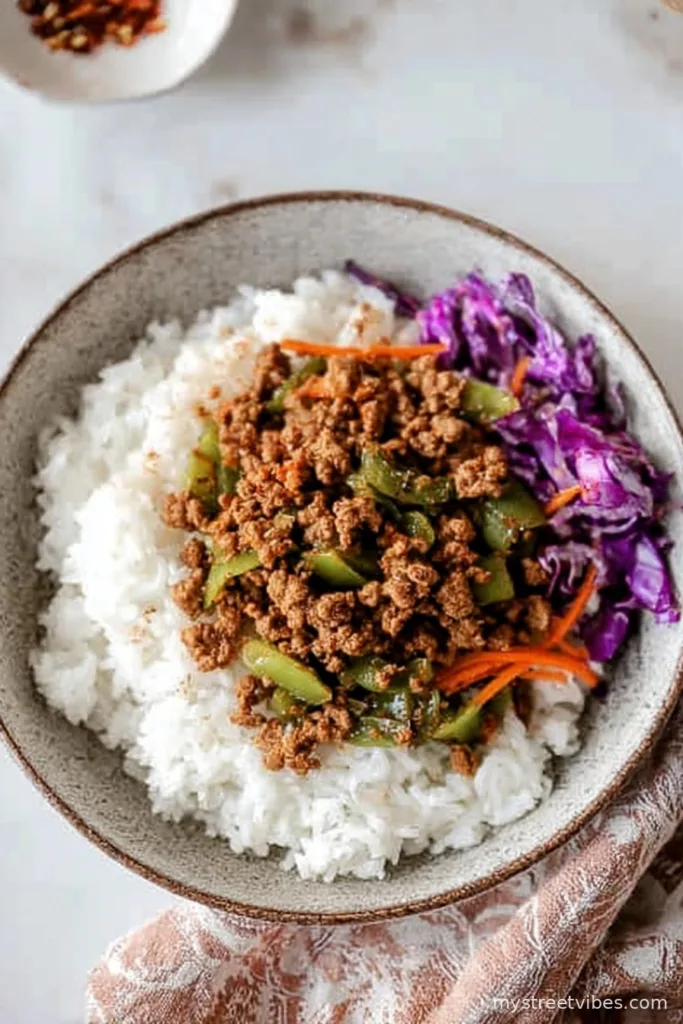
- Scoop generously over warm rice. Eat immediately (as if anyone could wait).
Notes, aka Stuff I Figured Out the Hard Way
- Once I used turkey that’s close to its date, and the flavor held up fine—it’s very forgiving.
- If you want more sauce, double the soy and sugar, but then watch your salt; it sneaks up on you.
- Leftover turkey is surprisingly good tossed into a quick fried rice or topped on a baked potato (not very Korean, but I regret nothing).
Fun Variations: Some Successes, One Flop
- I swapped turkey for firm tofu, and while it crumbled nicely, the texture is a bit odd—I’d maybe try it again but not for company.
- Ground chicken is a close second in terms of flavor—just watch the cook time; it dries out quick if you look away.
- I once threw in diced carrots and bell peppers for color (and kid trickery), and it was a hit.
- Adding a fried egg on top is just chef’s kiss, if you ask me.

Equipment: Use What You’ve Got
- A big nonstick skillet is handy, but honestly, I once used a cast iron pan and it was just as good (had to clean it a bit more, though).
- If you don’t have a spatula, a wooden spoon does the trick—don’t let anyone tell you otherwise.
Storing & Leftovers
Fridge life: Up to 3 days in a sealed container (though honestly, in my house it never lasts more than a day; people keep sneaking forkfuls). I think it actually tastes better the next day, so go wild and make extra if you’re into leftovers.
How I Serve It (Totally Optional, But Tasty)
My personal favorite is over jasmine rice, topped with extra green onions and crispy seaweed. Sometimes, we bulk it up with a pile of kimchi or a handful of frozen edamame if I find them rolling around the freezer. If it’s a Friday, we might even wrap it up in lettuce cups—messy in the best way possible.
Pro Tips, Learned the Messy Way
- I once tried rushing the simmer and poured the sauce in before deglazing the pan; flavor just wasn’t as deep. Patience is sauce’s best friend here.
- Actually, I find it works better if you use freshly cooked warm rice; cold rice kinda steals some magic.
- Don’t skip the green onions at the end—they wake everything up!
FAQ (Questions I’ve Really Been Asked)
- Can I freeze Korean Ground Turkey?
Yup! Pop it in the freezer for up to a month, just reheat gently so it doesn’t get weirdly rubbery. I’ve done it, works fine (just mark the date, or you’ll forget—trust me). - What if I can’t find gochujang?
No drama, sriracha or even a bit of chili flakes does the trick. It’s a different flavor, but still good. - Is this super spicy?
Honestly, not really; the brown sugar tames it a lot. If you like it hot, double up on the chili. - Can I make this gluten free?
Yep, just use tamari instead of soy sauce and make sure your gochujang is GF. Or skip it for something spicy you have on hand.
Oh, quick side note: if your smoke alarm is as touchy as mine, open a window ahead of time. Learned this one the hard way during a particularly enthusiastic stir fry session.
Ingredients
- 1 pound ground turkey (Sometimes I just use beef if that’s what’s left. My friend swears by the 93 percent lean, but 85 percent works, too)
- 2 tablespoons neutral oil (like canola, but I sometimes use olive oil, which my grandmother would give me the stink eye for)
- 4 garlic cloves, minced (I’ve been known to use the pre-minced stuff when rushed; nobody noticed)
- 1 tablespoon freshly grated ginger (or 1 teaspoon ground ginger if that’s all I’ve got—honestly, it’s fine)
- 1/3 cup low sodium soy sauce (once I accidentally used regular and, um, we were all quite thirsty after)
- 2 tablespoons brown sugar (sometimes I’ll sneak in honey if I realize I’ve run out last-minute)
- 1 tablespoon sesame oil
- 1 tablespoon Gochujang (Korean chili paste; sriracha works in a pinch, but it changes the flavor a bit)
- 2 green onions, chopped (or more—when I’m feeling reckless with my garnishes)
- 1 tablespoon sesame seeds (optional but just looks fancy)
- Cooked rice, for serving (white, brown, jasmine—pick your favorite or whatever’s leftover in the fridge)
Instructions
-
1First things first—get a large skillet and heat the oil over medium-high. I always forget to add the oil before the turkey, but it’s better if you do.
-
2Dump in the ground turkey and break it up with a spatula. Cook until it’s browned and no longer pink. If you see some bits sticking to the pan, that’s actually good flavor, so don’t panic.
-
3Now toss in the garlic and ginger. Stir for about a minute. This is where I usually sneak a taste (okay, probably a bit early, but you know).
-
4Lower the heat to medium. Pour in the soy sauce, brown sugar, sesame oil, and gochujang. Stir everything up. It might look a bit gloopy at first—it sorts itself out.
-
5Simmer for 2-3 minutes until the sauce gets all glossy and starts clinging to the meat. If it starts reducing too fast, just add a splash of water. I’ve definitely done that on autopilot before.
-
6Stir in half the green onions (save the rest for the top) and let that cook for another minute. Off the heat—sprinkle sesame seeds and remaining green onions on top.
-
7Scoop generously over warm rice. Eat immediately (as if anyone could wait).
CLICK FOR NUTRITION INFO
↑
Approximate Information for One Serving
Serving Size:
1 serving
Calories:
400cal
Protein:
27 gg
Fat:
18 gg
Saturated Fat:
0g
Trans Fat:
0g
Cholesterol:
0mg
Sodium:
0mg
Potassium:
0mg
Total Carbs:
33 gg
Fiber:
0g
Sugar:
0g
Net Carbs:
0g
Vitamin A:
0
Vitamin C:
0mg
Calcium:
0mg
Iron:
0mg
Nutrition Disclaimers
Number of total servings shown is approximate. Actual number of servings will depend on your preferred portion sizes.
Nutritional values shown are general guidelines and reflect information for 1 serving using the ingredients listed, not including any optional ingredients. Actual macros may vary slightly depending on specific brands and types of ingredients used.
To determine the weight of one serving, prepare the recipe as instructed. Weigh the finished recipe, then divide the weight of the finished recipe (not including the weight of the container the food is in) by the desired number of servings. Result will be the weight of one serving.
Did you make this recipe?
Please consider Pinning it!