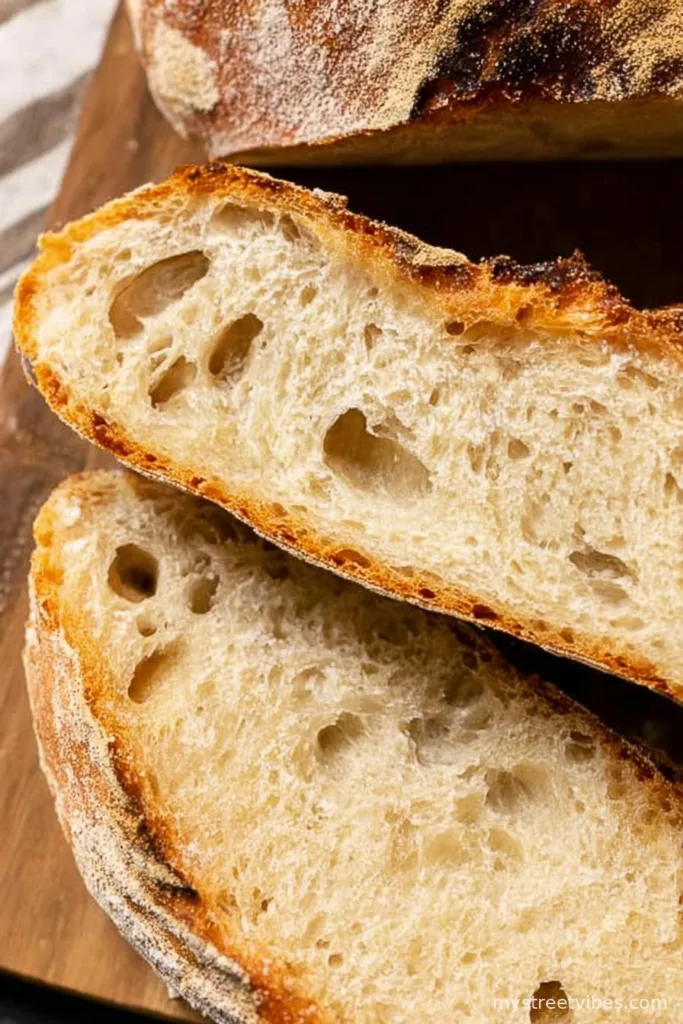
Let Me Tell You About This Bread—And the Flour on My Shirt
You know that feeling when something sounds way too good to be true? Like, bread you barely have to touch with your own hands, and it basically bakes itself? That’s Easy No-Knead Crusty Bread. The first time I tried it was during that stretch last winter when I kept misplacing my patience (and my keys). I read you didn’t even need a mixer, and I might’ve rolled my eyes. But curiosity, plus the half-bag of flour haunting my cupboard, convinced me. Anyway, by some kitchen miracle, it came out crunchy on the outside, all fluffy inside, and even my neighbor (the one who rarely smiles—except for Friday bingo night) asked for a slice. If a recipe can make that happen, it’s worth sharing, right?

Why You’ll Love This Bread (Or At Least, Why I Do)
So, I make this when the weather’s a bit gloomy or I just want to feel like I accomplished something vaguely impressive for minimal effort. My family pretty much demolishes the loaf in record time (there’s never leftovers for sandwiches, which is honestly a bit rude). And if you’ve ever tried those complicated bread recipes with dough sticking everywhere—no worries here. Just a bowl, a spoon, and a tiny bit of stubbornness. Um, don’t get me started on the smell when it’s baking. It’s like the warm hug you didn’t know you needed.
What You’ll Need (and Where My Grandma Would Shake Her Head)
- 3 cups (375g) all-purpose flour – Sometimes I swap out a cup for whole wheat just to see what’ll happen (the answer: more chew, still tasty)
- 1 1/2 teaspoons salt – Table salt is fine. There, I said it. Grandma was all about sea salt flakes but honestly it’s not a big deal
- 1/2 teaspoon instant yeast – I’ve occasionally used active dry yeast after accidentally buying it; just proof it with the water first
- 1 1/2 cups (355ml) lukewarm water – Sometimes I barely measure and just aim for “not hot, not cold”
- (Optional) Handful of seeds or herbs – Sunflower seeds, rosemary, whatever makes you cheerful
How To Pull This Off (Don’t Overthink It)
- In your biggest, sturdiest bowl, mix flour, salt, and yeast. Add the water and stir until it looks rough and not exactly pretty – that’s normal, trust me. I usually use a wooden spoon because I like the feel (and I hate washing whisks).
- Cover the bowl with a plate or a clean towel; forget about it for at least 12 hours. Overnight is the sweet spot. The dough will puff up and look kind of bubbly and, well, weird in the morning. Perfect!
- Flour your countertop generously. Scoop (or scrape—mine’s often more like blobbing) the dough onto the surface. Fold it over on itself a couple times. I do maybe three folds; some folks get very fancy, but I can’t be bothered.
- Let it rest for about 30 mins, covered by that same towel. Now’s a good time to preheat your oven to 450°F (230°C) with a heavy pot or Dutch oven inside. If you forgot to preheat, no judgment. I do this at least every third bake.
- When ready, gently plop the dough (seam side down, if you can even tell) into the hot pot. Watch your fingers—this is not the time for heroics. Cover and bake 30 mins. Then uncover and bake 15-ish more; the crust will go golden and crackly.
- Try to let it cool a bit before slicing. Actually, I find it works better if you wait, though sometimes I slice too soon and pay for it with smushed bread. Worth it?
Bits I’ve Learned the Hard Way
- The dough will look like a sticky ghost—don’t add loads of extra flour! That mistake made my first loaf more brick than bread.
- If your crust looks pretty dark, it’s probably fine; the inside matters more (unless you like chewing on gravel—then, um, enjoy!)
- Sometimes I forget to put parchment paper in the pot; most times, it’s fine. But once in a while, it sticks like a barnacle. A little oil helps.
Stuff I’ve Tried—Bread Experiments (Not All Winners)
- Adding chopped olives—yes. Makes you feel like you’re at a fancy bakery.
- Basic cinnamon and raisins went a bit chewy for my taste, but the smell was unreal.
- Once I tried using all rye flour. Just—don’t. Unless you like bread that’s also a doorstopper.

Equipment (But Don’t Sweat It)
- Big mixing bowl – I use an old ceramic one, chips and all
- Wooden spoon or anything for mixing
- Heavy Dutch oven with lid – Ok, this helps. But in a pinch, I once used a big enamel soup pot with an aluminum pie plate as a lid (hey, we improvise)
- Parchment paper (nice, not essential)
Keeping It Fresh (If You Can)
Store cooled bread wrapped in a towel or paper bag, not plastic (unless you love chewy crusts, which honestly is fine). Stays nice for about two days, but in my house it never lasts more than a day! And if it does go a bit stale, toast is your friend.
How We Eat It (And Oddly Specific Traditions)
Nothing beats a thick slice, still a little warm, with a big pat of salted butter and maybe a drizzle of honey (don’t knock it till you try it). My uncle likes dunking his in tomato soup—says it’s the only way to make “bricky bread” edible (rude, but he’s not wrong about the combo).
If I Could Go Back—Pro Tips From My Most Spectacular Mishaps
- Don’t try to rush the rise. I did once and all I got was a flat, sad pancake loaf. That was not a fun breakfast.
- Letting it cool enough really helps the texture. Cutting while hot = gummy insides every time. (But also, patience isn’t my strong suit, so…I live with the consequences!)
FAQ From Friends and, Occasionally, Mild Acquaintances
- Can I use bread flour instead of all-purpose? Sure thing. Comes out slightly chewier, which I love. Use whatever’s handy.
- Do I really need a Dutch oven? It helps, but I used to use my grandma’s deep roasting pan and just covered it with foil and a bit of hope. Not as perfect, still pretty good.
- What if my dough didn’t rise much? Yeast might be old, or maybe the kitchen’s a bit chilly. Give it extra time (or pop the bowl in the oven with just the light on; a neighbor told me that trick, works a charm).
- Can this be made gluten free? I’m not a pro here, but I’ve heard those 1-to-1 GF flour blends work, though it’s a bit more delicate. I tried once and the dough wouldn’t hold its shape—maybe you’ll have better luck?
- Can I freeze the bread? Absolutely. Slice it first for easy toast later. Actually, on second thought, I never have enough left to freeze, but it should work!
- Why is my crust so tough? Oo, probably baked a bit long uncovered. Or maybe it’s just extra rustic, in which case—enjoy your jaw workout?
So, that’s my not-so-secret Easy No-Knead Crusty Bread process. If all else fails, order pizza and call it a science experiment. Seriously though, you’ll get the hang of it (and probably end up loving scruffy, flour-dusted mornings as much as I do).
Ingredients
- 3 cups all-purpose flour
- 1/2 teaspoon instant yeast
- 1 1/2 teaspoons salt
- 1 1/2 cups warm water
- Cornmeal or flour, for dusting
- 1 tablespoon olive oil (optional, for greasing)
- Butter, for serving (optional)
Instructions
-
1In a large bowl, combine flour, instant yeast, and salt. Add warm water and stir until a shaggy dough forms.
-
2Cover the bowl tightly with plastic wrap and let the dough rise at room temperature for 12 to 18 hours, or until the surface is dotted with bubbles.
-
3Lightly flour a work surface and turn the dough out onto it. Shape the dough into a ball using floured hands.
-
4Place the dough on a sheet of parchment paper dusted with cornmeal or flour. Cover loosely with a towel and let rise for 30 to 40 minutes.
-
5While the dough is rising, place a Dutch oven (with lid) in the oven and preheat to 450°F (230°C) for at least 30 minutes.
-
6Carefully transfer the dough (with parchment) into the hot Dutch oven. Cover and bake for 30 minutes, then uncover and bake for 15 minutes more, until the loaf is golden brown and crusty. Cool before slicing.
CLICK FOR NUTRITION INFO
↑
Approximate Information for One Serving
Serving Size:
1 serving
Calories:
170 caloriescal
Protein:
5 gg
Fat:
0.8 gg
Saturated Fat:
0g
Trans Fat:
0g
Cholesterol:
0mg
Sodium:
0mg
Potassium:
0mg
Total Carbs:
34 gg
Fiber:
0g
Sugar:
0g
Net Carbs:
0g
Vitamin A:
0
Vitamin C:
0mg
Calcium:
0mg
Iron:
0mg
Nutrition Disclaimers
Number of total servings shown is approximate. Actual number of servings will depend on your preferred portion sizes.
Nutritional values shown are general guidelines and reflect information for 1 serving using the ingredients listed, not including any optional ingredients. Actual macros may vary slightly depending on specific brands and types of ingredients used.
To determine the weight of one serving, prepare the recipe as instructed. Weigh the finished recipe, then divide the weight of the finished recipe (not including the weight of the container the food is in) by the desired number of servings. Result will be the weight of one serving.
Did you make this recipe?
Please consider Pinning it!!