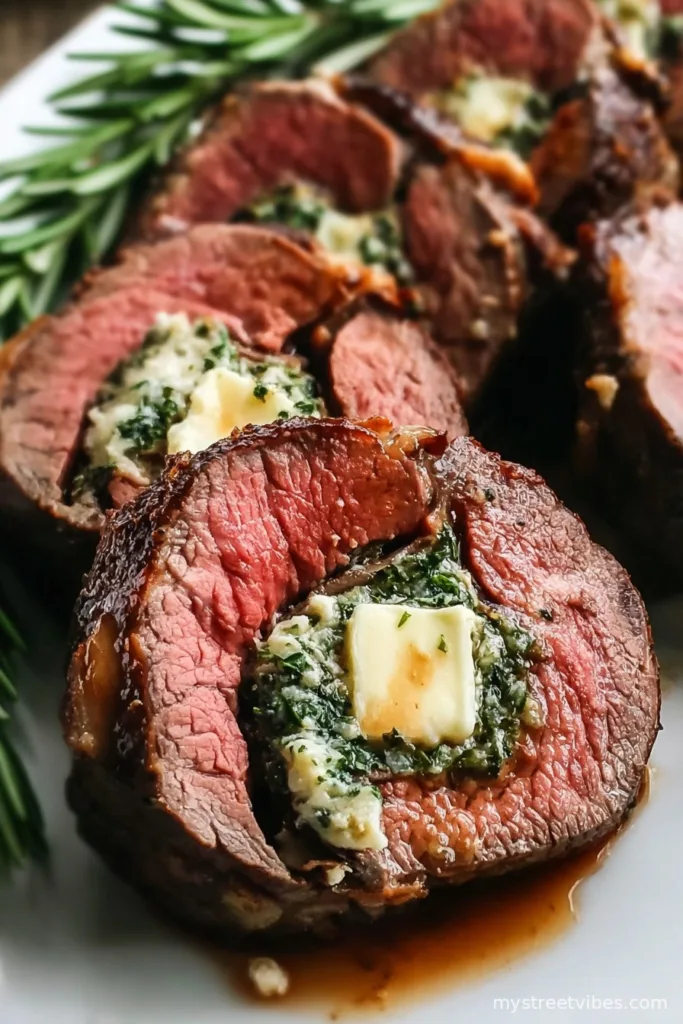
Okay, so you know those recipes that instantly make you feel like you’ve turned into a legit chef, even though (spoiler alert) you’re just kinda winging it in your own kitchen? This Christmas stuffed beef tenderloin is 100% that dish for me. The first time I made it, I was a teen who’d just discovered Food Network and I burned the pine nuts, panicked over the twine, and nearly tripped over a dog begging underfoot. Yet somehow, despite all that, it turned out just magic—and it’s been our family’s main event ever since. And honestly, if *I* survived my first go at it, you will crush this, mate.
Why You’ll Love This Tenderloin (For Real!)
I make this when I want to impress without losing my ever-loving mind (well, mostly). My family goes crazy for it because, let’s be honest, there’s just something about beef stuffed with herby, buttery things that makes people act like they’ve never been fed before. I also love the way it makes the whole house smell—it’s like an edible Christmas candle, if that’s a thing? Oh, and if you’ve ever struggled to keep tenderloin from drying out (story of my life), stuffing it actually solves that. Who knew, eh?
Here’s What You’ll Need—and a Few Shortcuts
- 1 whole beef tenderloin (about 2kg/4–5 lbs). Any brand works—I usually just get whatever looks happiest at the butcher. (Some folks swear by certified Angus, but I find it’s more about how you cook it.)
- 3 cups fresh spinach, chopped (frozen works in a pinch; just defrost and squeeze out the water like it owes you money)
- 1 cup mushrooms, finely diced (shiitake are lush, but button mushrooms are cheap and cheerful)
- 1/2 cup crumbled blue cheese or goat cheese (or honestly, a handful of grated cheddar if your guests are nervous about ‘fancy’ cheese)
- 2 cloves garlic, minced (I sometimes use that pre-minced stuff when I’m lazy. Don’t judge.)
- 1 shallot, diced (onion will work if you don’t have a shallot—my gran never bothered with shallots anyway)
- 1/4 cup toasted pine nuts (skip these if you’re allergic, or just can’t be bothered. Walnuts are surprisingly good.)
- 3 tbsp olive oil
- 2 tbsp butter
- Salt & pepper, to taste (I go heavy on the pepper but that’s just me)
- Fresh herbs—I like thyme and rosemary; dried works in a pinch, or even that Italian herb mix hiding in the back of your cupboard
- Kitchen twine (unless you want to live dangerously)
How to Make Christmas Stuffed Beef Tenderloin (Don’t Panic!)
- Preheat and Prep: Set your oven to 220°C (425°F). Defrost the spinach if you went frozen. Also, don’t forget to set out the meat so it chills out a bit; you want it close to room temp before cooking.
- Make the Stuffing: In a big frying pan, melt butter with a glug of olive oil. Toss in the garlic and shallot (or onion—whatever), sauté till they smell amazing; add mushrooms and cook till soft and all the juice disappears. Stir in the spinach, cook for another minute or so, then turn off the heat. Let it cool a bit—if you add the cheese now, it kinda melts in, which is fine, but I actually like to let the cheese keep some shape, so your call!
- Butterfly the Beef: Here’s where you pretend you’re a butcher. Using a sharp knife (I mean, any sharp knife will do—just be careful), slice the tenderloin lengthwise, but don’t cut all the way through. Open it up like a book. If it looks a bit ragged, don’t stress—no one sees the inside except you.
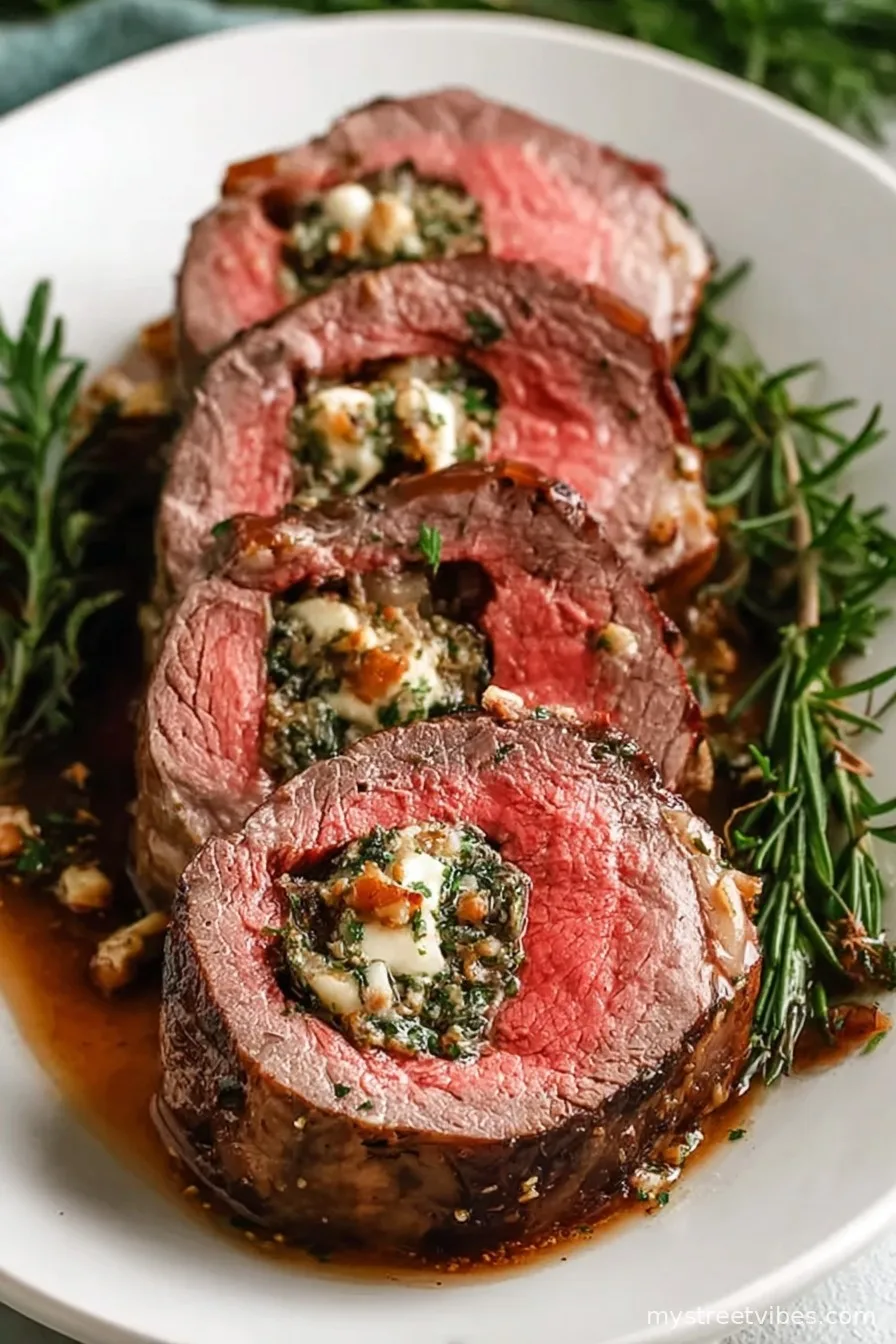
- Stuff It Like You Mean It: Lay out the stuffing, scatter cheese and nuts (if using), then sprinkle herbs, salt, and pepper. I sometimes sneak a little extra cheese here, not gonna lie. Roll it gently back up—don’t stress about perfection; the twine will keep it all sorted.
- Tie and Sear: Tie the stuffed tenderloin every couple of inches with kitchen twine. I never make the knots fancy; just do your best. Rub the outside with olive oil, salt, pepper, and more herbs. Sear it in your biggest skillet on high heat till nicely browned on all sides—3 minutes-ish per side. (This is always the part where I start second-guessing myself, but it’s fine!)
- Roast: Transfer to a roasting pan and pop it in the oven. Roast 25–35 minutes, depending on how rare you want it. I use a thermometer now because once I totally overcooked it and nearly cried—shoot for 125°F for rare, or 135°F for medium rare. Tent with foil and let it rest for at least 15 minutes. Don’t skip this step unless you enjoy chasing juices all across your cutting board.
- Slice & Serve: Snip off the twine, slice (a good half inch thick is about right), and pour any pan juices over the top. Taste-test a piece just to be sure you didn’t miss anything, of course.
A Few Little Notes (from Many Mishaps)
- If you can’t find tenderloin, you can do this with sirloin. Won’t be quite as tender, but it’ll still taste like a celebration.
- Letting the cheese sit out of the fridge for a while makes it easier to crumble. Found that out the hard way—it used to fly all over my kitchen when I tried to break up a cold block!
- If you use frozen spinach, squeeze it in a tea towel over the sink. I once skipped this and ended up with a swamp inside my beef. Not pretty.
Not Your Average Variations (and a Fail)
- Swapped out blue cheese for smoked mozzarella once—absolutely banging flavor, but a messier slice.
- Tried stuffing with roasted red peppers and feta for a Mediterranean vibe, and it was a solid 7/10.
- I once put dried apricots and pistachios inside thinking it’d be festive but, uh, nope. My sister still teases me about ‘fruit meatloaf’ whenever Christmas rolls around.
Gear I Use—and What to Do If You Don’t Have It
- Big skillet (No cast iron? No worries. Any heavy pan will do, or use a grill pan if that’s all you’ve got)
- Meat thermometer: Yes, they’re handy. But honestly, you can just poke it and see how squishy it is (not scientific, but it works—sorta)
- Kitchen twine: Got dental floss? Use the unflavored kind. Or that’s what I’ve done in a pinch; it works!
- Roasting pan, foil, sharp knife. If nothing else, just use the heaviest baking tray you own—it all comes out in the wash.
How to Store It (If There’s Any Left)
If by some Christmas miracle you have leftovers, wrap them tight in foil or stash in a sealed container. Lasts about 2–3 days in the fridge. To reheat, I just cover slices with a damp paper towel and zap them in the microwave—sounds silly, but it keeps it moist! But, honestly, in my house it never lasts more than a day; usually gone before the Queen’s (or, okay, King’s) speech is over.
Serving Suggestions Straight from My Table
I love to put slices on a big wooden board, scatter some extra herbs (or just whatever’s not wilted in the crisper), and surround with garlicky green beans and crispy roast potatoes. Sometimes I’ll do a horseradish cream, sometimes just English mustard—depends if I’m feeling posh or not. And there’s always a plate of warm bread near at hand, mostly so my kids can mop up the juices without using their sleeves.
Pro Tips You Only Learn by Messing Up
- I once tried rushing the searing step and regretted it because it just looked sad and pale—give it the time.
- Don’t skip the resting step. I used to think this was chef nonsense, but now I know—your cutting board will thank you!
- Actually, I find it works better if you stuff and roll ahead of time, then chill in the fridge for 30 minutes before roasting. Makes it easier to slice, too.
FAQ—You Ask, I Answer (and Sometimes Ramble)
- Can I prep this a day ahead?
Absolutely! I prep and roll it, wrap tight in clingfilm, and leave it in the fridge overnight. Just bring to room temp for about an hour before roasting. - Is there a way to make this gluten free?
Yup—totally gluten free by accident unless your stuffing additions contain bread. If you add breadcrumbs (some people do), just swap with gluten free crumbs and you’re golden. - What should I do if it’s overcooked?
First—deep breath! I’ve been there. Slice thin, pile high with that horseradish cream (or even some gravy from this recipe I like) and serve on a warm roll. Basically, turn it into a Christmas beef sandwich. Folks will love it anyway. - Any good side dish ideas?
Oh, tons! Try potato gratin from Smitten Kitchen if you want buttery and rich, or go for simple roasted Brussels sprouts. That’s what I usually do so I can feel virtuous when I inevitably eat half the tenderloin myself. - Does it freeze well?
I wouldn’t—it kinda loses its magic. But, if you must, wrap tightly and defrost in the fridge, then gently reheat. Not stellar, but not a disaster either.
Side note: Every time I make this beef, it somehow turns into a family debate about stuffing vs. not stuffing turkey. For some reason, the more stuffed beef I make, the less patience my people have for a dry bird. But that’s just our crew…maybe yours too?
Let me know if you try it—or if you find a stuffing combo that’s even better. I’m always up for a good kitchen experiment, even if it ends up as a running joke for years to come.
Ingredients
- 1 (3 to 4 lb) beef tenderloin, trimmed
- 2 tablespoons olive oil
- 1 cup cremini mushrooms, finely chopped
- 1/2 cup fresh spinach, chopped
- 1/2 cup breadcrumbs
- 3 cloves garlic, minced
- 2 tablespoons fresh parsley, chopped
- 1 tablespoon Dijon mustard
- 1 teaspoon salt
- 1/2 teaspoon black pepper
- 6 slices prosciutto
Instructions
-
1Preheat oven to 425°F (220°C). Lay the beef tenderloin flat and carefully butterfly it, slicing lengthwise without cutting all the way through. Open it like a book and flatten gently.
-
2In a skillet over medium heat, add olive oil and sauté mushrooms, garlic, and spinach until softened. Remove from heat, stir in breadcrumbs, parsley, salt, and black pepper. Allow to cool slightly.
-
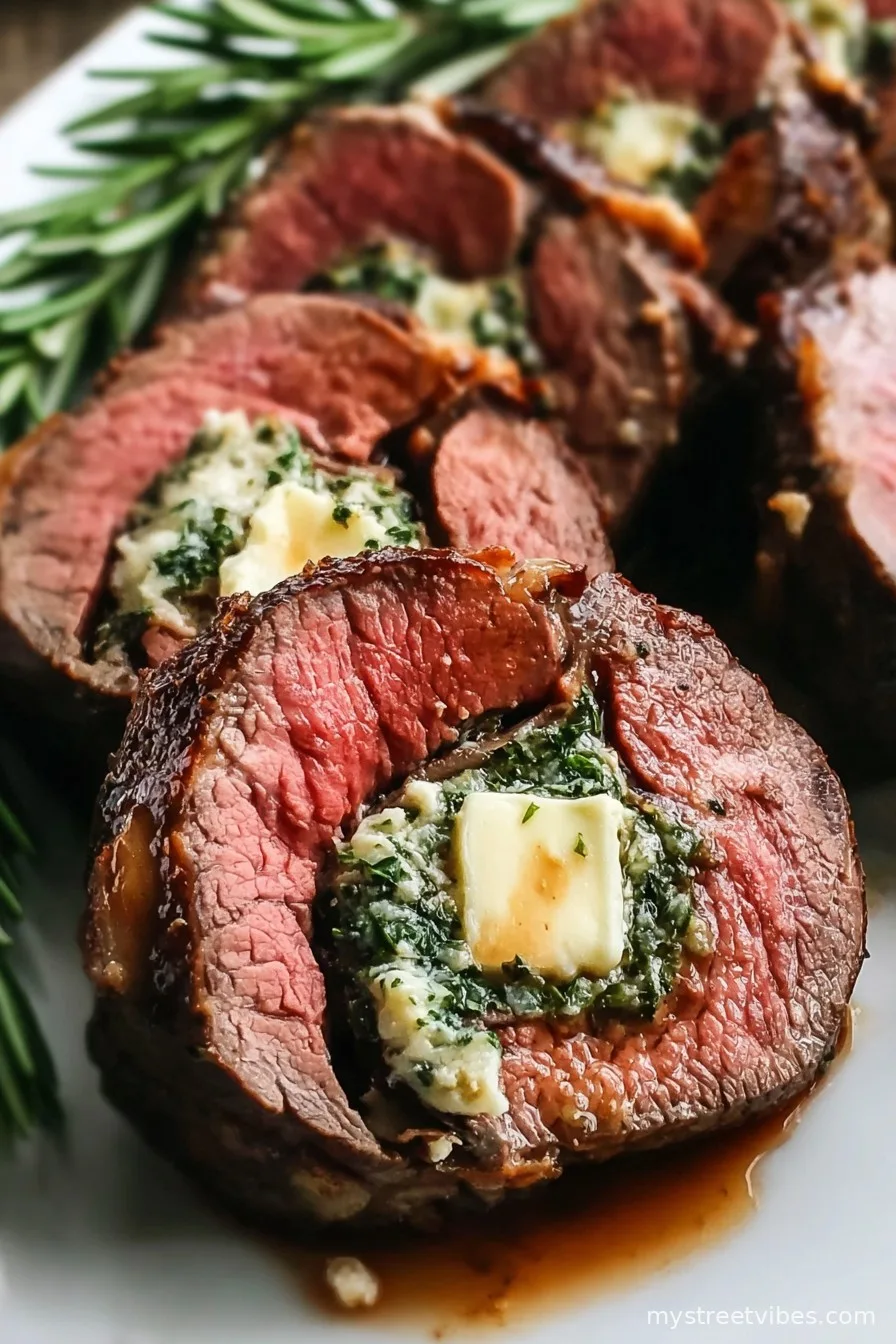
3Spread Dijon mustard evenly over the inside of the tenderloin. Arrange prosciutto slices over the mustard layer, then spread the cooled mushroom mixture on top.
-
4Carefully roll up the tenderloin, starting from one long side, and tie it securely with kitchen twine. Brush the outside with olive oil and season with salt and pepper.
-
5Place the stuffed tenderloin on a roasting rack in a baking pan. Roast for 40–45 minutes or until internal temperature reaches 130°F (54°C) for medium rare. Let rest 10 minutes before slicing and serving.
CLICK FOR NUTRITION INFO
↑
Approximate Information for One Serving
Serving Size:
1 serving
Calories:
420cal
Protein:
54 gg
Fat:
21 gg
Saturated Fat:
0g
Trans Fat:
0g
Cholesterol:
0mg
Sodium:
0mg
Potassium:
0mg
Total Carbs:
7 gg
Fiber:
0g
Sugar:
0g
Net Carbs:
0g
Vitamin A:
0
Vitamin C:
0mg
Calcium:
0mg
Iron:
0mg
Nutrition Disclaimers
Number of total servings shown is approximate. Actual number of servings will depend on your preferred portion sizes.
Nutritional values shown are general guidelines and reflect information for 1 serving using the ingredients listed, not including any optional ingredients. Actual macros may vary slightly depending on specific brands and types of ingredients used.
To determine the weight of one serving, prepare the recipe as instructed. Weigh the finished recipe, then divide the weight of the finished recipe (not including the weight of the container the food is in) by the desired number of servings. Result will be the weight of one serving.
Did you make this recipe?
Please consider Pinning it!!