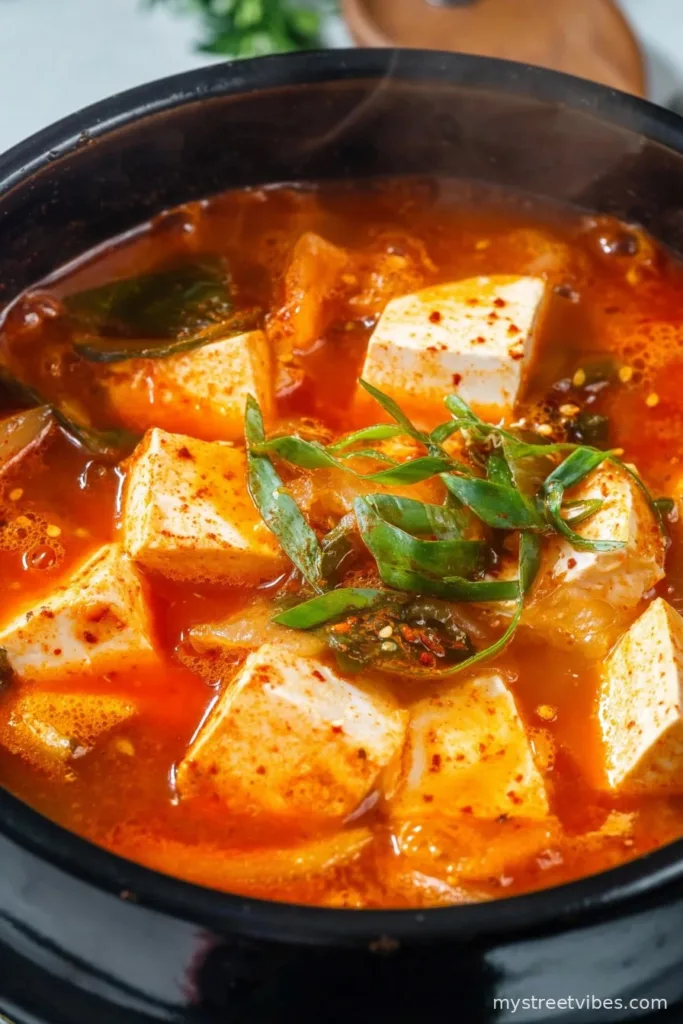
Hey Friend, Let’s Talk Soondubu Jjigae
Okay, so you ever have one of those days where all you want is a bubbling cauldron of something spicy, hearty, and honestly, just a bit messy? That’s me with Soondubu Jjigae—aka Korean Soft Tofu Stew—a dish that basically got me through last winter (and, if I’m being real, a fair number of hangovers). The first time I tried to cook it, I totally misread the chili powder ratio and probably nearly singed my tastebuds off, but hey, you live and you learn! Now, I’ll whip this up when the weather turns grim, I want to impress someone, or just because the fridge is half-empty except for tofu and some sad vegetables.

Why I’m Always Coming Back to This Stew
I make Soondubu Jjigae when I want something cozy but not heavy, rich but not fussy. My family basically hovers when they smell the soup simmering—seriously, my cousin once showed up unannounced (smelling the stew from their apartment next door!) and demanded a bowl. Sometimes the soft tofu breaks apart and it looks a mess, but, weirdly, that’s what I love. It’s like a spa day for your mouth (is that a weird thing to say? Eh, I’m running with it). And if I don’t have all the real deal ingredients, I just…don’t. It still works.
Here’s What You’ll Need (But, You Know, Flexibility Is Key)
- 1 tube (about 300g) of silken tofu (I use Pulmuone brand but any silky soft tofu works; sometimes I grab whatever’s cheapest, and honestly it’s fine)
- 100g pork belly, thinly sliced (or honestly, ground pork or even beef; once I used leftover bacon, not my brightest moment)
- 1/2 small onion, roughly chopped (yellow or sweet, or heck, shallot if that’s what’s rolling around)
- 2 tbsp Korean gochugaru (red pepper flakes; sometimes I use less for my spice-averse friend, but I make up for it with more garlic)
- 1 tbsp gochujang (fermented chili paste; if you don’t have it, just skip or toss in more gochugaru—no biggie)
- 2 cloves garlic, minced (…or more, I won’t judge. I add 4 sometimes and regret nothing)
- 1 green onion, sliced (spring onion works, or just some chives if you wanna be fancy)
- 300ml beef, chicken, or vegetable stock (I often use water and a magic soup stock cube—don’t tell my grandma)
- 1 tbsp cooking oil (neutral, like grapeseed or vegetable)
- 1/2 zucchini, sliced half-moons (but skip if you just hate zucchini)
- 100g mushrooms, sliced (shiitake if I have them; button mushrooms are fine too, or none, who cares really)
- 1 egg (absolutely optional! Sometimes I forget and nobody minds)
- 1 tsp soy sauce (or to taste—sometimes I do a dash of fish sauce, it’s funkier but not bad)
- Salt and pepper, to taste (you know the drill)
How I Pull It Together (with Occasional Chaos)
- Heat the oil in a heavy pot (a ddukbaegi stone bowl if you’ve got it, or any small saucepan for us mortals) over medium heat.
- Add the pork belly and cook until it’s brown and starting to look crispy around the edges—don’t rush, or you’ll miss the good bits stuck to the pan.
- Toss in the onion and zucchini; cook until slightly soft, a couple of minutes. If you’re feeling lazy, chuck in the garlic here with them.
- Now add the mushrooms and gochugaru (this step always looks too spicy but mellows out—trust!), stirring until everything’s mixed and smells wonderful (or just smells strong, if your fan isn’t great).
- Stir in the gochujang and soy sauce, let them melt into everything for maybe a minute.
- Pour in your stock (or water plus a cube—I won’t tattle). Give it a gentle stir and scrape the pan bits up. Bring to a simmer.
- Open your tofu tube and squeeze (yes, squeeze, it’s weird but it works) the tofu right into the bubbling stew. Don’t break it up much—the joy is in the big soft lumps. Salt and pepper to taste.
- Let it simmer gently, without a lid, for 7–10 minutes. I usually sneak a taste here and always burn my tongue. Worth it.
- Crack in the egg (just plop it right in the middle!), scatter your sliced green onion over the top, then let it sit one more minute.
- Serve bubbling hot—if you waited for it to cool you’re braver than me. Spoon it over rice if you want the true comfort-food hoodoo.
Small (Somewhat Chaotic) Notes
- If you’re out of pork or don’t eat meat, honestly, mushrooms alone are hearty enough. Actually, tofu stew is forgiving. Once, I tossed in some leftover seafood—shrimp and clams—and it was almost too briny but still got eaten.
- My friend swears by adding kimchi before the stock, but I always forget. Up to you!
- I think this tastes better the next day, though it rarely makes it past the evening in my house.
Variations I’ve Tried (for Better or Worse)
- Seafood version: Add a handful of clams and 3–4 shrimp in step 6. Salty but nice.
- Vegetarian: Skip the meat, double the mushrooms, and use kombu dash stock (if you feel fancy).
- I once tried adding broccoli…and I really wanted it to work, but it just turned weird and green-tasting. Would not repeat.

What If Your Kitchen Lacks Stuff?
- I know every video says you need a Korean stone bowl. Honestly, any sturdy saucepan or small cast iron works. (Just maybe don’t use those thin picnic pots… they burn.)
- No gochujang? Extra gochugaru and a teensy pinch of sugar do the trick in a pinch.
Real Talk: Storing Your Stew
It keeps fine in a lidded container in the fridge for a day or two, and warms up great—though honestly, in my house it never lasts more than a day! The tofu gets a bit firmer, but that’s not a dealbreaker at all.
How We Eat It: Serving Sitch
Always, always with steamed rice. Sometimes I set out a bowl of kimchi and pickled radish. On cold days, I’ll pour the bubbling stew right onto the rice. My cousin spoons the egg out on top for extra drama (not gonna lie, it does look cool).
Things I’ve Messed Up (So You Don’t Have To)
- One time I tried adding the tofu too early and boiled it into mush. Actually, I find it works better if you don’t fuss—just plop it in close to the end and be gentle when stirring.
- I once rushed the pork-browning step. Regretted it, big time. You want that caramelization—it’s where the flavor hides.
FAQ—Because Apparently I Get Texts About This All the Time
- Can I use firm tofu? Mmm, you can, but it won’t fall apart into lovely soft bits. Silken’s where it’s at (in my humble opinion).
- Is it super spicy? Not as much as you’d think! But if you’re nervous, start with 1 tbsp gochugaru, stir, taste, add more if you want to sweat.
- Can I freeze leftovers? You could, but be warned: the tofu texture changes (gets a little spongy) and sometimes it leaks water when thawed. I just eat it fast, problem solved.
- What do I do with leftover gochujang? Oh man, spread it on a grilled cheese. Or add a spoon to any soup that needs a bit of zing.
- Why does my stew taste bland? Try a splash more soy or even a pinch of salt. Or, maybe I’m wrong and you just need more gochugaru! Tweaking is the name of the game.
So there you have it—my genuinely imperfect, somewhat rambling, but always comforting take on Soondubu Jjigae. Go forth, make a mess, and let me know if you do something wild with it!
Ingredients
- 1 tube (about 300g) of silken tofu (I use Pulmuone brand but any silky soft tofu works; sometimes I grab whatever’s cheapest, and honestly it’s fine)
- 100g pork belly, thinly sliced (or honestly, ground pork or even beef; once I used leftover bacon, not my brightest moment)
- 1/2 small onion, roughly chopped (yellow or sweet, or heck, shallot if that’s what’s rolling around)
- 2 tbsp Korean gochugaru (red pepper flakes; sometimes I use less for my spice-averse friend, but I make up for it with more garlic)
- 1 tbsp gochujang (fermented chili paste; if you don’t have it, just skip or toss in more gochugaru—no biggie)
- 2 cloves garlic, minced (…or more, I won’t judge. I add 4 sometimes and regret nothing)
- 1 green onion, sliced (spring onion works, or just some chives if you wanna be fancy)
- 300ml beef, chicken, or vegetable stock (I often use water and a magic soup stock cube—don’t tell my grandma)
- 1 tbsp cooking oil (neutral, like grapeseed or vegetable)
- 1/2 zucchini, sliced half-moons (but skip if you just hate zucchini)
- 100g mushrooms, sliced (shiitake if I have them; button mushrooms are fine too, or none, who cares really)
- 1 egg (absolutely optional! Sometimes I forget and nobody minds)
- 1 tsp soy sauce (or to taste—sometimes I do a dash of fish sauce, it’s funkier but not bad)
- Salt and pepper, to taste (you know the drill)
Instructions
-
1Heat the oil in a heavy pot (a ddukbaegi stone bowl if you’ve got it, or any small saucepan for us mortals) over medium heat.
-
2Add the pork belly and cook until it’s brown and starting to look crispy around the edges—don’t rush, or you’ll miss the good bits stuck to the pan.
-
3Toss in the onion and zucchini; cook until slightly soft, a couple of minutes. If you’re feeling lazy, chuck in the garlic here with them.
-
4Now add the mushrooms and gochugaru (this step always looks too spicy but mellows out—trust!), stirring until everything’s mixed and smells wonderful (or just smells strong, if your fan isn’t great).
-
5Stir in the gochujang and soy sauce, let them melt into everything for maybe a minute.
-
6Pour in your stock (or water plus a cube—I won’t tattle). Give it a gentle stir and scrape the pan bits up. Bring to a simmer.
-
7Open your tofu tube and squeeze (yes, squeeze, it’s weird but it works) the tofu right into the bubbling stew. Don’t break it up much—the joy is in the big soft lumps. Salt and pepper to taste.
-
8Let it simmer gently, without a lid, for 7–10 minutes. I usually sneak a taste here and always burn my tongue. Worth it.
-
9Crack in the egg (just plop it right in the middle!), scatter your sliced green onion over the top, then let it sit one more minute.
-
10Serve bubbling hot—if you waited for it to cool you’re braver than me. Spoon it over rice if you want the true comfort-food hoodoo.
CLICK FOR NUTRITION INFO
↑
Approximate Information for One Serving
Serving Size:
1 serving
Calories:
410cal
Protein:
25 gg
Fat:
27 gg
Saturated Fat:
0g
Trans Fat:
0g
Cholesterol:
0mg
Sodium:
0mg
Potassium:
0mg
Total Carbs:
18 gg
Fiber:
0g
Sugar:
0g
Net Carbs:
0g
Vitamin A:
0
Vitamin C:
0mg
Calcium:
0mg
Iron:
0mg
Nutrition Disclaimers
Number of total servings shown is approximate. Actual number of servings will depend on your preferred portion sizes.
Nutritional values shown are general guidelines and reflect information for 1 serving using the ingredients listed, not including any optional ingredients. Actual macros may vary slightly depending on specific brands and types of ingredients used.
To determine the weight of one serving, prepare the recipe as instructed. Weigh the finished recipe, then divide the weight of the finished recipe (not including the weight of the container the food is in) by the desired number of servings. Result will be the weight of one serving.
Did you make this recipe?
Please consider Pinning it!