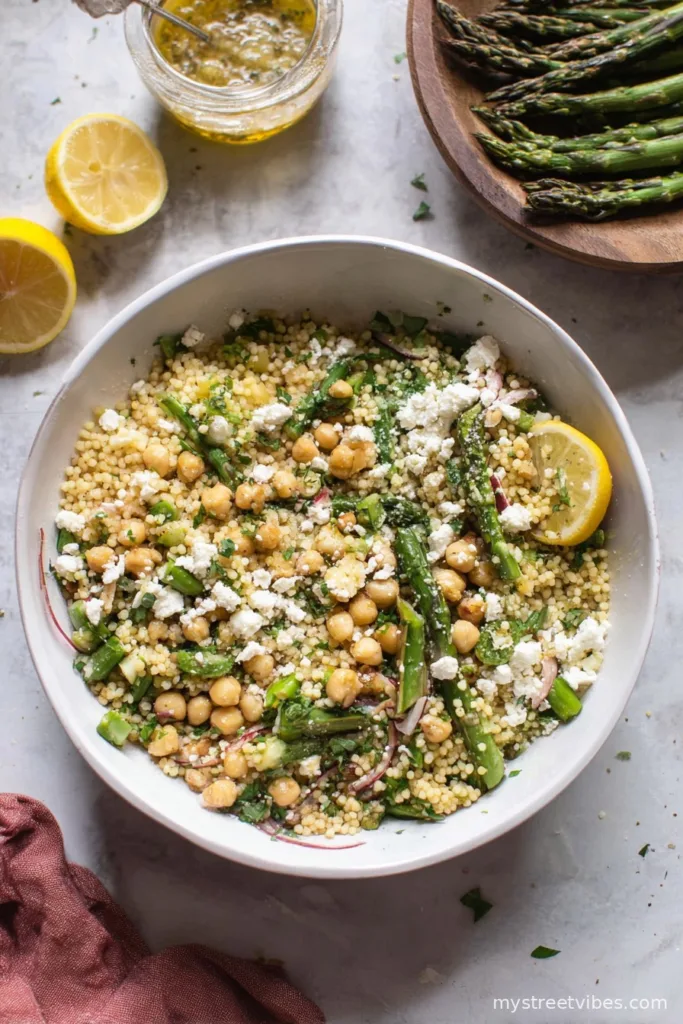
So about these vibrant Spring Couscous Bowls…
So, let me tell you: I was never much of a couscous person (is that even a thing?), until one lazy April afternoon last year. I’d just gotten home from the farmer’s market—half sunburned, clutching a ridiculous amount of snap peas and radishes, and sort of hungry but not up for a big palaver. I remembered seeing some couscous in the back of the cupboard behind—no word of a lie—four jars of peanut butter. So, I figured, why not throw together whatever veggies I had and dress it up with something zippy and bright?

This bowl was born out of that kind of “eh, what-have-I-got” half-panicked, half-inspired moment. Now, somehow, it shows up on the table (or the sofa, let’s be real) any time Spring weather even thinks about showing its face. There’s lemon, there’s feta, there’s a heap of herbs. Oh, and there’s couscous, of course. You can have this salad warm, cold, or somewhere in between—it doesn’t make a fuss.
Why You’ll Love Making (and Eating) This
- I make this for those 6pm “I guess we have to eat something semi-healthy but I don’t want to think too hard” situations. My sister swears it’s her favorite lunch for working from home—probably because it looks fancy but is just a big ol’ bowl of comfort (and if you happen to use up those last few dodgy veggies? No one needs to know).
- Sometimes I add extra feta because my partner keeps nicking bits straight from the bowl. I’m not naming names! Oh, and for the record, the lemon vinaigrette is so bright, it could almost make shoe leather taste good (not that I recommend it).
- If you get annoyed at how couscous can go from perfect to a bit soggy in 30 seconds—me too. I’ll show you how to dodge that problem below.
What You’ll Need (and Some Substitutes ‘Cause Life Happens)
- 1 cup couscous (the regular tiny kind, but I sometimes use pearl couscous for more bite—my grandma always insisted on Bob’s Red Mill but honestly, use what you like or have handy)
- 1 1/4 cups water (but veggie broth adds even more flavor when you remember to use it… which I often don’t)
- 1 cup fresh snap peas, sliced (no snap peas? Use asparagus, blanched green beans, or even some thawed peas)
- 4-5 radishes, thinly sliced (if I’m out of radish, cucumber can pinch hit just fine)
- 1/2 cup crumbled feta cheese (I’ll never say no to more, but you do you)
- 1/4 cup chopped fresh parsley (or any mix of parsley, dill, mint—I’ll sometimes go a bit wild with herbs if my garden is overflowing)
- 1/4 cup toasted almonds, chopped (sunflower seeds or pine nuts are great too, and once when I was desperate, I used chopped walnuts—it was… not my favorite but edible!)
- 2 tbsp extra virgin olive oil (or whatever oil makes you happy; I sometimes use avocado oil if I’m out)
- 1 medium lemon, zested and juiced (I use Meyer lemons if I can find them; the zest always adds more zing)
- 1 small garlic clove, grated or finely minced
- Salt and black pepper, to taste (I almost always add more pepper at the end)
How To Make It (No Panic Necessary)
- First, bring the water (or broth) to a boil in a small saucepan. Add a pinch of salt, then dump in the couscous. Give it a quick stir, whack on the lid, and turn off the heat. Walk away—don’t peek!—for 5 minutes.
- While that’s doing its thing, slice your snap peas and radishes. Try not to eat all the peas as you slice them (not that I’m admitting to anything here).
- In a big bowl, zest the lemon right into the bottom. Toss in the juice, olive oil, minced garlic, and a good pinch of salt and pepper. Whisk it up with a fork. This is where the magic happens. I usually sneak a taste—sometimes it wants more lemon. Or less. Who knows?
- Fluff the couscous with a fork—it can look a bit clumpy at first, but just keep going and it’ll loosen up. Pour it straight into your dressing bowl while it’s still warm so it soaks up all that flavor.
- Toss in the snap peas, radishes, and half the herbs. Give everything a gentle mix. Don’t worry if it looks a bit bland now – the feta’s coming.
- Crumble in the feta, scatter over the remaining herbs and the almonds (or whatever crunchy thing you’re using). Stand back and admire for a quick second.
- Taste. Adjust salt or pepper, and maybe add another squeeze of lemon for good measure. Mum always says you can never have too much lemon—she’s not wrong.

A Few Notes from My Scatterbrained Kitchen
- If your couscous gets a bit sticky, just fluff it with a fork and break up the clumps. Actually, I find adding the dressing while warm helps it loosen.
- Letting the bowl sit for 15 minutes before serving gives the flavors time to really get to know each other.
- I’ve found pine nuts make it taste posh, but they’re expensive. Almonds are just as good in my book.
Variations (Some Winners and One Not-So-Winner)
- Swap the feta for goat cheese for more tang. Or, if you’re dairy-free, marinated tofu is surprisingly great here.
- On a whim, I tossed in roasted sweet potato one time. Tasted fine, but honestly, it kind of bullied the other spring flavors. Wouldn’t do that again.
- I’ve also thrown chopped cooked chicken or chickpeas in here to make it more of a meal. That one always goes down well.

Equipment: The “Do I Really Need That?” Edition
- Saucepan with a lid (but if your saucepan lid has vanished, a big plate will do the trick—it’s not rocket science)
- Mixing bowls (I once used a pot when all mine were dirty—no shame)
- Sharp knife & chopping board
- Microplane or grater for that lemon zest (if you don’t have one, just thinly slice and chop tiny—works-ish!)
How to Store It (But Don’t Expect Leftovers!)
Technically, this will keep tightly covered in the fridge for about 2 days, but honestly, in my house it never lasts more than a day. That one late-night ‘just another spoonful’ gets me every time. If you do stash it overnight, I think it tastes better the next day—so zingy.
How I Like to Serve It (And How My Family Argues)
The official way: mound into bowls and add a final flurry of herbs. The real way: with a big spoon straight from the mixing bowl, preferably on a picnic blanket outside. Sometimes I grill up some chicken or salmon to plop on top, especially if my Dad’s around (he refuses to believe a meal is finished without protein—classic Dad move, right?).
Pro Tips (Learned by Doing It Wrong)
- I once rushed the couscous—didn’t leave it to steam with the lid on—and ending up with a weird crunchy mess. Don’t skip that resting time!
- Don’t overdress it right away; sometimes the couscous keeps soaking up the sauce as it sits, and you want to save a little bit for a last drizzle just before serving.
FAQ (Yes, People Have Actually Asked Me These)
- Can I use quinoa instead of couscous? You could, but it’ll taste a bit earthier. Actually, I find it works OK, but classic couscous is…well, classic.
- What if I don’t like radishes? No biggie, skip them or chuck in cucumber. No one’s going to chase you for it!
- Is this vegan? It’s not, but lose the feta or swap for a plant-based cheese and you’re golden.
- Do I have to toast the nuts? I mean, nobody’s watching you. But toasting brings out extra flavor, so if you’ve got 5 minutes, do it.
- Can I double this? For sure, I do it all the time—especially for potlucks. You might need a bigger mixing bowl, mind.
- This looks weird—did I mess up? Probably not! It’s supposed to be a bit rustic and messy; that’s half the charm.
And now I’ve got myself hungry for couscous again. Typical. Hope you love this one as much as we do—let me know if you come up with a wild new variation. (Just… maybe skip the sweet potato.)
Ingredients
- 1 cup couscous (the regular tiny kind, but I sometimes use pearl couscous for more bite—my grandma always insisted on Bob’s Red Mill but honestly, use what you like or have handy)
- 1 1/4 cups water (but veggie broth adds even more flavor when you remember to use it… which I often don’t)
- 1 cup fresh snap peas, sliced (no snap peas? Use asparagus, blanched green beans, or even some thawed peas)
- 4-5 radishes, thinly sliced (if I’m out of radish, cucumber can pinch hit just fine)
- 1/2 cup crumbled feta cheese (I’ll never say no to more, but you do you)
- 1/4 cup chopped fresh parsley (or any mix of parsley, dill, mint—I’ll sometimes go a bit wild with herbs if my garden is overflowing)
- 1/4 cup toasted almonds, chopped (sunflower seeds or pine nuts are great too, and once when I was desperate, I used chopped walnuts—it was… not my favorite but edible!)
- 2 tbsp extra virgin olive oil (or whatever oil makes you happy; I sometimes use avocado oil if I’m out)
- 1 medium lemon, zested and juiced (I use Meyer lemons if I can find them; the zest always adds more zing)
- 1 small garlic clove, grated or finely minced
- Salt and black pepper, to taste (I almost always add more pepper at the end)
Instructions
-
1First, bring the water (or broth) to a boil in a small saucepan. Add a pinch of salt, then dump in the couscous. Give it a quick stir, whack on the lid, and turn off the heat. Walk away—don’t peek!—for 5 minutes.
-
2While that’s doing its thing, slice your snap peas and radishes. Try not to eat all the peas as you slice them (not that I’m admitting to anything here).
-
3In a big bowl, zest the lemon right into the bottom. Toss in the juice, olive oil, minced garlic, and a good pinch of salt and pepper. Whisk it up with a fork. This is where the magic happens. I usually sneak a taste—sometimes it wants more lemon. Or less. Who knows?
-
4Fluff the couscous with a fork—it can look a bit clumpy at first, but just keep going and it’ll loosen up. Pour it straight into your dressing bowl while it’s still warm so it soaks up all that flavor.
-
5Toss in the snap peas, radishes, and half the herbs. Give everything a gentle mix. Don’t worry if it looks a bit bland now – the feta’s coming.
-
6Crumble in the feta, scatter over the remaining herbs and the almonds (or whatever crunchy thing you’re using). Stand back and admire for a quick second.
-
7Taste. Adjust salt or pepper, and maybe add another squeeze of lemon for good measure. Mum always says you can never have too much lemon—she’s not wrong.
CLICK FOR NUTRITION INFO
↑
Approximate Information for One Serving
Serving Size:
1 serving
Calories:
330 caloriescal
Protein:
9gg
Fat:
17gg
Saturated Fat:
0g
Trans Fat:
0g
Cholesterol:
0mg
Sodium:
0mg
Potassium:
0mg
Total Carbs:
36gg
Fiber:
0g
Sugar:
0g
Net Carbs:
0g
Vitamin A:
0
Vitamin C:
0mg
Calcium:
0mg
Iron:
0mg
Nutrition Disclaimers
Number of total servings shown is approximate. Actual number of servings will depend on your preferred portion sizes.
Nutritional values shown are general guidelines and reflect information for 1 serving using the ingredients listed, not including any optional ingredients. Actual macros may vary slightly depending on specific brands and types of ingredients used.
To determine the weight of one serving, prepare the recipe as instructed. Weigh the finished recipe, then divide the weight of the finished recipe (not including the weight of the container the food is in) by the desired number of servings. Result will be the weight of one serving.
Did you make this recipe?
Please consider Pinning it!