Let Me Tell You About My Lazy Day Beef Tips
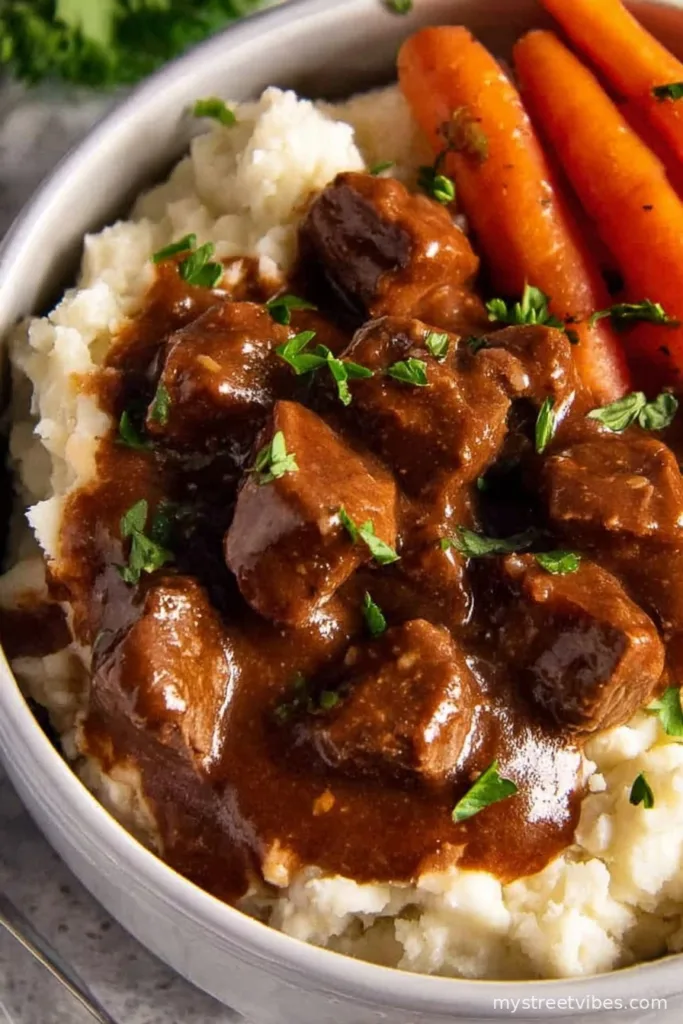
Alright, so picture this—rainy Saturday, I’m still in pajama pants at 2pm (don’t judge, or actually definitely judge). I should be cleaning the house, but what’s the rush? Instead, I’m tossing together my favorite Slow Cooker Beef Tips and Gravy and hoping the smell alone will trick my family into thinking I worked way harder than I did. I remember the first time I made this, we got distracted playing board games and forgot about dinner altogether until the whole place started smelling like a cozy roadside diner. My son announced, “It smells like grandma’s house in here,” and I don’t know, something about that made the lazy day feel kind of like a small win. Anyway, don’t expect me to follow any rules you see on a food blog, but trust me, this recipe hits the spot!
Why I Keep Coming Back to This Beefy Wonder
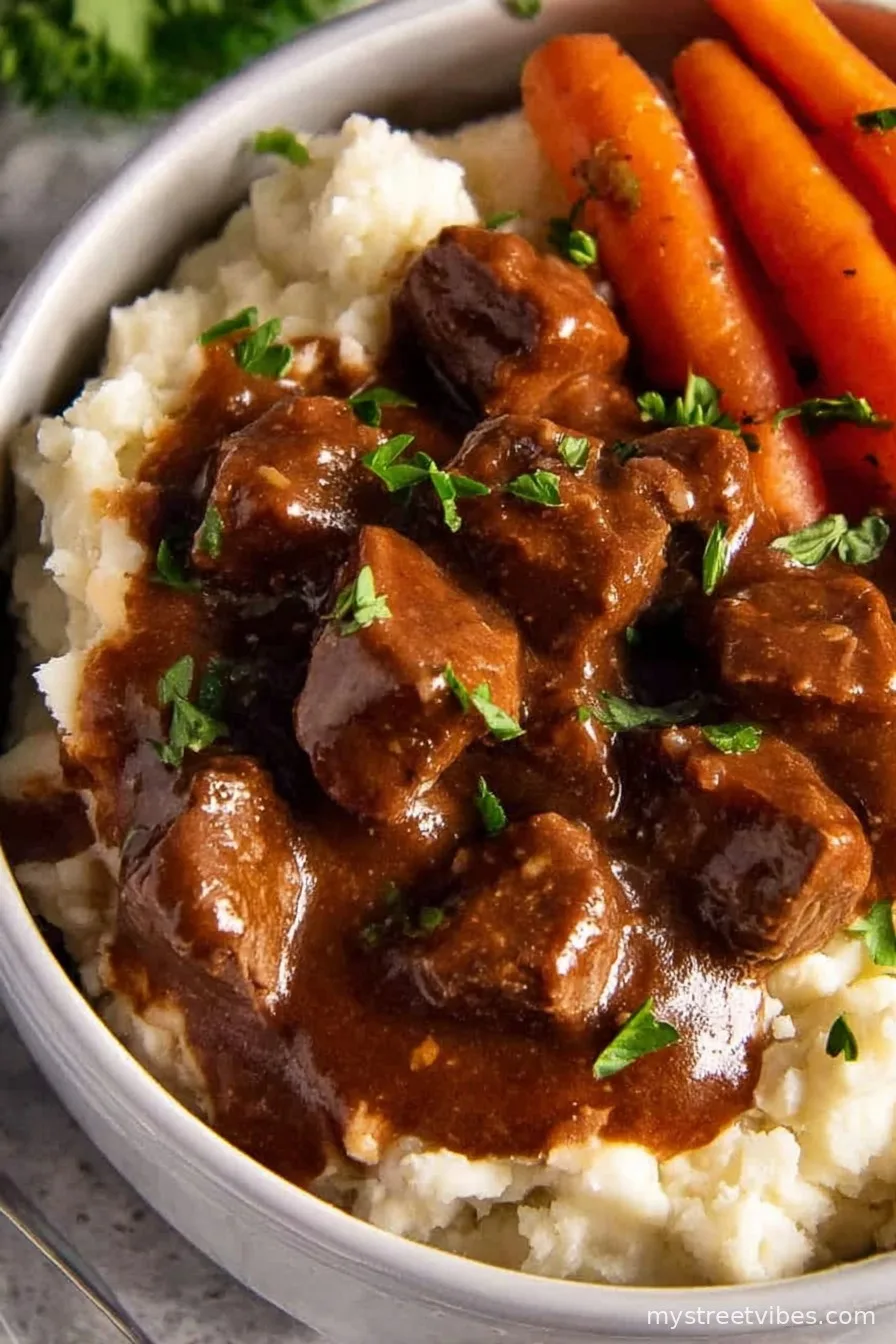
I make this when I’ve had it up to here (picture me holding my hand way above my coffee mug) with figuring out dinner plans. My family goes kind of nutty for this beef tips and gravy, mostly because it’s hearty and, let’s be real, there’s gravy. (Theoretically you could pour that on a tire and my husband would declare it “delicious.”) The Slow Cooker does the heavy lifting, so I can ignore it for hours; occasionally peeking in like a nosy neighbor. I used to get all stressed about browning the beef perfectly first, but honestly, even if you just dump it all in, it comes out tasty. Though—I’ll warn you—one time I tried to use fancy wine instead of stock and the kids politely told me it tasted “weird.” Lesson learned.
What You’ll Need (And a Few Like-You-Needed-Permission Substitutions)
- 2 pounds stew beef (or cut-up chuck roast; sometimes I use whatever’s on sale honestly)
- 1/4 cup all-purpose flour (I’ve even used cornstarch when I, uh, found out I was out of flour mid-prep)
- 2 tablespoons vegetable oil (olive oil works fine, or skip it if you can’t be bothered to brown the beef—I won’t tell)
- 1 medium onion, chopped (red or yellow, or no onion if someone in your house is onion-phobic)
- 2 cups beef broth (I like the low-sodium kind, or just dissolve a bouillon cube in water if that’s what you’ve got)
- 3 tablespoons Worcestershire sauce (or, as my cousin from Kentucky insisted, soy sauce when you’re in a pinch)
- 2 cloves garlic, minced (garlic powder in a rush is alright, just go modest on it)
- 1 teaspoon dried thyme (skipping it hasn’t ruined dinner yet)
- 1 teaspoon salt (adjust to taste—sometimes the broth is salty enough)
- 1/2 teaspoon black pepper
- 3 tablespoons cornstarch (to thicken right at the end, but sometimes I totally forget—and nobody riots)
- 3 tablespoons cold water (for the cornstarch slurry)
Here’s How I Usually Throw It All Together
- First off, if you’re feeling fancy (or just want extra flavor), pat the stew beef dry and toss it with the flour in a big bowl. Otherwise, skip this step. I’ve done both, and it’s honestly not a dealbreaker.
- Heat the vegetable oil in a skillet over medium-high and brown the beef in batches. Don’t overcrowd it, or it just steams. I always sneak a bite here—can’t help myself. If you’re in a rush, you can skip browning and pop everything right in the Slow Cooker. Done both, both taste great (different, but not bad different).
- Throw the onion, beef broth, Worcestershire, garlic, thyme, salt, and pepper into the slow cooker. Give it a quick stir. Dump the browned (or raw) beef on top.
- Cook on low for 7 to 8 hours. Or high for about 4 hours, if you’re behind schedule and everyone is already getting hangry. Sometimes it looks a wee bit grey at this stage—don’t panic! The magic happens at the end.
- About 30 minutes before dinnertime, stir together the cornstarch and cold water in a mug to make a slurry. Pour that in the slow cooker, stir it around, and let it finish up. The gravy thickens up; it’s very satisfying. If you forget or skip it, it’ll be more like beef in brothy sauce—not a disaster, just different.
- Serve it hot over mashed potatoes, egg noodles, or rice. Or straight out of the slow cooker if no one’s watching (I’ve been known to do this on a particularly rough Monday). Don’t forget to check for salt and pepper at the end!

Honestly Useful Notes (AKA Oops, Learned the Hard Way)
- If you want bigger flavor, add a splash of red wine (but… don’t overdo it, or it gets weirdly tangy—the one my kids didn’t love!)
- You can add mushrooms or carrots if you’ve got stubborn veggies sitting in the fridge.
- Prepping the flour coat does make a slightly richer gravy, but half the time I forget and no one calls me out.
Stuff I’ve Tried (Not All Winners!)
- Swapped out beef for pork once, but, eh, it didn’t quite scratch that comfort food itch.
- Tried it with mushroom soup instead of broth—super creamy, but less beefy. My neighbor loved it, I thought it was just okay.
- Sometimes tossed in a little frozen peas or green beans right at the end for color (and so I can pretend it’s healthy).

Gear Talk—But You Don’t Need Fancy Stuff
If you’ve got a slow cooker, you’re golden. I love my old, slightly cracked one from the 90s. No slow cooker? Just use a big, heavy pot on a low, low burner—check it every hour, though. Someone I know even uses the oven at 250. People are resourceful when they’re hungry!
How To Store (If There’s Any Left—Almost Never Is)
Pack leftovers in an airtight container and keep in the fridge for up to 3 days. I actually think the flavor gets even deeper on day two, but honestly, it’s usually picked clean the first night at my house. Reheat it gently; don’t microwave the heck out of it or you’ll get rubbery beef. Been there, regretted that.
How We Like To Eat Ours
In my house, it goes over a big pile of mashed potatoes. My partner swears by buttered egg noodles; my youngest dunks bread straight into the gravy. On holidays, we spoon it over Yorkshire puddings (don’t @ me, it’s so good). You do you!
My Hard-Earned, Beefy Wisdom
- Don’t rush the meat—tried turning up the slow cooker to “high” so it finished faster, and the beef was tough. Low and slow is the way here.
- If you skimp on the seasoning at first, pinch more salt in at the end. It wakes everything up (without it being salty, I promise).
- Taste as you go, if you can—one time I almost mixed up the sugar jar for salt. Disaster averted!
Questions I Get (and Sometimes Shrug At)
- Can I make this ahead? Yep, it reheats beautifully—just let it cool, refrigerate, then warm on the stove or microwave. (Maybe add a splash of broth so it doesn’t dry up.)
- Could I use chicken instead? Technically, I guess; but chicken just doesn’t get as dreamy in gravy as beef. I vote stick to beef.
- Is the browning step really necessary? Honestly, I skip it when I’m lazy/tired/busy. If you wanna impress, brown it. Otherwise, don’t stress.
- What’s the best cut of beef? Chuck roast or stew beef—that’s what I grab. Fancier beef seems wasted here. Pocketbook thanks me.
- Can I freeze it? Sure, though texture changes a little form freezing—still good, just not quite as perfect.
- Is it gluten free? Not as written, but just use cornstarch instead of flour and check your broth and you’re there.
There you go: my not-so-secret, slow cooker beef tips and gravy comfort dish. If you make it, let me know if you put your own spin on it (or if you find a way to make it last longer than a night… hats off to you!).
Ingredients
- 2 pounds stew beef (or cut-up chuck roast; sometimes I use whatever’s on sale honestly)
- 1/4 cup all-purpose flour (I’ve even used cornstarch when I, uh, found out I was out of flour mid-prep)
- 2 tablespoons vegetable oil (olive oil works fine, or skip it if you can’t be bothered to brown the beef—I won’t tell)
- 1 medium onion, chopped (red or yellow, or no onion if someone in your house is onion-phobic)
- 2 cups beef broth (I like the low-sodium kind, or just dissolve a bouillon cube in water if that’s what you’ve got)
- 3 tablespoons Worcestershire sauce (or, as my cousin from Kentucky insisted, soy sauce when you’re in a pinch)
- 2 cloves garlic, minced (garlic powder in a rush is alright, just go modest on it)
- 1 teaspoon dried thyme (skipping it hasn’t ruined dinner yet)
- 1 teaspoon salt (adjust to taste—sometimes the broth is salty enough)
- 1/2 teaspoon black pepper
- 3 tablespoons cornstarch (to thicken right at the end, but sometimes I totally forget—and nobody riots)
- 3 tablespoons cold water (for the cornstarch slurry)
Instructions
-
1First off, if you’re feeling fancy (or just want extra flavor), pat the stew beef dry and toss it with the flour in a big bowl. Otherwise, skip this step. I’ve done both, and it’s honestly not a dealbreaker.
-
2Heat the vegetable oil in a skillet over medium-high and brown the beef in batches. Don’t overcrowd it, or it just steams. I always sneak a bite here—can’t help myself. If you’re in a rush, you can skip browning and pop everything right in the slow cooker. Done both, both taste great (different, but not bad different).
-
3Throw the onion, beef broth, Worcestershire, garlic, thyme, salt, and pepper into the slow cooker. Give it a quick stir. Dump the browned (or raw) beef on top.
-
4Cook on low for 7 to 8 hours. Or high for about 4 hours, if you’re behind schedule and everyone is already getting hangry. Sometimes it looks a wee bit grey at this stage—don’t panic! The magic happens at the end.
-
5About 30 minutes before dinnertime, stir together the cornstarch and cold water in a mug to make a slurry. Pour that in the slow cooker, stir it around, and let it finish up. The gravy thickens up; it’s very satisfying. If you forget or skip it, it’ll be more like beef in brothy sauce—not a disaster, just different.
-
6Serve it hot over mashed potatoes, egg noodles, or rice. Or straight out of the slow cooker if no one’s watching (I’ve been known to do this on a particularly rough Monday). Don’t forget to check for salt and pepper at the end!
CLICK FOR NUTRITION INFO
↑
Approximate Information for One Serving
Serving Size:
1 serving
Calories:
345cal
Protein:
38 gg
Fat:
15 gg
Saturated Fat:
0g
Trans Fat:
0g
Cholesterol:
0mg
Sodium:
0mg
Potassium:
0mg
Total Carbs:
14 gg
Fiber:
0g
Sugar:
0g
Net Carbs:
0g
Vitamin A:
0
Vitamin C:
0mg
Calcium:
0mg
Iron:
0mg
Nutrition Disclaimers
Number of total servings shown is approximate. Actual number of servings will depend on your preferred portion sizes.
Nutritional values shown are general guidelines and reflect information for 1 serving using the ingredients listed, not including any optional ingredients. Actual macros may vary slightly depending on specific brands and types of ingredients used.
To determine the weight of one serving, prepare the recipe as instructed. Weigh the finished recipe, then divide the weight of the finished recipe (not including the weight of the container the food is in) by the desired number of servings. Result will be the weight of one serving.
Did you make this recipe?
Please consider Pinning it!