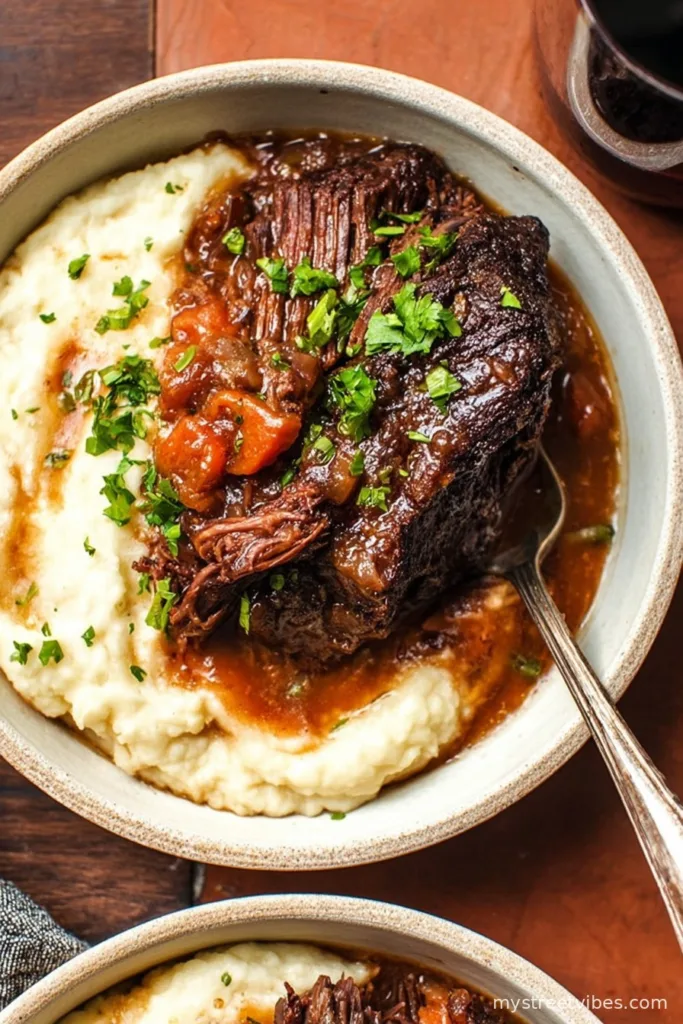
If You’ve Never Made Red Wine Braised Beef…
I still remember the first time I tried my hand at Red Wine Braised Beef. It was cold outside, I accidentally bought the wrong cut, and my dog managed to steal a carrot off the counter (classic Rosie). Turns out, none of that really mattered—because after a few hours simmering, what came out was pure comfort. Like, the kind of dish that makes you want to text your siblings just to say “You need to come over now.” Anyway, that’s my slightly chaotic introduction—let’s get into it!
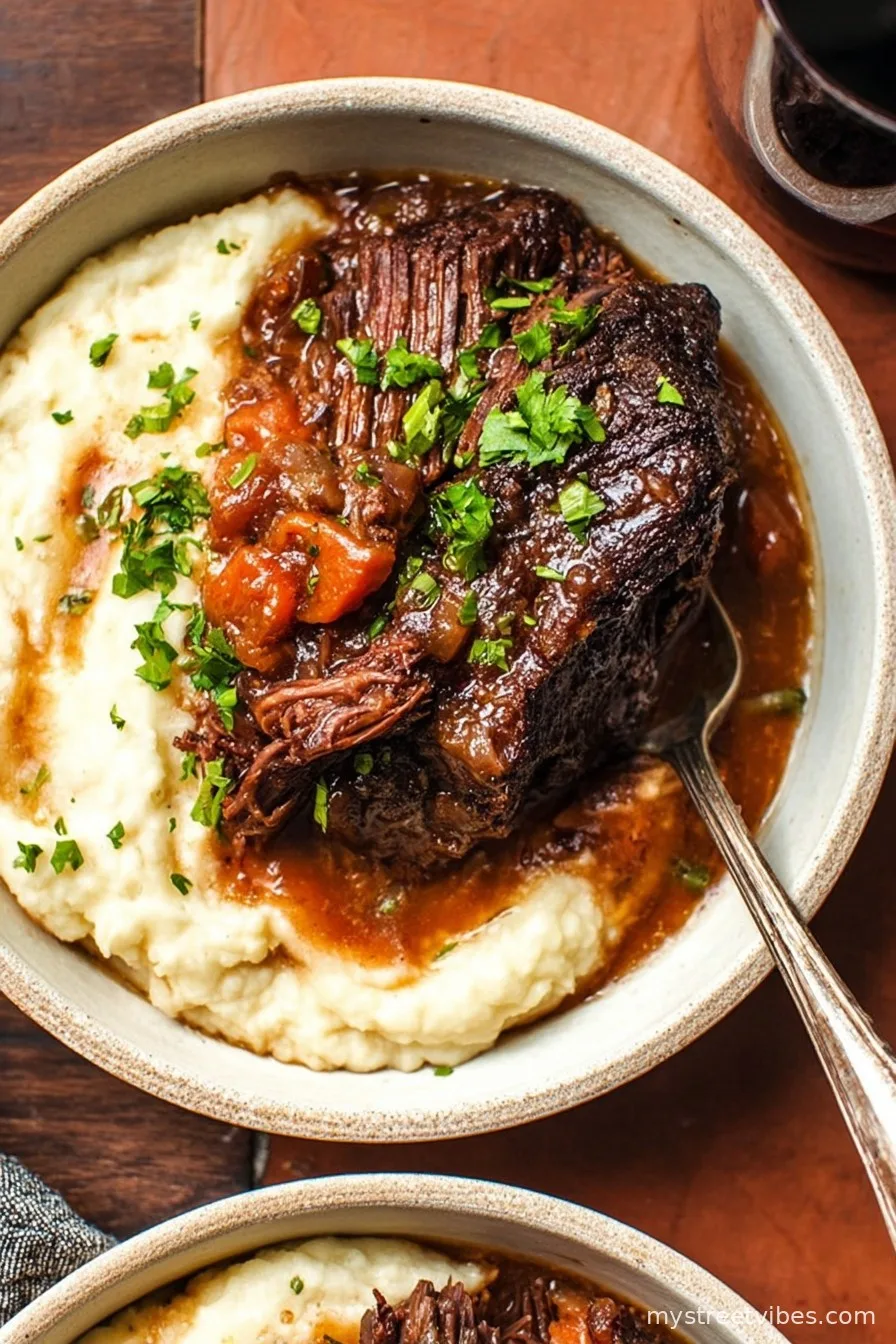
Why I Keep Coming Back to This Beefy Magic
I make this when I want the house to feel warm, even if it’s raining and the cat’s mad because I didn’t let her outside. My family goes a bit wild for this because it’s hearty, rich, and tastes somehow fancy even when I use the cheap wine that’s been lurking in the cabinet since Christmas (don’t tell my brother-in-law). If you’ve ever been frustrated by tough beef, trust me—I feel you. This is the recipe that convinced me patience really does pay off, even for kitchen klutzes.
Here’s What You’ll Need (With a Few Lazy Hacks)
- 3 pounds beef chuck roast, cut into chunky pieces (sometimes I use beef brisket if that’s what’s on sale—don’t stress!)
- Salt and pepper, to taste (my grandmother swore by that flaky salt, but honestly, regular table salt’s fine)
- 2 tablespoons olive oil (or, if I’m out, a big spoonful of butter—it’s fine, really)
- 1 large onion, roughly chopped (yellow, white, red, whatever—use what you have)
- 4 garlic cloves, smashed (sometimes I get lazy and use pre-minced, shh)
- 2 celery stalks, diced (if you skip this I won’t tell anyone)
- 3 carrots, cut into big-ish chunks (I once used baby carrots—not ideal, but nobody noticed)
- 2 tablespoons tomato paste (ketchup in a pinch, but it’s… not the same, let’s be honest)
- 2 cups dry red wine (not super fancy—just not super sweet; I use whatever’s open)
- 2 cups beef stock (or, chicken stock if you’re desperate, one time I even used veggie broth; it was pretty good!)
- 2 sprigs fresh thyme (dried thyme works but use less—learned that the hard way)
- 2 bay leaves
- 1 tablespoon Worcestershire sauce (optional, but
actually, it kinda kicks up the flavor—your call)
How I Pull It Together (Don’t Overthink This!)
- First, heat a big old Dutch oven or heavy pot on medium-high. Add the olive oil (or butter—that’s more forgiving than you think).
- Season those beef chunks with a decent shower of salt and pepper. Brown them in batches; don’t cram too many at once or they just steam. This takes a while; maybe that’s time for a quick email check?
- Remove the beef and toss in your onion, carrot, and celery. Stir it around until the onion looks see-through, which always seems to take longer when I’m hungry.
- Chuck in the garlic and tomato paste. Smells gloriously messy. Give it a minute or so. If it sticks a bit, just scrape (I freaked out the first time—it’s fine).
- Pour in the red wine. This is where I usually sneak a taste (and sometimes regret it). Scrape up all those browned bits, let the wine bubble for a few minutes so the alcohol chills out a bit.
- Drop the beef back in, plus any juices that snuck out. Add the stock, thyme, bay leaves, and Worcestershire sauce (if you like).
- Bring it up to a gentle simmer, pop the lid on, lower the heat, and leave it mostly alone for about 2 1/2 – 3 hours. Every now and then, poke in and stir. If it looks weird around hour two, all good—it comes together, promise.
- Once the beef is practically falling apart just by looking at it, fish out any herb twigs or bay leaves you spot. Taste. Add salt or pepper if needed (I always taste too many times here).
- If you want a little thicker sauce, take the lid off for the last 30 minutes. Or mash some carrots into the liquid. Or don’t—sometimes I forget, and nobody minds.
Random Notes I Wish I Knew Earlier
- If you use super cheap wine, it’s still good—just maybe don’t use that $2 stuff that smells like jam.
- Actually, I find it works better if you start this right after lunch so you’re not growing roots by dinner.
- Forgot to brown the beef once—tastes different, still edible, but not quite as deep (don’t panic!)
- I think this tastes even better the next day, fridge flavors unite and all that.
Variations I’ve Tried (Some Winners, One Flop)
- Added mushrooms once—hearty and yum.
- Swapped thyme for rosemary; people raved. On second thought, tarragon wasn’t my fave—kind of weirdly sweet?
- Sweet potatoes instead of carrots: tasty but softer; change it up if you’re feeling bold.
- That time I tried white wine:… not again. Let’s forget that one.

What If I Don’t Have a Dutch Oven?
Well, I do say a Dutch oven is handy, but honestly, a big oven-safe pot (with a lid) or even a slow cooker works. I used a battered roasting pan with foil once. Kinda worked; was a bit more fiddly, but dinner happened. We all survived.
Storing Leftovers (Assuming There Are Any)
This keeps in the fridge, tightly covered, about four days. Freezes nicely too, in those snap-lid containers. But, honestly, in my house it never lasts more than a day—I blame my brother.
How I Like to Serve It
I’m all about buttery mashed potatoes, but crusty bread for mop-up is a classic. My cousin dumps it over polenta; she swears it’s the best (could be true, I just love potatoes more). Sometimes I toss in peas at the end, if I’m feeling veg guilt.
My Don’t-Skip-This Lessons (Learned the Dumb Way)
- I once tried rushing the simmer—nope, tough beef. Trust the process; your jaw will thank you.
- Give the wine a little bubble time—that raw taste isn’t great, unless you’re into that sort of thing.
- If you under-salt, it’s blah. But over-salting isn’t much fun either, so start light and taste as you go (yes, I’ve wrecked a batch or two).
FAQ (You Wouldn’t Believe What People Ask!)
- Can I make this with a different kind of meat? You bet. Lamb shoulder, even pork—just might need to tweak cooking time, but go wild.
- Do I really have to use wine? Nope! Use extra broth, or a splash of balsamic for zip. It’ll be a little different, but still delish.
- Is it okay to use a slow cooker? Yep, just brown things first if you can, then toss it all in and go about your day. Maybe 8 hours on low?
- What if I forgot the tomato paste? Don’t stress. A little ketchup can work. Or honestly, just skip it—it’ll still be rich.
- My sauce is too runny! Help? Take the lid off, crank up the heat, stir for a bit. Or, mash some veggies right in. Works like a charm, in my experience.
And hey, if all else fails—just call it rustic. No one says no to a bowl of this after a long day. Even if the cat still won’t speak to you.
Ingredients
- 3 pounds beef chuck roast, cut into chunky pieces
- Salt and pepper, to taste
- 2 tablespoons olive oil (or a big spoonful of butter)
- 1 large onion, roughly chopped
- 4 garlic cloves, smashed
- 2 celery stalks, diced
- 3 carrots, cut into big-ish chunks
- 2 tablespoons tomato paste
- 2 cups dry red wine
- 2 cups beef stock
- 2 sprigs fresh thyme
- 2 bay leaves
- 1 tablespoon Worcestershire sauce (optional)
Instructions
-
1First, heat a big old Dutch oven or heavy pot on medium-high. Add the olive oil (or butter—that’s more forgiving than you think).
-
2Season those beef chunks with a decent shower of salt and pepper. Brown them in batches; don’t cram too many at once or they just steam. This takes a while; maybe that’s time for a quick email check?
-
3Remove the beef and toss in your onion, carrot, and celery. Stir it around until the onion looks see-through, which always seems to take longer when I’m hungry.
-
4Chuck in the garlic and tomato paste. Smells gloriously messy. Give it a minute or so. If it sticks a bit, just scrape (I freaked out the first time—it’s fine).
-
5Pour in the red wine. This is where I usually sneak a taste (and sometimes regret it). Scrape up all those browned bits, let the wine bubble for a few minutes so the alcohol chills out a bit.
-
6Drop the beef back in, plus any juices that snuck out. Add the stock, thyme, bay leaves, and Worcestershire sauce (if you like).
-
7Bring it up to a gentle simmer, pop the lid on, lower the heat, and leave it mostly alone for about 2 1/2 – 3 hours. Every now and then, poke in and stir. If it looks weird around hour two, all good—it comes together, promise.
-
8Once the beef is practically falling apart just by looking at it, fish out any herb twigs or bay leaves you spot. Taste. Add salt or pepper if needed (I always taste too many times here).
-
9If you want a little thicker sauce, take the lid off for the last 30 minutes. Or mash some carrots into the liquid. Or don’t—sometimes I forget, and nobody minds.
CLICK FOR NUTRITION INFO
↑
Approximate Information for One Serving
Serving Size:
1 serving
Calories:
520cal
Protein:
46 gg
Fat:
28 gg
Saturated Fat:
0g
Trans Fat:
0g
Cholesterol:
0mg
Sodium:
0mg
Potassium:
0mg
Total Carbs:
15 gg
Fiber:
0g
Sugar:
0g
Net Carbs:
0g
Vitamin A:
0
Vitamin C:
0mg
Calcium:
0mg
Iron:
0mg
Nutrition Disclaimers
Number of total servings shown is approximate. Actual number of servings will depend on your preferred portion sizes.
Nutritional values shown are general guidelines and reflect information for 1 serving using the ingredients listed, not including any optional ingredients. Actual macros may vary slightly depending on specific brands and types of ingredients used.
To determine the weight of one serving, prepare the recipe as instructed. Weigh the finished recipe, then divide the weight of the finished recipe (not including the weight of the container the food is in) by the desired number of servings. Result will be the weight of one serving.
Did you make this recipe?
Please consider Pinning it!