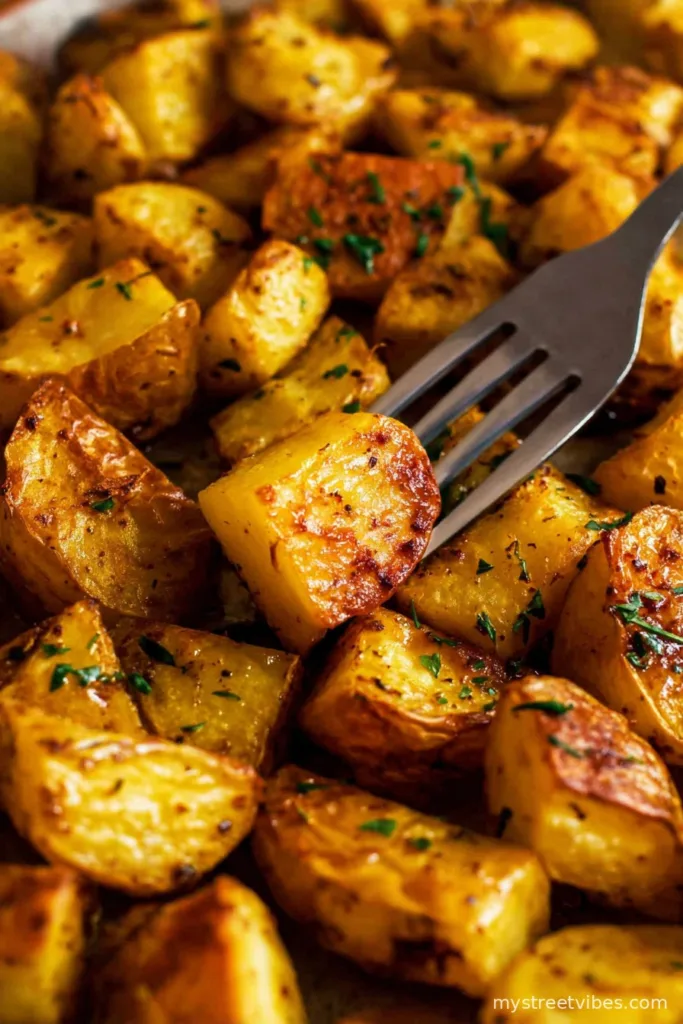
My Go-To Comfort: Easy Seasoned Roasted Potatoes
Okay, full disclosure right upfront: I started making these Easy Seasoned Roasted Potatoes in college mainly because I had a pan, a bag of spuds, and—let’s be honest—a total lack of confidence in my actual cooking chops (shout out to my roommate for eating every experiment with a straight face). Now, years later, I still whip these up when I want something that feels homey but doesn’t ask for anything too fancy. There was one time my cousin mistook them for those crispy British roasties—they’re not the same, but hey, flattery is flattery.
Why You’ll Love This Recipe (and Maybe Laugh a Bit)
I make this when we’re all gathered on a random Tuesday and someone says, “Let’s just do potatoes for dinner.” My family goes bonkers for it, especially since it takes me about eight minutes to throw everything together (assuming I’ve already scrubbed the stubborn farm dirt off the potatoes—pet peeve alert). If you’re known to burn toast, you’ll appreciate that these are basically foolproof unless, you know, you put the oven on broil and wander off for a FaceTime call. Not naming names here—even though it was me at least twice.
The Potato Players: Main Ingredients & a Few Trade Secrets
- Roughly 800g (that’s 1.75 pounds-ish) of potatoes, cut into chunky cubes (I’ve used everything from Yukon Golds to those red ones my neighbor swears by; honestly, it all works. Granny Betty claims only King Edwards count, but Betty also measures flour by handfuls.)
- 2 to 3 tablespoons good olive oil (I admit it, sometimes it’s sunflower oil because that’s what’s in the cupboard)
- 1 teaspoon smoked paprika or normal, depending on mood
- About 1/2 teaspoon garlic powder (or fresh, finely chopped, if you’re feeling energetic)
- Salt—just a generous pinch, you learn what feels right, or try 1 teaspoon
- Black pepper—again, as much as you like (I’m heavy-handed, can’t help it)
- Optional: a sprinkle of dried thyme or rosemary, or a mix of whatever green flakes you find at the back of the spice cupboard
- If desperate: a premixed Italian seasoning blend also works wonders (no shame in shortcuts, right?)
How I Actually Make These Roasted Potatoes
- Preheat your oven to 220°C (428°F if you like weird numbers; don’t sweat a few degrees here—just go hot).
- Chop the potatoes. I leave the skin on, mainly because peeling is boring, but also because it makes them crispy. Throw them in a big bowl (this is usually where a flying chunk escapes across the counter—don’t be alarmed).
- Pour over the oil. Add all the seasonings. Toss it all about with your hands—yes, hands are best, though I grab a wooden spoon if I don’t feel like getting oily. This is the moment to sneak a sniff—or even a taste? Sometimes I can’t resist; raw potato probably isn’t for everyone.
- Spread the coated potatoes out on a baking tray. Ideally, line it with parchment, but if you forget, just embrace the crispy bits that stick (they’re the best bits anyway).
- Roast for 30–40 minutes. At about 20 minutes, give the tray a good shake or use a spatula to flip things about. Don’t panic if some edges darken more than others—variety is key.
- Done when golden and crisp. If they get too brown on the corners, well, just call them “rustic.” Let cool for a few minutes; these are basically mouth-burners straight from the oven. Ask me how I know.
Weird Little Notes from My Kitchen
- I tried microwaving the potatoes to “get a head start”—they just turned mushy. Lesson learned.
- If you under-salt them, they taste kinda flat. But you can always sprinkle more at the end.
- Potatoes cut too big take way longer; too tiny and you basically get potato chips. Which… honestly, not the worst thing.
How I’ve Tweaked or Totally Botched It (Variations!)
- I once swapped the oil for melted butter. Actually, that’s a good thing. Tastes way richer.
- Sweet potatoes? It’s… fine, but not as crispy as regular potatoes, and they burn fast. Proceed with caution.
- A squeeze of lemon before serving sometimes makes me feel fancy, but my kid says it’s “weird breakfast potato energy.”
No Fancy Gear? No Problem
Usually, I use a battered old baking sheet I got from my mum. If you’re missing a tray, I’ve even used one of those pizza pans with holes (works okay, just expect some mess at the bottom of the oven—par for the course). An air fryer will do in a pinch, but you have to do about six batches. Consider it a patience exercise!

Keeping ‘Em Fresh (But Honestly, Just Eat ‘Em Now)
Store leftovers in a container in the fridge—they’re actually decent reheated in the oven (about 180°C or 350°F for 10 minutes), even better if you toss them under the broiler for a sec. That said, in my house they rarely make it past the next morning—I caught someone sneaking them cold with mayo, which, hey, no judgment. They’re technically fine for up to three days, but I think they taste better on day two anyway, weirdly?
How We Serve These at My Place
I like them best next to roast chicken, with plenty of whatever pan juices are around. If it’s a Sunday, I might serve them with a fried egg on top and call it brunch. My partner dunks them in aioli; my youngest prefers… ketchup mixed with pickle juice? Kids are wild. Sometimes, if I’m really feeling frisky, I load ’em up with cheese and green onions and pretend they’re poutine (spoiler: they are not, but we don’t tell anyone).
Hard-Earned Pro Tips (aka Learn from My Sins)
- I once tried roasting on foil—never again. The potatoes stuck and half of ’em lost their crunchy jackets. Just use parchment, or honestly, go bare and scrape later.
- If you pile them up instead of spreading them out, they’ll just steam—no crispiness. I keep making this mistake though, usually when I’m tired and rushing. Every time, regret.
- Double the batch if feeding more than four. People eat more potatoes than you’d think and you’ll be left with a pan of sadness staring at you when you wanted seconds.
FAQ: Potato Panic Hotline
- Can I use sweet potatoes?
- Yep! But they roast up softer and they’re a little trickier—they burn fast. Keep an eagle eye.
- Do you need to parboil the potatoes?
- Nope. I mean, it might help with ultimate crisp, but honestly, more washing up, and I’m not that dedicated.
- What about fresh herbs?
- You can totally toss in fresh rosemary or thyme, but add it near the end or it goes weird and black. Live and learn!
- Can I make these in advance?
- You can, and it’s actually not bad—crisp them up in a hot oven before serving. But, honestly, nothing beats fresh from the pan. Side note: I actually prefer them as leftovers, cold with hot sauce, but don’t quote me on that.
- No olive oil—what now?
- Don’t sweat it; veg oil, canola, even coconut oil (if you like the taste) all seem to work. Ghee does too, I tried once just for fun.
And that’s it. I could talk spuds all day. But hey—if you want a fancier riff, check out this wild method from the folks at Serious Eats; it’s a marathon, not a sprint, but worth a browse.

Ingredients
- 2 pounds russet or Yukon gold potatoes, cut into 1-inch cubes
- 3 tablespoons olive oil
- 1 teaspoon garlic powder
- 1 teaspoon paprika
- 1 teaspoon dried oregano
- 1/2 teaspoon dried thyme
- 1 teaspoon salt
- 1/2 teaspoon black pepper
- Fresh parsley, chopped for garnish (optional)
Instructions
-
1Preheat the oven to 425°F (220°C). Line a large baking sheet with parchment paper or lightly grease it.
-
2In a large bowl, toss the potato cubes with olive oil, garlic powder, paprika, dried oregano, dried thyme, salt, and black pepper until evenly coated.
-
3Spread the seasoned potatoes in a single layer on the prepared baking sheet.
-
4Roast in the preheated oven for 30-35 minutes, turning the potatoes halfway through, until golden brown and crispy.
-
5Remove from the oven and garnish with fresh chopped parsley if desired. Serve hot.
CLICK FOR NUTRITION INFO
↑
Approximate Information for One Serving
Serving Size:
1 serving
Calories:
220cal
Protein:
4 gg
Fat:
8 gg
Saturated Fat:
0g
Trans Fat:
0g
Cholesterol:
0mg
Sodium:
0mg
Potassium:
0mg
Total Carbs:
34 gg
Fiber:
0g
Sugar:
0g
Net Carbs:
0g
Vitamin A:
0
Vitamin C:
0mg
Calcium:
0mg
Iron:
0mg
Nutrition Disclaimers
Number of total servings shown is approximate. Actual number of servings will depend on your preferred portion sizes.
Nutritional values shown are general guidelines and reflect information for 1 serving using the ingredients listed, not including any optional ingredients. Actual macros may vary slightly depending on specific brands and types of ingredients used.
To determine the weight of one serving, prepare the recipe as instructed. Weigh the finished recipe, then divide the weight of the finished recipe (not including the weight of the container the food is in) by the desired number of servings. Result will be the weight of one serving.
Did you make this recipe?
Please consider Pinning it!!