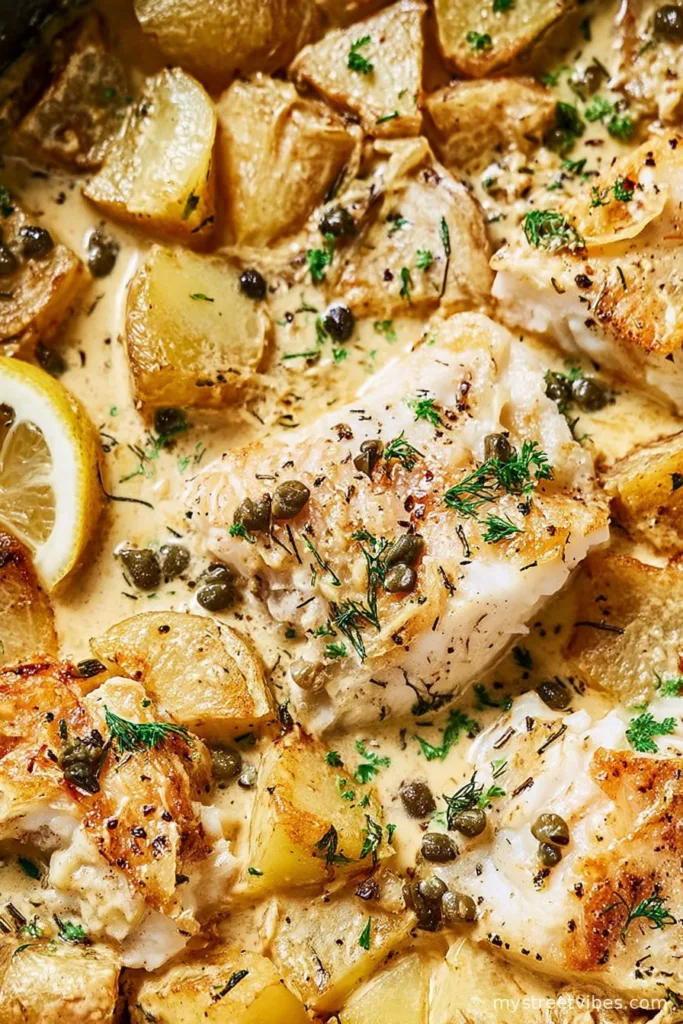
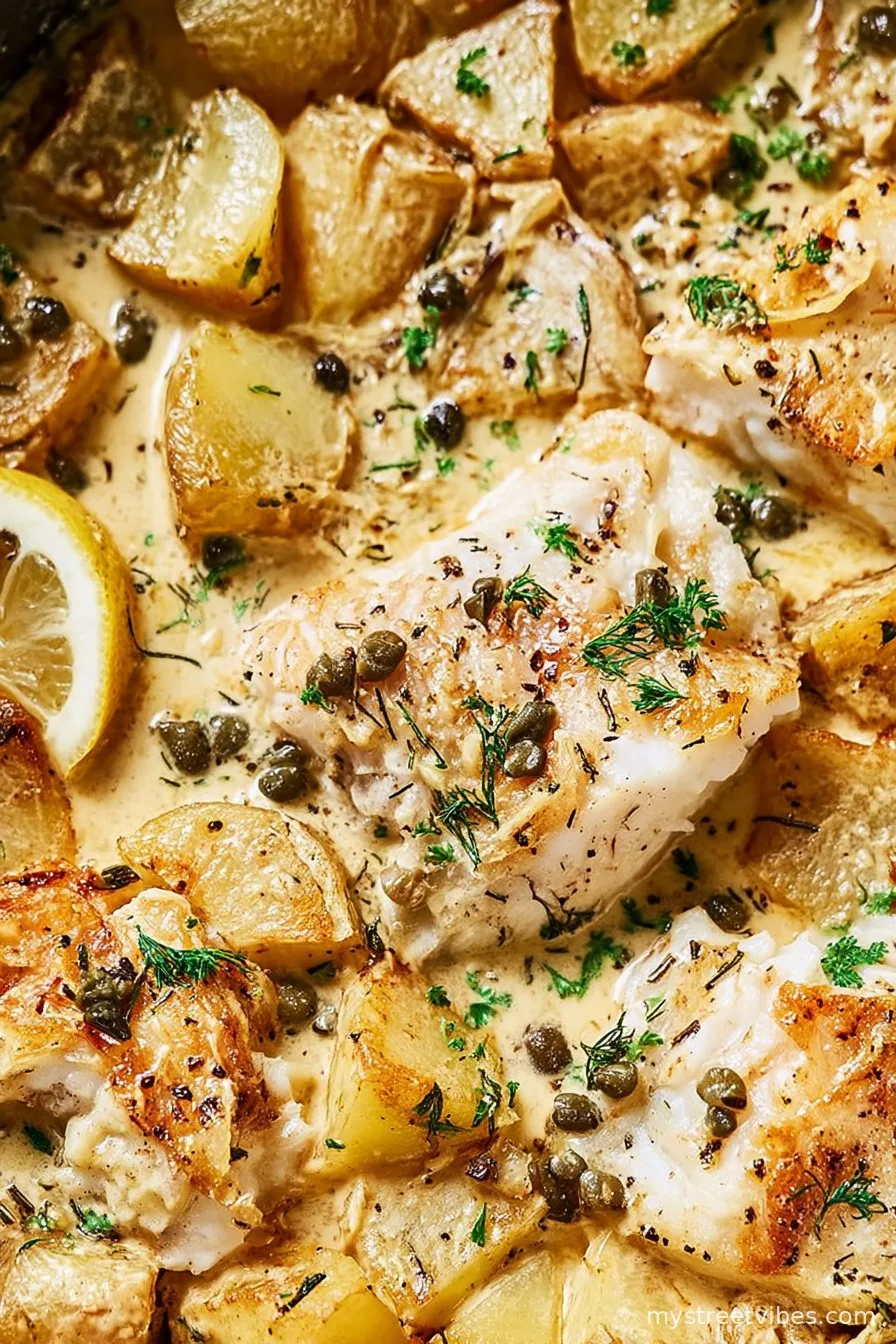
Right, so let me tell you about the first time I made this cod & potatoes in rosemary cream sauce… It was one of those rainy Tuesdays when all you want is a proper hug in a bowl. My father-in-law was coming over (he’s lovely, but a total food traditionalist—deeply suspicious of “fancy” fish), and I just needed something reassuring, you know? Honestly, I’d planned to make roast chicken, but my local shop was out—so there I was, with a bag of spuds and some cod I didn’t want to mess up. And that’s how this whole thing started!
Why I Keep Coming Back to This Dish
I make this whenever we crave something cozy but can’t face another bowl of soup, or when fish fingers are just too bleak—my family goes absolutely bonkers for the rosemary cream (and if you ask my partner, he pretty much bathes the potatoes in it). I love it because cod cooks super-fast, and even the kids will eat it (OK, they pick out rogue sprigs of rosemary, but still). Funny thing: I used to be terrified of cream sauces, but this one’s almost goof-proof—well, unless you walk away at a crucial moment like I did once. But let’s not dwell.
What You’ll Need (With My Rambling Ingredient Tips)
- 4 small-medium potatoes, peeled & cut into thick slices (waxy is best, but honestly, even floury ones hold up okay—my gran swears by Maris Piper, but any spud that doesn’t totally collapse will do)
- 2 tablespoons olive oil (sometimes I switch in butter half-and-half for extra richness)
- 4 cod fillets (about 150g each; I’ve even used haddock when cod was a bit pricy)
- Salt and black pepper (my husband throws in crazy amounts—mildly alarming, but you do you)
- 1 small onion, thinly sliced (red or white; I once used shallots and it was super fancy-feeling, just sayin’)
- 2 garlic cloves, minced (or, on a lazy day, a squeeze of the jarred stuff—I won’t tell)
- 150ml (about 2/3 cup) double cream (heavy cream in the US—sometimes I use crème fraîche if that’s what’s lurking in the fridge)
- 100ml (just under ½ cup) chicken or veggie stock (cube, carton, whatever—you could even use water, but it’s less tasty)
- 1 tablespoon fresh rosemary, chopped (I have used dried in a pinch; use about 1 tsp and rub it between your fingers for full aroma. Rosemary can be bossy, so don’t go mad.)
- A squeeze of lemon juice (half a lemon does the trick; bottled is absolutely fine for busy nights)
How I Usually Throw This Together
- First off, get those potato slices par-cooked: put them in a saucepan, cover with cold salted water, then bring to a soft boil. Let them simmer 7-8 minutes (barely tender—don’t let them go mushy!). Drain and leave aside. I’ve overcooked them so many times… just trust your fork.
- Meanwhile, heat the olive oil in a biggish frying pan over a medium heat. Add onion and cook 4-5 minutes until soft, not brown (honestly, I always let them go a bit golden, and it’s never ruined things).
- Tip in the garlic, fry about a minute, then tumble in the par-cooked potatoes. Keep gently turning so they start to get just a hint of colour.
- Pour in the cream and stock, give everything a gentle stir, then chuck in the rosemary, a bit of salt, loads of pepper if you like, and bring to a soft simmer. It’ll smell like you’ve suddenly become French. This is the part where I usually sneak a taste—stir occasionally so nothing catches.
- Once the sauce has thickened up a bit (say 5-7 minutes; don’t panic if it looks a bit thin at first), lay the cod fillets on top, sprinkle them with a little more salt and a squeeze of lemon, then cover with a lid (or whatever lid kind of fits—tin foil, anyone?).
- Let everything gurgle away gently for 8-10 minutes, until the cod flakes easily (lift one up with a fork and check—don’t be shy). If your potatoes bubble to the top and get crispy on the edge… that’s bonus joy.
- Spoon everything into big bowls, making sure everyone gets plenty of sauce. If you’re feeling extra, scatter on some fresh parsley before serving. Or not. Up to you.
Some Notes I Wish I’d Known Sooner
- Actually, I find it works better if you let the sauce bubble for a minute before adding the cod—the flavours get more friendly (but if you’re in a rush, chuck ’em in, no judgement).
- Be careful with dried rosemary—one time I was heavy-handed and everyone spent dinner picking it out of their teeth… live and learn.
- If the sauce gets too thick (happens to me every third time), just splash in a bit more stock or water. Easy fix.
Variations and Experiments (Some Good, Some…Not So Much)
- Swapped in smoked haddock—deliciously different, though it did make the sauce more robust. Would do again!
- Used dill instead of rosemary once (because the rosemary in my garden looked a bit sad). It worked, but I still prefer the original—dill’s a bit too polite for this dish.
- Tried tossing in a handful of frozen peas near the end. Regret: they went a bit wrinkly. Maybe next time I’ll use fresh or just skip the peas.

About Gear: Don’t Panic If You Don’t Have Everything
A big sturdy frying pan is brill, but I’ve also cobbled this together in a deep, heavy saucepan and even a hob-friendly baking dish once (during kitchen chaos). Don’t stress about the right lid—tin foil or even a sturdy dinner plate has worked for me, so be creative, it’s not a science project.
Storage Realities
Technically this keeps alright in the fridge for up to 2 days, tightly covered. In my house it never lasts that long (leftovers vanish mysteriously), but if you do have extra, I think it tastes better the next day—flavours seem to mellow out. Just warm it gently so the cod doesn’t toughen up.
Serving: My Personal Favourites
For me, a hunk of warm brown bread is essential (the kind with seeds is best for mopping up the creamy bits). My cousin insists on a little side salad with a sharp vinaigrette, if that’s your style. Sometimes we have it family-style, right from the pan—no shame, less washing up!
What NOT to Rush: My Biggest Pro Tips
- Once I tried cranking up the heat to make it “go faster”—big mistake. Sauce split and potatoes got gluey. Just let it simmer low and slow. Patience wins.
- Let the onions get properly soft—don’t shortcut this, or you end up with weird onion crunch at the end.
Real Qs I’ve Actually Been Asked
- Can I use frozen cod? Absolutely, just thaw it first and pat it dry. Sometimes I forget to take it out—if it’s still a bit icy, it just takes a minute or two longer in the pan.
- Is there a dairy-free version? I’ve tried coconut cream, but actually, I didn’t love the flavour combo. Maybe try oat cream with a squeeze more lemon? Worth a shot.
- What if I only have sweet potatoes? Won’t lie, I’ve done this and it’s surprisingly tasty, but the sweet clashes a bit with rosemary for me. Maybe try sage or thyme instead.
- My sauce curdled! Help? Usually means the heat was too high or citrus went in too soon. But it’ll still taste good (if not Instagrammable), power through!
Oh, and side note—this dish smells so good while it’s cooking that every time I make it, my kids wander into the kitchen and beg to ‘taste test’. Must be doing something right, eh?
Ingredients
- 4 small-medium potatoes, peeled & cut into thick slices (waxy is best, but honestly, even floury ones hold up okay—my gran swears by Maris Piper, but any spud that doesn’t totally collapse will do)
- 2 tablespoons olive oil (sometimes I switch in butter half-and-half for extra richness)
- 4 cod fillets (about 150g each; I’ve even used haddock when cod was a bit pricy)
- Salt and black pepper (my husband throws in crazy amounts—mildly alarming, but you do you)
- 1 small onion, thinly sliced (red or white; I once used shallots and it was super fancy-feeling, just sayin’)
- 2 garlic cloves, minced (or, on a lazy day, a squeeze of the jarred stuff—I won’t tell)
- 150ml (about 2/3 cup) double cream (heavy cream in the US—sometimes I use crème fraîche if that’s what’s lurking in the fridge)
- 100ml (just under ½ cup) chicken or veggie stock (cube, carton, whatever—you could even use water, but it’s less tasty)
- 1 tablespoon fresh rosemary, chopped (I have used dried in a pinch; use about 1 tsp and rub it between your fingers for full aroma. Rosemary can be bossy, so don’t go mad.)
- A squeeze of lemon juice (half a lemon does the trick; bottled is absolutely fine for busy nights)
Instructions
-
1First off, get those potato slices par-cooked: put them in a saucepan, cover with cold salted water, then bring to a soft boil. Let them simmer 7-8 minutes (barely tender—don’t let them go mushy!). Drain and leave aside. I’ve overcooked them so many times… just trust your fork.
-
2Meanwhile, heat the olive oil in a biggish frying pan over a medium heat. Add onion and cook 4-5 minutes until soft, not brown (honestly, I always let them go a bit golden, and it’s never ruined things).
-
3Tip in the garlic, fry about a minute, then tumble in the par-cooked potatoes. Keep gently turning so they start to get just a hint of colour.
-
4Pour in the cream and stock, give everything a gentle stir, then chuck in the rosemary, a bit of salt, loads of pepper if you like, and bring to a soft simmer. It’ll smell like you’ve suddenly become French. This is the part where I usually sneak a taste—stir occasionally so nothing catches.
-
5Once the sauce has thickened up a bit (say 5-7 minutes; don’t panic if it looks a bit thin at first), lay the cod fillets on top, sprinkle them with a little more salt and a squeeze of lemon, then cover with a lid (or whatever lid kind of fits—tin foil, anyone?).
-
6Let everything gurgle away gently for 8-10 minutes, until the cod flakes easily (lift one up with a fork and check—don’t be shy). If your potatoes bubble to the top and get crispy on the edge… that’s bonus joy.
-
7Spoon everything into big bowls, making sure everyone gets plenty of sauce. If you’re feeling extra, scatter on some fresh parsley before serving. Or not. Up to you.
CLICK FOR NUTRITION INFO
↑
Approximate Information for One Serving
Serving Size:
1 serving
Calories:
410cal
Protein:
32gg
Fat:
18gg
Saturated Fat:
0g
Trans Fat:
0g
Cholesterol:
0mg
Sodium:
0mg
Potassium:
0mg
Total Carbs:
31gg
Fiber:
0g
Sugar:
0g
Net Carbs:
0g
Vitamin A:
0
Vitamin C:
0mg
Calcium:
0mg
Iron:
0mg
Nutrition Disclaimers
Number of total servings shown is approximate. Actual number of servings will depend on your preferred portion sizes.
Nutritional values shown are general guidelines and reflect information for 1 serving using the ingredients listed, not including any optional ingredients. Actual macros may vary slightly depending on specific brands and types of ingredients used.
To determine the weight of one serving, prepare the recipe as instructed. Weigh the finished recipe, then divide the weight of the finished recipe (not including the weight of the container the food is in) by the desired number of servings. Result will be the weight of one serving.
Did you make this recipe?
Please consider Pinning it!