One Pot, Cozy Vibes: Why I Keep Making Chicken Congee
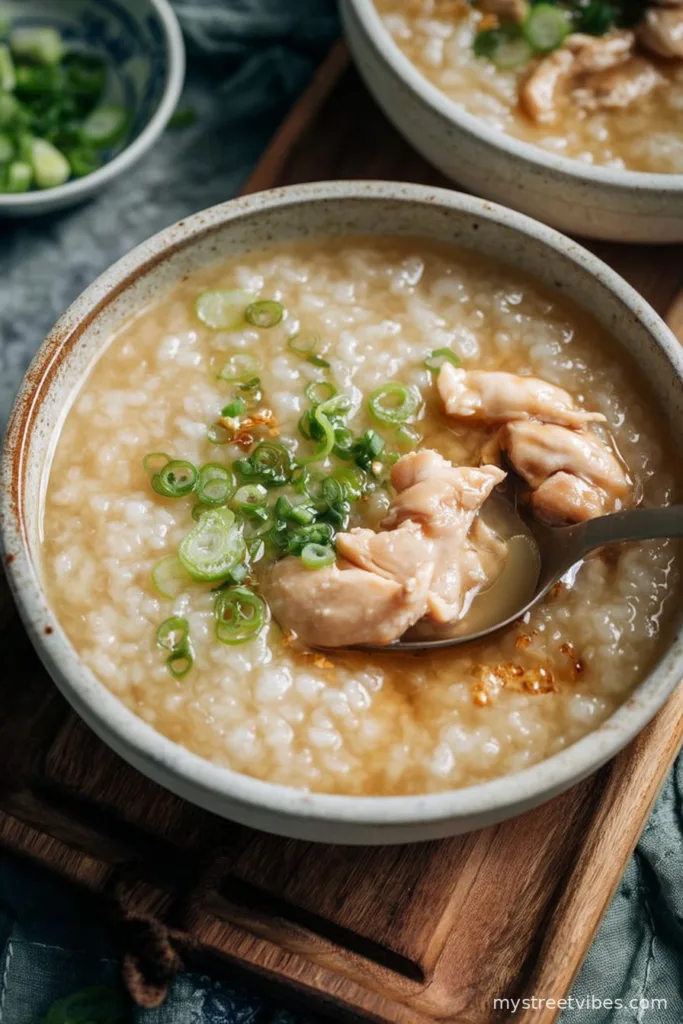
Okay, first off—if you haven’t made chicken congee before, get ready to enter a whole new world of comfort food. It’s basically my answer to those drizzly mornings or when the house just feels a little too quiet. You know, the kind of food that hugs you from the inside out? The first time I cooked it, the rice basically had its own mind (seriously, I thought I’d made rice pudding by mistake). But hey, I grew up with a big pot of this gurgling on the stove, my mum tossing a bit of ginger in with a little smile—she said it kept the colds away; I think she just liked the taste.
But here’s the thing: if you mess up a little, it’s still delicious. Congee is forgiving, almost like an old friend who doesn’t mind your funky socks or that time you accidentally dropped your phone in the soup (not recommended but… stuff happens).
Why You’ll Love This:
- I whip this up when there are leftover rotisserie chicken bits rattling around the fridge (seriously, this happens more than I’d like to admit!).
- My family basically lines up at the kitchen door because—let’s be honest—there’s something about bubbling, gingery rice that makes people act like there’s a queue at the best ramen shop in town.
- Sometimes, when I’m feeling a bit lazy, I just dump everything into the pot (don’t worry, no one notices if you cut a corner here and there).
- Congee also saves you when you’re under the weather, or just pretending to be so you don’t have to go out in crappy weather.
- I used to end up with concrete instead of porridge—if that’s you, don’t worry, we can fix it!
What You’ll Need: My Not-So-Strict Ingredient List
- 1 cup jasmine rice (sometimes I use plain old long grain—no shame, works fine)
- 7-8 cups chicken broth (store brand is fine but honestly, homemade is magic—in a pinch I’ll use water with a couple of bouillon cubes, too)
- 2 chicken breasts or 2 cups cooked shredded chicken (leftover roast chicken is perfect, even supermarket rotisserie chicken if you’re out of energy)
- Thumb-sized bit of ginger, sliced thin (if you love ginger, pile it in; if you don’t, just one or two slices won’t offend)
- 2-3 cloves garlic, smashed (my friend swears by the bagged pre-peeled stuff, I say just use what you have)
- 2 green onions, chopped (Mom always used both the green and the white bits—your call)
- 1 tablespoon soy sauce (sometimes I dash in fish sauce, but only if my partner isn’t peering over my shoulder)
- Salt & pepper, to taste
- Optional upgrades: a drizzle of sesame oil at the end, a small handful of fried shallots, preserved egg (if you’re feeling fancy), or a shake of white pepper
Here’s How I Make Chicken Congee (Don’t Panic If It Looks Odd)
- Rinse your rice a couple of times until the water runs less cloudy. Not crystal clear, I mean who has time for that, just ‘less milky’—good enough.
- In a big pot, tip in the rice, broth, ginger, and garlic. Bring to a boil. This is where I always forget to turn the heat down and everything foams like a science experiment. When it boils, give it a stir and knock the heat down low-low so it barely blips.
- Add your chicken. If it’s raw, chuck the breasts in whole; if it’s cooked, just toss the shreds in after about 30 min (they don’t need the bath as long).
Yes, sometimes I fumble and drop the chicken in at the wrong time—it doesn’t really matter. - Let it simmer, stirring sort of often (ish? Every 10 min unless you get distracted). It’ll start looking thick and gloopy after 45-60 min. If it gets too thick, just pour in a half cup of water—trust me, it’ll forgive you.
- Pull out the chicken if you used raw breasts, shred it with a fork, and dump it back in. Taste! Is it bland? More soy or salt. Too salty? More water. This is when I sneak a spoonful or three. Quality control.
- Throw in your chopped green onions, dash of sesame oil, or whatever else suits your mood.
Yes, you can totally double the toppings. I don’t even bother with measuring those.
Notes from Trial and Error (Oh, the Mishaps!)
- If you use only water instead of broth, it’ll be gentler (good for sick days) but a smidge less flavorful. Sometimes I add a splash of fish sauce if it’s too bland.
- Steel pot’s nice, but yes—I once used a massive frying pan. Took ages to clean but did the job. A rice cooker with porridge mode, if you have one, is a game-changer, but don’t stress if you don’t own the latest gear.
- I found out (accidentally) that if you cook it too long and leave it on the stove, it forms a tasty crust at the bottom. My uncle loves scraping that stuff out, but you might want to soak the pot for a bit after—just warning you.
Variations I’ve Tried (Some Good, One Not…)
- Added a runny boiled egg on top—almost like breakfast ramen. Highly recommend.
- Used turkey instead of chicken after Thanksgiving—and maybe it’s just me, but it sorta missed the mark, though it fills you up!
- Veggie version with mushrooms, carrots, and veggie stock instead of chicken (won me zero cheers from the die-hards but I liked it, so).
Gear Check: What You’ll Actually Need
- Biggish soup pot or Dutch oven (I once used two medium saucepans, so if that’s all you have, just halve the recipe in each—bit of a faff, but it works!)
- Sharp knife. I keep meaning to get mine professionally sharpened, but hey, a steak knife has rescued me more than once.
- Cutting board (though in a pinch I’ve used a clean baking tray… not ideal, but it got me by when the real one was hidden under dirty dishes).

Got Leftovers? (Rare, But Possible…)
Pop any extra congee into containers and stick ’em in the fridge; it’ll stay happy for about 3 days. You do need to add a splash (or a slug) of water when reheating, otherwise it’s more like… rice glue. Honestly though, in my house it never lasts more than a day!
How We Serve It At Home
We like to load up on crispy shallots (store-bought mostly, because making my own always leads to smokey drama), plus a big spoonful of chili oil. Sometimes I throw a handful of chopped cilantro, but that’s not everyone’s cuppa. On particularly cold evenings, I set the bowls on a towel, right on the coffee table so we can eat with our feet up—perhaps uncouth, but pure joy.
Things I’ve Learned the Hard Way (My Not-So-Secret Pro Tips)
- Don’t try to rush it by cranking up the heat. I did, and ended up scraping burned rice cement off the pot for an hour; slow and steady wins the flavor race.
- Actually, I find it works better if you just leave it alone—with an occasional stir—rather than hovering like a hen over eggs.
- If it looks too watery after 60 minutes, just keep simmering. Or if it’s too thick? Add a splash of broth—it always evens out.
Questions People (Actually) Ask Me
- Can I freeze chicken congee? Yeah, but the texture does get a little odd when you thaw it. If that doesn’t bug you, go for it! I tend to just make a half batch and eat it fresh instead. (Serious Eats did a whole breakdown of congee freezing—worth a look if you’re nerdy like me here).
- What kind of rice works best? Short or medium grain gives the classic smooth, almost creamy congee. Long grain is fine in a pinch. I’ve even mixed a little sticky rice once when I ran out—and it was honestly pretty decent. Some folks on Reddit have ALL the opinions about this here.
- Can I make this in a pressure cooker? For sure, and it’s quick (about 20 min under pressure), but you might need to play with water ratios.
Honestly though, I love having a pot gently bubbling on the stove—ambience (and you can listen to some tunes while you wander off between stirs). - Mine came out super thick—what did I do wrong? Probably nothing! Just add water and stir it up good. The stuff is meant to be different for everyone (I like it a bit rib-sticking; my aunt likes it soupy enough to drink with a straw).
- Is congee for breakfast or dinner? Yes. 😉
And if you want even more deep-dive kitchen gossip, you can check out a lovely video demonstration by Souped Up Recipes over on YouTube! Somehow, watching someone else stir a pot can be weirdly comforting, too.
If you give it a go, let me know how it turns out—or what went sideways. (And if you drop your phone in it, I’m blaming the congee, not you.)

Ingredients
- 1 cup jasmine rice, rinsed
- 8 cups chicken stock
- 2 boneless skinless chicken breasts
- 1 tablespoon fresh ginger, thinly sliced
- 2 garlic cloves, minced
- 1 teaspoon salt
- 1/2 teaspoon white pepper
- 2 green onions, sliced (for garnish)
- 1 tablespoon soy sauce (optional)
- 1 tablespoon sesame oil (for garnish)
Instructions
-
1Rinse the jasmine rice under cold water until the water runs clear. Drain well.
-
2In a large pot, add the rice, chicken stock, ginger, garlic, and salt. Bring to a boil over medium-high heat.
-
3Add the chicken breasts to the pot. Reduce heat to low, cover, and simmer for 40 minutes, stirring occasionally to prevent the rice from sticking.
-
4Remove the chicken breasts and shred them using two forks. Return shredded chicken to the congee and continue to cook for another 10-15 minutes until the porridge is thickened to your liking.
-
5Season with white pepper and soy sauce if desired. Ladle congee into bowls, drizzle with sesame oil, and garnish with sliced green onions before serving.
CLICK FOR NUTRITION INFO
↑
Approximate Information for One Serving
Serving Size:
1 serving
Calories:
320 caloriescal
Protein:
21gg
Fat:
7gg
Saturated Fat:
0g
Trans Fat:
0g
Cholesterol:
0mg
Sodium:
0mg
Potassium:
0mg
Total Carbs:
44gg
Fiber:
0g
Sugar:
0g
Net Carbs:
0g
Vitamin A:
0
Vitamin C:
0mg
Calcium:
0mg
Iron:
0mg
Nutrition Disclaimers
Number of total servings shown is approximate. Actual number of servings will depend on your preferred portion sizes.
Nutritional values shown are general guidelines and reflect information for 1 serving using the ingredients listed, not including any optional ingredients. Actual macros may vary slightly depending on specific brands and types of ingredients used.
To determine the weight of one serving, prepare the recipe as instructed. Weigh the finished recipe, then divide the weight of the finished recipe (not including the weight of the container the food is in) by the desired number of servings. Result will be the weight of one serving.
Did you make this recipe?
Please consider Pinning it!!