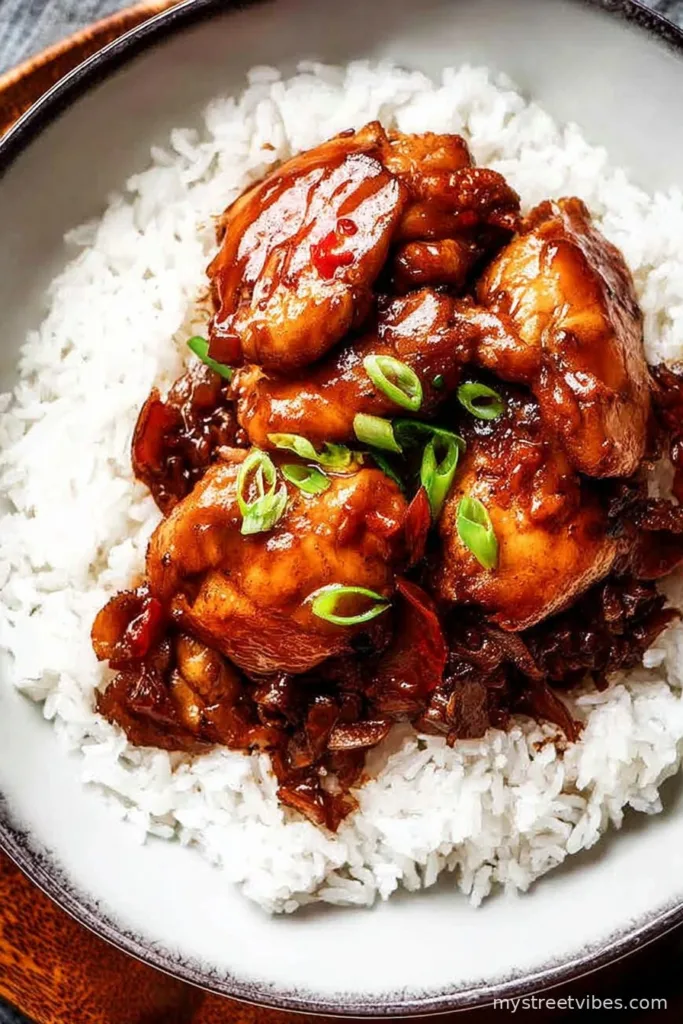
Let Me Tell You About My Chicken Adobo
Alright, so here’s the thing—I’ve probably made chicken adobo more times than I’ve lost my keys (and trust me, I lose those a lot). The first time I tried it, I was basically winging it with a handwritten recipe from my auntie that had a mysterious red wine stain in the corner—no idea where that came from since nobody in my family drinks red wine. Anyway, every time I make this, I remember her warning: “Don’t let it get too salty or the rice will run away screaming!” (She was only half-joking, I think.)

Why You’ll Love This (Or at Least Why I Do)
I whip this chicken adobo up on nights when I’ve got just enough time to avoid takeout. My family pretty much cheers when they smell the vinegar and garlic doing their thing (full disclosure: that’s the only time my teenager comes out of his room voluntarily). As for me, I make this when I want something forgiving without too many steps—because who wants more dishes? Sometimes the adobo sauce gets super concentrated and I have to add a splash of water, but hey, then it tastes even richer the next day. Oh, and sometimes I get distracted and forget the bay leaves. Dish still gets destroyed at dinner.
What You’ll Need (Substitutions Make It Yours)
- 1.5 kg (about 3 lbs) chicken, cut into bone-in, skin-on pieces (I use thighs and drumsticks—if you’re feeling lazy, whole legs work too. Breast meat’s a bit sad for adobo, but you do you.)
- 1/2 cup soy sauce (Honestly, my grandmother always insisted on Kikkoman, but honestly, any soy sauce except the really cheap, metallic-tasting stuff gets a pass.)
- 1/2 cup cane vinegar (White vinegar works if you’re in a pinch—apple cider vinegar changes the flavor a bit but isn’t a sin.)
- 6 cloves garlic, smashed or roughly chopped (Pre-minced works if you’re out of patience)
- 1 large onion, sliced (Optional, but I throw it in when I want extra sweetness. Sometimes I forget it, no big deal.)
- 2–3 bay leaves (Fresh or dried, or skip if you realize too late—won’t ruin dinner, promise)
- 1 tbsp whole black peppercorns (Or a generous shake of ground pepper—I’ve done this when the grinder’s jammed.)
- 1 tbsp brown sugar (I like mine a tiny bit sweet; skip it if you’re not into that, or toss in a squirt of honey. On second thought, use white sugar if that’s all you’ve got.)
- 1 cup water (I sometimes add more if the sauce cooks down too much. No rules.)
- 2 tbsp cooking oil (Canola’s fine, coconut oil is lovely if you have it. I avoid olive oil here—too fancy.)
- Chopped scallions, for serving (Very optional; honestly I forget more than I remember)
- Steamed white rice, to serve (No adobo without it, unless it’s 1am and I just eat it straight from the pan. Rookie move.)
Let’s Get Cooking (The Fun, Slightly Messy Part)
- Sear the chicken: Heat the oil in a big pan or Dutch oven (I use my ancient nonstick; if all you’ve got is a wok, use that!). Brown the chicken pieces on both sides—don’t fuss if it sticks a bit, the sauce will sort that out. I do this in batches, otherwise they just steam and never get brown. Set chicken aside for a hot minute.
- Sauté aromatics: In the same pan (don’t clean it—those brown bits are gold), throw in garlic and onions. Let them get a bit soft and the garlic just starts to turn golden, but don’t let it burn or your kitchen smells like burnt popcorn.
- Combine everything: Now put the chicken back in. Pour over the soy sauce and vinegar (don’t mix yet—Filipino wisdom says wait until the vinegar bubbles a bit so it doesn’t taste harsh). Add water, peppercorns, bay leaves, and that little bit of brown sugar. Don’t forget to give everything a bit of a wiggle so the sauce gets to the bottom.
- Simmer (patiently!): Bring to a boil, then pop a lid on and turn the heat down. Let it bubble gently for 30 minutes. (This is where I check the group chat, but don’t leave it too long—it will reduce faster than you expect.)
- Reduce and finish: Take the lid off and simmer another 15 minutes, or until the sauce gets thick and glossy. Spoon the sauce over the chicken a few times if you remember. Sometimes the sauce is runny, sometimes it’s sticky—both are fine honestly.
- Taste test: This is my favourite part—grab a spoon and check for balance. Too salty? Toss in a little water. Too sharp? A pinch more sugar. Just right? Call everyone to the table before you eat it all.
- Serve: Scatter with scallions (if you remembered them). Eat with loads of rice, and then probably a nap.
Notes and ‘Learned The Hard Way’ Stuff
- If you’re doubling the recipe, don’t skimp on the garlic—I did once, and it tasted weirdly flat.
- Adobo gets even better the next day, but my brother insists it only counts if you eat it cold for breakfast. (He’s wrong, but let him have this one.)
- If you use too much vinegar and it’s a bit too tangy, add a splash of coconut milk, trust me.
If You Like to Tinker: Variations From My Experiments
- Swap out some of the chicken for pork belly—makes it more decadent. I did this once and nobody complained.
- Coconut milk in place of some water gives you a creamier, gentler adobo. Not traditional, but lush.
- I once tried adding green beans to the pot. They turned to mush—would not recommend.

Equipment (But Don’t Stress)
Ideally, use a big, heavy pan or Dutch oven. Honestly, I’ve used an old dented stockpot and even a rice cooker once (don’t—it was a mess). No lid? Just stick a baking tray on top. No one’s peeking.
Storing Your Leftovers (If You Have Any!)
Stick any leftover chicken adobo in an airtight container and pop it in the fridge—should last three days, but honestly, in my house it never even gets a chance to see Day 2. It also freezes well, but by then it’s definitely lost a bit of punch (I still eat it).
Serving How I Like It
Pile it high over hot steamed rice—that’s the rule. Sometimes my cousin sneaks a fried egg on top, which, okay, I admit is delicious. We occasionally serve pickled cucumber on the side, but that’s more aspirational than routine.
Pro Tips I Learned the Hard Way
- Once I rushed the simmering and cranked the heat. Ended up with chicken rubber—never again. Just chill, it’s worth waiting for.
- Don’t skip browning the chicken. Do it in batches even if it’s annoying. (You’ll thank yourself later.)
- And make more rice than you think you need. There’s never enough.
You Asked, I Answered (Real FAQ!)
Can I make chicken adobo ahead? Sure thing! Actually, I think it tastes better the next day. Just reheat gently, or do what my cousin does: eat it cold, like a rebel.
Can I use boneless chicken? You could, but—real talk—the flavor’s not the same. Bone-in holds up better in the sauce. That said, boneless thighs’ll work in a pinch if you’re short on time (or patience).
What if my sauce is too thin? Just keep simmering with the lid off. It’ll thicken. Or, if you’re starving, eat it as is, sauce and all. (I’ve done both, tbh.)
Can I make this spicy? Absolutely. Chili flakes, bird’s eye chilies—whatever’s in your pantry. But be warned: stealth heat can sneak up, so add gradually!
Halal/kosher/vegan options? Haven’t tried vegan adobo, but my friend swears jackfruit in place of chicken isn’t bad—though it’s definitely not the same. As for kosher or halal, just check your ingredients are compliant and skip any optional pork add-ins.
By the way, if you do figure out a way to make it as tasty with tofu, let me know? I wouldn’t mind having more meatless dinners that aren’t “just salad.” Anyway, that’s how I make chicken adobo—messy, meaty, and always all gone.
Ingredients
- 1.5 kg (about 3 lbs) chicken, cut into bone-in, skin-on pieces (I use thighs and drumsticks—if you’re feeling lazy, whole legs work too. Breast meat’s a bit sad for adobo, but you do you.)
- 1/2 cup soy sauce (Honestly, my grandmother always insisted on Kikkoman, but honestly, any soy sauce except the really cheap, metallic-tasting stuff gets a pass.)
- 1/2 cup cane vinegar (White vinegar works if you’re in a pinch—apple cider vinegar changes the flavor a bit but isn’t a sin.)
- 6 cloves garlic, smashed or roughly chopped (Pre-minced works if you’re out of patience)
- 1 large onion, sliced (Optional, but I throw it in when I want extra sweetness. Sometimes I forget it, no big deal.)
- 2–3 bay leaves (Fresh or dried, or skip if you realize too late—won’t ruin dinner, promise)
- 1 tbsp whole black peppercorns (Or a generous shake of ground pepper—I’ve done this when the grinder’s jammed.)
- 1 tbsp brown sugar (I like mine a tiny bit sweet; skip it if you’re not into that, or toss in a squirt of honey. On second thought, use white sugar if that’s all you’ve got.)
- 1 cup water (I sometimes add more if the sauce cooks down too much. No rules.)
- 2 tbsp cooking oil (Canola’s fine, coconut oil is lovely if you have it. I avoid olive oil here—too fancy.)
- Chopped scallions, for serving (Very optional; honestly I forget more than I remember)
- Steamed white rice, to serve (No adobo without it, unless it’s 1am and I just eat it straight from the pan. Rookie move.)
Instructions
-
1Sear the chicken: Heat the oil in a big pan or Dutch oven (I use my ancient nonstick; if all you’ve got is a wok, use that!). Brown the chicken pieces on both sides—don’t fuss if it sticks a bit, the sauce will sort that out. I do this in batches, otherwise they just steam and never get brown. Set chicken aside for a hot minute.
-
2Sauté aromatics: In the same pan (don’t clean it—those brown bits are gold), throw in garlic and onions. Let them get a bit soft and the garlic just starts to turn golden, but don’t let it burn or your kitchen smells like burnt popcorn.
-
3Combine everything: Now put the chicken back in. Pour over the soy sauce and vinegar (don’t mix yet—Filipino wisdom says wait until the vinegar bubbles a bit so it doesn’t taste harsh). Add water, peppercorns, bay leaves, and that little bit of brown sugar. Don’t forget to give everything a bit of a wiggle so the sauce gets to the bottom.
-
4Simmer (patiently!): Bring to a boil, then pop a lid on and turn the heat down. Let it bubble gently for 30 minutes. (This is where I check the group chat, but don’t leave it too long—it will reduce faster than you expect.)
-
5Reduce and finish: Take the lid off and simmer another 15 minutes, or until the sauce gets thick and glossy. Spoon the sauce over the chicken a few times if you remember. Sometimes the sauce is runny, sometimes it’s sticky—both are fine honestly.
-
6Taste test: This is my favourite part—grab a spoon and check for balance. Too salty? Toss in a little water. Too sharp? A pinch more sugar. Just right? Call everyone to the table before you eat it all.
-
7Serve: Scatter with scallions (if you remembered them). Eat with loads of rice, and then probably a nap.
CLICK FOR NUTRITION INFO
↑
Approximate Information for One Serving
Serving Size:
1 serving
Calories:
420cal
Protein:
32 gg
Fat:
25 gg
Saturated Fat:
0g
Trans Fat:
0g
Cholesterol:
0mg
Sodium:
0mg
Potassium:
0mg
Total Carbs:
18 gg
Fiber:
0g
Sugar:
0g
Net Carbs:
0g
Vitamin A:
0
Vitamin C:
0mg
Calcium:
0mg
Iron:
0mg
Nutrition Disclaimers
Number of total servings shown is approximate. Actual number of servings will depend on your preferred portion sizes.
Nutritional values shown are general guidelines and reflect information for 1 serving using the ingredients listed, not including any optional ingredients. Actual macros may vary slightly depending on specific brands and types of ingredients used.
To determine the weight of one serving, prepare the recipe as instructed. Weigh the finished recipe, then divide the weight of the finished recipe (not including the weight of the container the food is in) by the desired number of servings. Result will be the weight of one serving.
Did you make this recipe?
Please consider Pinning it!