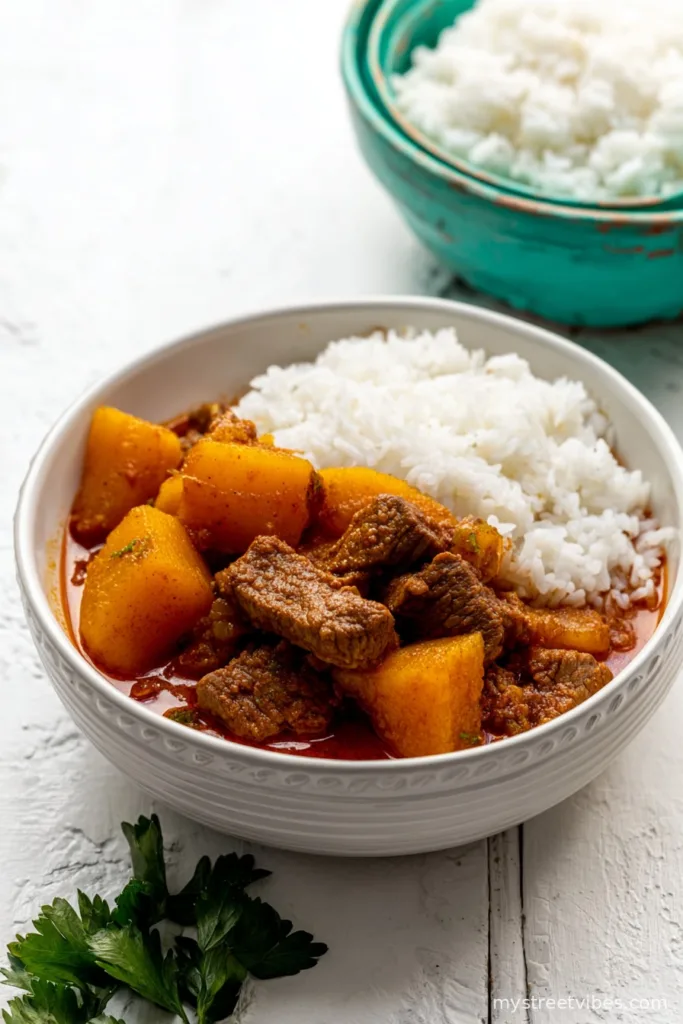
Let Me Tell You About the Time I Fell in Love With Cuban Carne con Papas
Okay, so here’s the story: my first attempt making Cuban Carne con Papas happened on a swelteringly hot Sunday, when, frankly, turning on the stove felt slightly insane. But nostalgia hit me hard—I could smell that tender beef, the potatoes just soaking up all the spiced goodness from my abuela’s kitchen. I figured, well, sweat builds character, right? Plus, if you’re Cuban or part of a Cuban family, you know this is what gets served at every big gathering, even when it’s too warm to eat anything hot. Go figure.
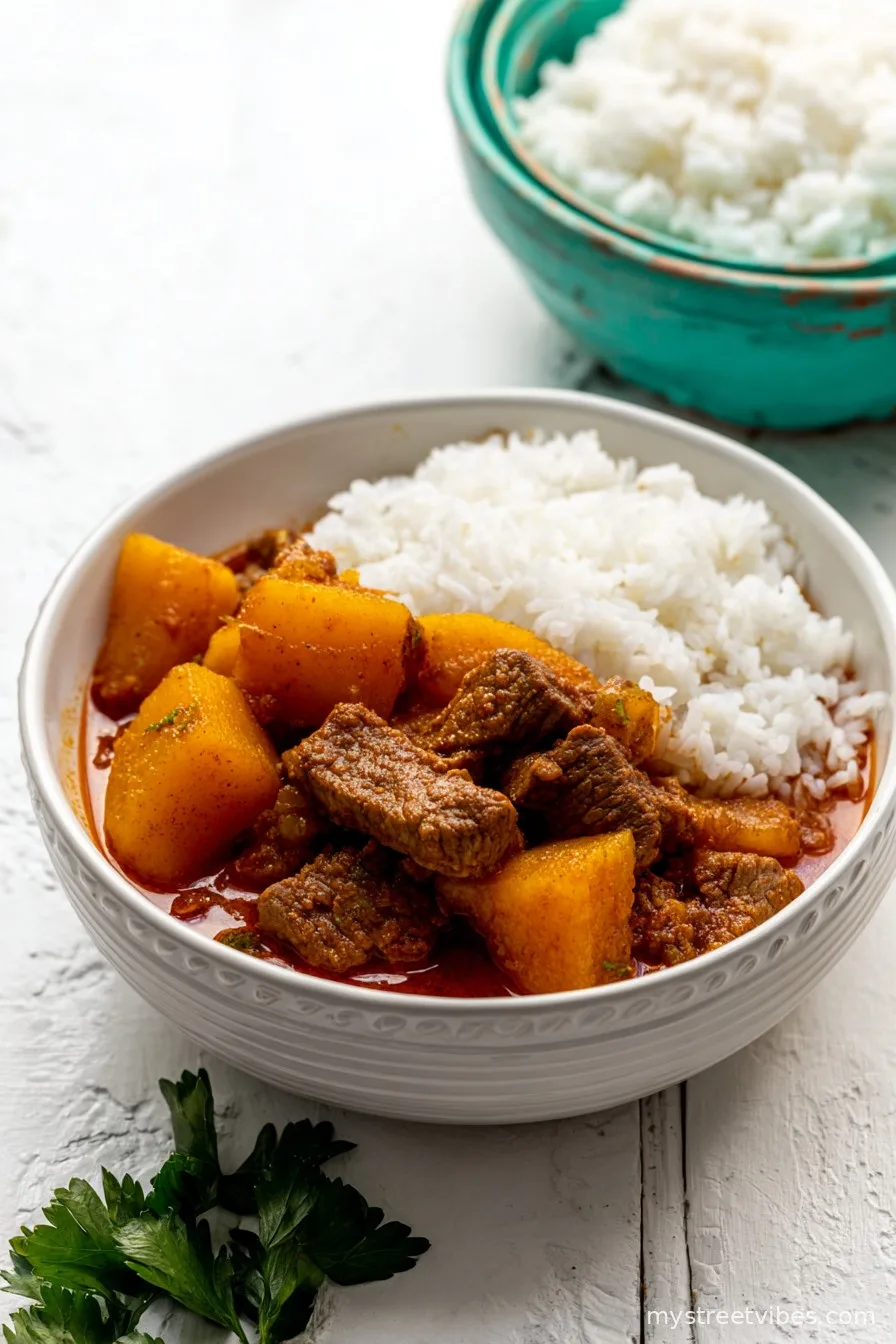
I remember the first time I cooked this for my (then) boyfriend. I was so nervous about making the sofrito from scratch I almost bailed and used jarred sauce. Spoiler: I’m glad I didn’t. There’s just nothing like that aroma when everything comes together (well, except maybe the smell of your hair after, but that’s beside the point…).
Why You’ll Love This (Or, Why My Family Can’t Get Enough)
I tend to make this dish when the weather’s gloomy or when I’ve had a week that just needs something comforting at the end of it. My family goes wild for it—especially my cousin who always tries to snag the biggest pieces of potato. I like it because, even though there are a few steps, it feels like pretty forgiving home-cooking: a little more cumin, a dash less wine, it’s never exactly the same twice. And if I’m being totally honest, it’s also great for using up random veggies that might be on their last leg in the fridge (I see you, wrinkled carrots).
This is a meal that waits for no one, though. Once it’s ready, the scent pretty much rings a dinner bell all by itself. One caution—remember to announce ‘Cuidado, caliente!’ if there are hungry kids lurking. Learned that the hard way.
What You’ll Need (And a Few Swaps That Work in a Pinch)
- 2 lbs beef chuck (boneless; stew meat is fine, too)
- 2 tbsp olive oil (canola works if that’s all you’ve got)
- 1 large onion, chopped (I sometimes use 2 small ones; nobody noticed)
- 1 green bell pepper, diced (red is fine for a little sweetness)
- 3-4 garlic cloves, minced (I always use 4, honestly)
- 2 large russet potatoes, peeled and diced (Yukon golds are great, too)
- 1 cup tomato sauce (grandma swore by Goya, but use what you have)
- 1/3 cup dry white wine (I’ve subbed in chicken broth once in a panic)
- 1 tsp ground cumin
- 1 tsp dried oregano
- 1 bay leaf
- 1/2 cup pimientos (optional, but I love the zing)
- 1/2 cup peas, frozen or fresh (I’ll admit—I forget them sometimes)
- Salt and pepper, to taste
- 1/2 cup beef stock or water, if needed
- Handful chopped cilantro or parsley (optional for garnish; sometimes I just don’t bother)
How I Usually Throw This Together
- Cut the beef into 1-inch-ish cubes. Season those chunks liberally with salt and pepper; I use my hands because it’s way faster (plus you feel a little like a chef on TV).
- Heat the olive oil in a heavy pot or big Dutch oven—something with a thick bottom, so you don’t scorch it. If you only have a skinny old saucepan, just watch the heat; learned that lesson when I was 19 and still charred everything.
- Toss in the beef cubes. Brown them a bit, turning so all sides get a little color. Don’t crowd the pan, or they’ll steam and taste sad. Usually about 6-8 minutes. Remove and set aside.
- Add the onions and bell peppers to that same pot (no need to clean it—those beefy bits are gold). Sauté over medium heat until soft, about 5 min. This is when the kitchen starts to smell right.
- Chuck in the garlic and let it go for a minute or two. Stir so it doesn’t burn. That’s the ticket.
- Pour in the tomato sauce, white wine, cumin, oregano, bay leaf. Stir everything and scrape up all those brown bits at the bottom. If it’s looking too thick, a splash of broth or water helps.
- Return your browned beef to the pot. Give it a good mix. Simmer, covered, for 45 minutes on low. Go read a book or (if you’re like me) start a load of laundry you will 100% forget about.
- After 45 min, toss in the potatoes and give another stir. Let that gently bubble, covered, for another 30 minutes-ish. Potatoes should get tender, beef should start to fall apart a little. If it looks dry, add more beef stock. This is usually where I sneak a bite “just to check.”
- When the potatoes are soft, stir in pimientos and peas. Simmer uncovered for 5-10 min, so it thickens up. Salt and pepper to taste—unless you’re feeling wild, don’t overdo it.
- Scatter with cilantro or parsley if you feel fancy. Fish out the bay leaf (unless you like living on the edge). Serve hot, with rice or just on its own, no judgment.
Stuff I’ve Learned (Usually the Hard Way)
- If you’re short on time, a pressure cooker gets the beef tender in a third the time, but the flavors don’t develop as deep, in my opinion, so just know that.
- Russet potatoes break down more, while Yukon golds stay more solid—choose based on your mood or what’s surviving in the veggie drawer.
- Actually, leftovers reheat insanely well, I think it tastes even better the next day, but honestly, it’s rare we have any left.
Ways I’ve Tweaked It (And One Fail!)
- Once I tossed in a dash of smoked paprika for “depth”—it was interesting; not really traditional but not bad.
- I swapped in carrots for peas one time when my fridge was sad, and no one complained.
- I tried using sweet potatoes instead of normal ones… not my favorite, but somebody out there might like it?

What You’ll Need (But Here’s a Hack If You’re Missing Something)
- A heavy-bottomed pot or Dutch oven
BUT if you don’t have one, an old big pot works, you’ll just have to stir more so it doesn’t stick like glue at the bottom. - A decent sharp knife (or, ya know, the one you use for everything—just mind your fingers).
Keeping & Storing This (But Good Luck Making It Last!)
I keep leftovers in any old container with a lid—fridge for 3 days is fine, though it never sticks around that long in our house. Freezer is fine too (I’ve done 2 months, came out decent). But just thaw it slow and don’t forget to fish out the bay leaf or it gets weird, trust me.
What Goes Well With It? (My Family’s Favorites)
I’m a huge fan of eating this with fluffy white rice and a squeeze of lime (don’t @ me, that’s just how I like it). My uncle eats it with crusty bread so he can mop up every drop—no shame in that. Oh, and if you’re making plantains, pile them on the plate; it’s never too much. For big family meals, we set everything out on the table and let people go wild—I say go for it.
Stuff I Wish I Knew Before I Messed Up
- I once rushed the simmering step thinking I could shave off 10 minutes—it made the beef weirdly tough and I regretted it. Give it time, you’ll thank me after the first bite.
- Don’t overload with salt up front; potatoes soak it up fast and then it can sneak up on you. It’s better to salt at the end, I promise!
Your Questions (And the Real Answers!)
- Can I use another type of meat? Sure, pork shoulder works, though it isn’t classic. Actually, I’ve even tried chicken in a pinch—definitely not the same, but it works for picky eaters.
- Does it really need wine? Nah, chicken broth or even water will work if you don’t have wine (or if it’s somehow vanished from your pantry… not pointing any fingers).
- Can I make it in advance? 1000% yes—I’m convinced it tastes better after a night in the fridge; just reheat gently so the potatoes don’t fall apart totally.
- Why is my sauce so thin? Just simmer it uncovered for a little longer. If that fails, mash a couple pieces of potato into the sauce, works like magic.
- What if I forgot the peas? You’d be surprised how often I forget them (or just ditch them when I ran out). Won’t ruin anything, don’t worry.
And hey, if you get stuck halfway or the pot looks terrifyingly messy, just remember—some of the best meals happen when things go “wrong.” Or, at least that’s what I tell myself when the smoke alarm chirps. Happy cooking, mi gente.
Ingredients
- 2 lbs beef chuck (boneless; stew meat is fine, too)
- 2 tbsp olive oil (canola works if that’s all you’ve got)
- 1 large onion, chopped (I sometimes use 2 small ones; nobody noticed)
- 1 green bell pepper, diced (red is fine for a little sweetness)
- 3-4 garlic cloves, minced (I always use 4, honestly)
- 2 large russet potatoes, peeled and diced (Yukon golds are great, too)
- 1 cup tomato sauce (grandma swore by Goya, but use what you have)
- 1/3 cup dry white wine (I’ve subbed in chicken broth once in a panic)
- 1 tsp ground cumin
- 1 tsp dried oregano
- 1 bay leaf
- 1/2 cup pimientos (optional, but I love the zing)
- 1/2 cup peas, frozen or fresh (I’ll admit—I forget them sometimes)
- Salt and pepper, to taste
- 1/2 cup beef stock or water, if needed
- Handful chopped cilantro or parsley (optional for garnish; sometimes I just don’t bother)
Instructions
-
1Cut the beef into 1-inch-ish cubes. Season those chunks liberally with salt and pepper; I use my hands because it’s way faster (plus you feel a little like a chef on TV).
-
2Heat the olive oil in a heavy pot or big Dutch oven—something with a thick bottom, so you don’t scorch it. If you only have a skinny old saucepan, just watch the heat; learned that lesson when I was 19 and still charred everything.
-
3Toss in the beef cubes. Brown them a bit, turning so all sides get a little color. Don’t crowd the pan, or they’ll steam and taste sad. Usually about 6-8 minutes. Remove and set aside.
-
4Add the onions and bell peppers to that same pot (no need to clean it—those beefy bits are gold). Sauté over medium heat until soft, about 5 min. This is when the kitchen starts to smell right.
-
5Chuck in the garlic and let it go for a minute or two. Stir so it doesn’t burn. That’s the ticket.
-
6Pour in the tomato sauce, white wine, cumin, oregano, bay leaf. Stir everything and scrape up all those brown bits at the bottom. If it’s looking too thick, a splash of broth or water helps.
-
7Return your browned beef to the pot. Give it a good mix. Simmer, covered, for 45 minutes on low. Go read a book or (if you’re like me) start a load of laundry you will 100% forget about.
-
8After 45 min, toss in the potatoes and give another stir. Let that gently bubble, covered, for another 30 minutes-ish. Potatoes should get tender, beef should start to fall apart a little. If it looks dry, add more beef stock. This is usually where I sneak a bite “just to check.”
-
9When the potatoes are soft, stir in pimientos and peas. Simmer uncovered for 5-10 min, so it thickens up. Salt and pepper to taste—unless you’re feeling wild, don’t overdo it.
-
10Scatter with cilantro or parsley if you feel fancy. Fish out the bay leaf (unless you like living on the edge). Serve hot, with rice or just on its own, no judgment.
CLICK FOR NUTRITION INFO
↑
Approximate Information for One Serving
Serving Size:
1 serving
Calories:
390cal
Protein:
34 gg
Fat:
17 gg
Saturated Fat:
0g
Trans Fat:
0g
Cholesterol:
0mg
Sodium:
0mg
Potassium:
0mg
Total Carbs:
25 gg
Fiber:
0g
Sugar:
0g
Net Carbs:
0g
Vitamin A:
0
Vitamin C:
0mg
Calcium:
0mg
Iron:
0mg
Nutrition Disclaimers
Number of total servings shown is approximate. Actual number of servings will depend on your preferred portion sizes.
Nutritional values shown are general guidelines and reflect information for 1 serving using the ingredients listed, not including any optional ingredients. Actual macros may vary slightly depending on specific brands and types of ingredients used.
To determine the weight of one serving, prepare the recipe as instructed. Weigh the finished recipe, then divide the weight of the finished recipe (not including the weight of the container the food is in) by the desired number of servings. Result will be the weight of one serving.
Did you make this recipe?
Please consider Pinning it!