
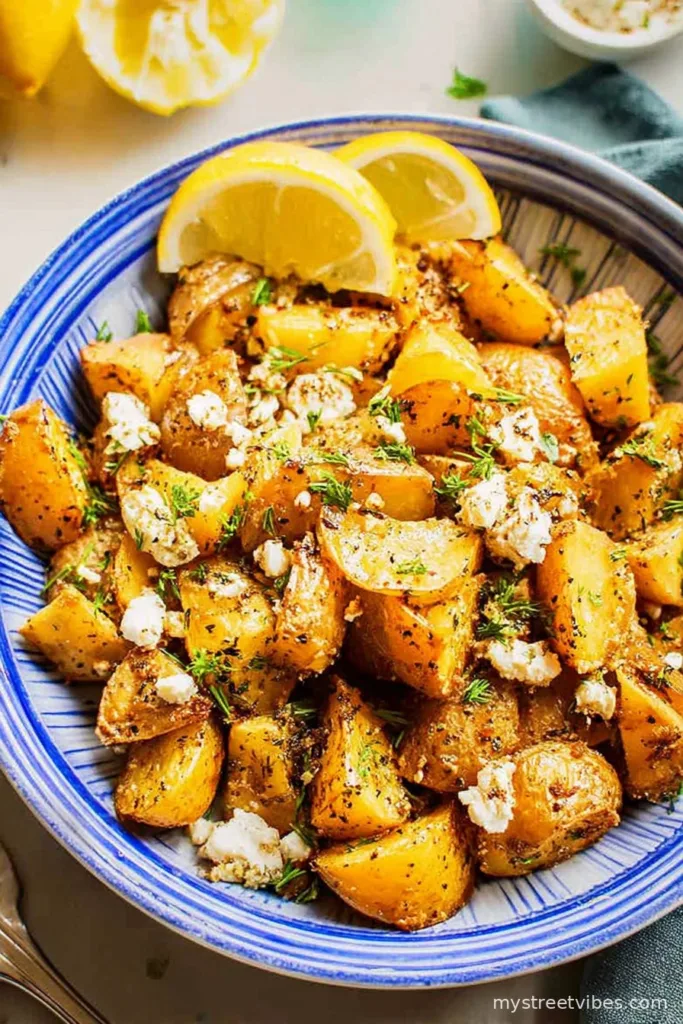
Catching Up with an Old Favorite: Greek Lemon Potatoes
If you’ve never had Greek lemon potatoes, mate, you’re really missing out — and I say this as someone who’s burned a potato or two in her day. I remember the first time I tried these at a friend’s house; I think I ate half the pan and then pretended someone else took the last one. There’s something about that combo of crispy edges, zingy lemon, and the whole kitchen smelling like a proper summer holiday in Kalamata. And let’s be honest: if it’s a choice between another green salad or these, well, potatoes win hands down every flipping time.
Why You’ll Probably End Up Making These Every Week
I pull this recipe out whenever it’s roast chicken night, or when someone’s coming for dinner and I want to look like I made a real effort (spoiler: it’s mostly the oven doing the work). My family goes absolutely bonkers for these — even my brother, who claims he hates lemon “in his food,” mysteriously polishes off his share. (Honestly, one time I mixed up the lemon and chicken stock measurements, and not a soul noticed. Maybe don’t tell them?) When I’m feeling lazy or forgot to buy fancy potatoes, I just grab what’s in the cupboard and hope for the best. Works nine times outta ten.
The All-Important Ingredients List (Flexible, Because Life)
- 8-10 medium potatoes (I like Yukon Golds, but Maris Piper or even the odd red potato is grand in a pinch)
- 1/3 cup olive oil (honestly, any decent olive oil does fine — my gran swore it had to be Greek, but, well…)
- 1 lemon, juiced (sometimes I just use that bottled lemon juice if it’s all I’ve got. Sue me)
- 3-4 garlic cloves, smashed, or a heaping teaspoon of the jar stuff — don’t tell the food snobs
- 1 cup chicken stock (I use the little cubes or whatever’s leftover — veggie stock works too if you want it meatless)
- 1 teaspoon dried oregano (I’ve been known to sprinkle a bit more when nobody’s looking)
- Salt and pepper, to taste
- Optional: a knob of butter for extra richness (I, uh, forget this half the time and it’s still good)
How I Actually Make Greek Lemon Potatoes
- Crank your oven up to 220°C/425°F. Okay, sometimes I start at 200°C if I’m working with fussy potatoes — just keep an eye on them.
- Peel the potatoes (or don’t, if you like a bit of rustic charm). Cut into chunky wedges — about the size of a thick chip. Too small and they get mushy, trust me.
- Toss the potatoes into a big roasting tray. Ideally, you want them sort of nestled in so they touch the liquid, but not stacked like a game of Jenga.
- In a jug or bowl, whisk together the olive oil, lemon juice, chicken stock, garlic, oregano, salt, and pepper. Sometimes I just shake it all in an old jam jar. Pour this over your potatoes.
- Give everything a good toss (just use your hands, it’s easier), then spread the potatoes back out. Dot with butter if using.
- Roast uncovered for 35-40 minutes. This is usually when I sneak a crispy bit if no one’s watching.
- After the top starts to catch a lovely golden brown, turn the potatoes over (I just rough them up with a spatula) and back in they go for another 20-30 minutes. Don’t stress if it looks a bit soupy halfway — it’ll sort itself out; promise.
- Once they’re deeply golden and most of the liquid’s gone, pull them out. Don’t fuss if they look a little wonky or stuck to the tray — those crusty bits are the best part.
Some Notes from My Messy Kitchen
- If you use waxy potatoes, they don’t soak up as much goodness. Not a disaster, just a bit different texture-wise.
- Forgot to flip them halfway? Meh, they’ll still taste great. I usually just scoop the really brown ones from the edges myself.
- Honestly, the type of broth doesn’t matter loads — I’ve made this with hot water in desperation.
Variations I’ve Fiddled With (Some with Questionable Results)
- Added a bit of smoked paprika once — not bad, but felt wrong with the lemon to me. Your tastebuds might disagree though.
- Tossed in chopped fresh rosemary or thyme — worked a treat, especially with roast lamb.
- Tried making it with sweet potatoes once. Let’s just say, once was enough; the flavors just didn’t play nice.
- Swapped lemon for lime. On second thought… best stick to lemon after all.
Do You Need Fancy Kitchen Gear? Nah — Mostly.
A big roasting pan is kinda essential for golden edges. That said, I’ve just used a deep cake tin when the proper one was already holding brownies (oops). Lined with parchment if I’m feeling lazy about washing up, not that anyone in my house volunteers anyway.

What About Leftovers?
Store any (yeah, right) in an airtight container in the fridge for up to 3 days. If they last that long of course — in my house, I’m usually scraping the last pieces before midnight. Just reheat in the oven to get back their crispiness. Actually, I think these taste even better the next day, like the flavors have sorted it all out while you slept.
How We Serve Them (According to Mildly Fussy Relatives)
Personally, I like to pile these next to some roast chicken and a heap of Greek salad. My cousin, though, famously dips them in ketchup (bit of a crime, but I love him anyway). During family BBQs, it’s all hands on deck, and these vanish faster than you can say “opa!” Sometimes I even pour a little extra lemon over them right before serving if I’m feeling fancy, which is rarely, if I’m honest.
Lessons Learned the (Slightly Hard) Way
- Don’t rush the second roast. I once tried to crank the temp and just, no. They went a bit rubbery; only the dog appreciated that batch.
- If you pile the potatoes too high, you end up with potato mush at the bottom. Spread them out if you can.
- Trying to skip the oil is just not worth the calories saved. Dry potatoes are *not* a vibe.
People Actually Do Ask Me These Things (No Joke)
- Can I make these ahead of time? Yep, and they reheat nicely in a hot oven. Actually, sometimes I think they’re even better a day later after all the flavors have made friends!
- Do they freeze well? Hmm, not really — they get a bit weird and mushy, but if you don’t mind that, go for it.
- Is there a way to make this vegan? Totally — just use veggie broth and skip the butter.
- Why do mine get stuck to the pan? Oh, don’t fret. Sometimes it’s just the sugar in the potatoes. A metal spatula is your pal here.
- Can I use bottled lemon juice? I mean, I do when I can’t be bothered with real lemons. Tastes fine, promise.
- Is there a way to do this quicker? Eh, not really. I tried microwaving the potatoes first and it wasn’t worth the faff. Sometimes, good things just need a bit of patience (or someone else to wash up, right?).
Okay, so that’s my not-so-secret Greek lemon potatoes. Once you make them a couple times, you really do just throw it all together by feel — it almost always works out. Unless you forget they’re in the oven and go walk the dog; but look, we all live and learn…

Ingredients
- 2 pounds russet potatoes, peeled and cut into wedges
- 1/3 cup olive oil
- 1/3 cup fresh lemon juice
- 3 cloves garlic, minced
- 1 cup chicken broth
- 1 teaspoon dried oregano
- 1 teaspoon sea salt
- 1/2 teaspoon black pepper
- 2 tablespoons chopped fresh parsley (for garnish)
Instructions
-
1Preheat your oven to 400°F (200°C). Lightly grease a large baking dish or sheet.
-
2Arrange the potato wedges in a single layer in the prepared baking dish.
-
3In a bowl, whisk together olive oil, lemon juice, garlic, chicken broth, oregano, salt, and black pepper.
-
4Pour the lemon mixture over the potatoes and toss to coat evenly.
-
5Roast in the preheated oven for 40 minutes. Flip the potatoes, then continue roasting for another 25 minutes or until golden and tender.
-
6Garnish with chopped fresh parsley and serve warm.
CLICK FOR NUTRITION INFO
↑
Approximate Information for One Serving
Serving Size:
1 serving
Calories:
275cal
Protein:
4 gg
Fat:
11 gg
Saturated Fat:
0g
Trans Fat:
0g
Cholesterol:
0mg
Sodium:
0mg
Potassium:
0mg
Total Carbs:
39 gg
Fiber:
0g
Sugar:
0g
Net Carbs:
0g
Vitamin A:
0
Vitamin C:
0mg
Calcium:
0mg
Iron:
0mg
Nutrition Disclaimers
Number of total servings shown is approximate. Actual number of servings will depend on your preferred portion sizes.
Nutritional values shown are general guidelines and reflect information for 1 serving using the ingredients listed, not including any optional ingredients. Actual macros may vary slightly depending on specific brands and types of ingredients used.
To determine the weight of one serving, prepare the recipe as instructed. Weigh the finished recipe, then divide the weight of the finished recipe (not including the weight of the container the food is in) by the desired number of servings. Result will be the weight of one serving.
Did you make this recipe?
Please consider Pinning it!!