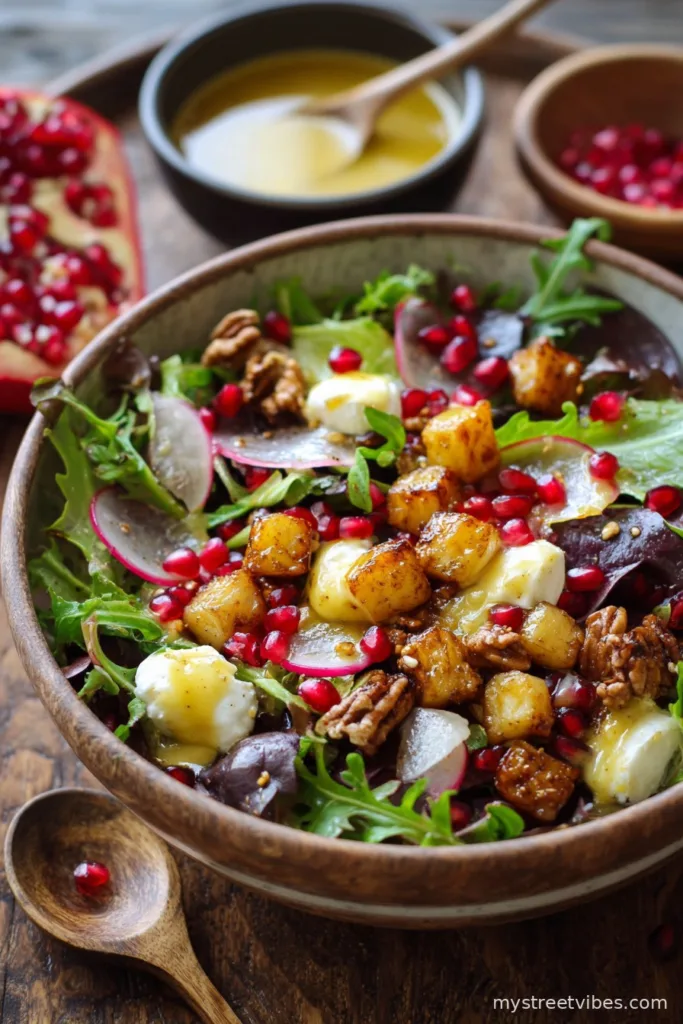
So, funny thing: the first time I made this salad, I basically just dumped a bunch of Christmassy-looking stuff in a bowl because I was running late (classic me) and needed something for my family’s annual holiday potluck. I didn’t expect it to become an actual tradition. But now it’s like, if I walk in without The Salad, my cousin pulls faces and my mom keeps hinting, “Wasn’t there a certain something missing from the table, dear?”
Why I Keep Coming Back to This Salad
I make this gorgeous pomegranate Christmas salad with honey mustard dressing basically every December (sometimes November too, if I’m particularly in the festive spirit). My family goes kinda bananas for it because the sharp pops of pomegranate, the creamy feta, all that crunch, and the tangy-sweet dressing just work. And okay, it sounds impressive but is actually pretty forgiving—so even if I’m juggling two other dishes, this one rarely stresses me out. Oh, except that one time I couldn’t find pomegranates anywhere and had to use dried cranberries (no one said a peep, so maybe I worry too much).
Here’s What Goes In (But Feel Free to Wing It)
- 1 big bag (about 150-200g) baby spinach or mixed greens (sometimes I use arugula if I want more of a bite, but my husband says it’s too peppery)
- 1 large pomegranate — seeded (don’t let the mess put you off, just wear an apron or an old soccer shirt, trust me)
- 100g feta cheese, crumbled (Grandma swears by Bulgarian feta, but honestly the regular supermarket kind is fine)
- 1 crisp apple, chopped — I usually grab Granny Smith but Honeycrisp is lovely too
- A handful of toasted pecans or walnuts (sometimes I go for candied pecans if I’ve got them — go wild!)
- Half a red onion, really thinly sliced (skip it if you’re not into onion breath, no judgement)
- Optional add-ins: Avocado chunks, pumpkin seeds, orange segments — the salad’s pretty forgiving, so use what you’ve got lying about
For the Honey Mustard Dressing:
- 3 tablespoons olive oil (extra virgin if you’ve got it, but regular will do in a pinch)
- 1.5 tablespoons Dijon mustard (sometimes I use whole grain, which makes it look a bit more rustic, if that’s your thing)
- 1 tablespoon runny honey – my neighbor gives me some from her backyard hives, but supermarket squeezy honey is fine
- 2 tablespoons apple cider vinegar (or lemon juice if that’s all you’ve got at hand, I won’t tell)
- Pinch of salt + a few cracks of black pepper
How I Throw It All Together (Just My Way, Really)
- First, whisk together all your dressing ingredients in a little jar (I just shake it up, but if you want to be posh, whisk in a bowl). This is where I always have a taste and end up adding more honey or mustard depending on my mood. If it seems too thick, add a splash of water, works like a charm.
- Chuck your greens in a massive salad bowl — I mean, really heap them in. Scatter over your chopped apple, then the pomegranate seeds (if a few fly out onto the counter, consider it a snack for the chef).
- Add the onions, then crumble over your feta (sometimes I use my fingers, other times I get fancy with a fork. Depends who’s watching!)
- Toss in the nuts. Optional: reserve a small handful for sprinkling on top, looks pretty at the end.
- Drizzle on the dressing. At this stage, I usually get impatient and try a leaf or two. Don’t worry if it looks a bit messy—everything comes together in the end.
- Mix gently so you don’t batter the feta too much, unless you like it creamy (it’s your salad, after all).
Just a Few Lived-In Notes
- Red onions can go a bit harsh, so if you’re sensitive, a quick soak in cold water takes off the edge (I never remember until it’s too late).
- Don’t stress about the pomegranate stain thing — bowl of water trick makes seeding less of a crime scene. Actually, I sometimes just buy the ready-seeded packs if I’m not up for kitchen chaos.
- The honey mustard dressing is super versatile; sometimes I double it and use leftovers for chicken or roasted veggies.
Variations I’ve Tried (And a Few That Flopped)
- Swapping feta for goat cheese — makes it extra creamy. My brother hated it, but I thought it was grand.
- Tried once with blue cheese (look, I was feeling brave) and… let’s just say, never again. Blue cheese is just too bossy for this crowd.
- Pistachios instead of pecans — works a treat, looks festive too!
- Forgot the apples one year, so threw in mandarin slices. It was zesty and fresh, though pretty different.
What You’ll Need (And What To Do If You Don’t Have It)
- Big salad bowl — gotta have room to toss. If you don’t, just use a mixing bowl, or honestly, a big saucepan in a pinch.
- Knife and chopping board for apples, onions, and nuts
- Whisk or clean jam jar for the dressing; old mustard jars work, too (form years of salad making, I own like six)

Storing Leftovers (Or, How They Rarely Make It To The Fridge)
If you do have leftovers, pop them in a container and refrigerate for up to 1-2 days. The spinach wilts a bit by the next day, but honestly, I think the flavors mellow out nicely. Though, honestly, in my house, it never lasts more than a day. My teenage nephew snaffles the rest pretty much as soon as I look away. Also, I never store it with the dressing already mixed in unless I have to.
How I Like To Serve It (But You Do You)
I usually pile the salad up on a platter and top with extra pomegranate and some saved crunchy pecans — makes it look like a confetti explosion, which is a big hit Christmas Eve. Sometimes I set out little bowls of extra dressing; my sister always asks for more. Pairs really well with simple roasted chicken or glazed ham, but no lie, I’ll eat a bowl straight from the fridge for breakfast (don’t knock it till you try it).
What I’ve Learned The Hard Way (Pro Tips, Sort Of)
- Don’t rush the pomegranate seeding — I once tried hacking it apart, and ended up with red juice in places I won’t mention. The water bowl method here from Simply Recipes is honestly magic.
- Don’t overdress the salad at the start; if you have leftovers, drenched leaves go sad real quick. Add more just before serving, trust me — I learned this the not-so-fun way.
- With nuts, toast ‘em lightly for max flavor, but don’t turn your back for a second. Burned pecans taste like disappointment.
Oh, before I forget, this site (The Kitchn has a vinaigrette guide) actually helped me understand ratios when I first started making my own dressings — worth a look if you want to riff on mine.
Actual FAQs (Because People Always Ask Me These Things)
- Can I make the salad ahead?
- Yep, you can prep the ingredients and keep them separate, but don’t toss everything together until almost dinnertime, or it’ll go soggy. If you’ve got to, just mix and eat within a couple of hours. (And actually, I think it tastes even better about 20 minutes after everything’s tossed.)
- What if I can’t find pomegranates?
- No crisis! Just use dried cranberries, or a mix of cranberries and orange segments. Or, skip the fruit entirely — no one will call the salad police.
- Is there a vegan version?
- Sure, just skip the feta or use your favorite non-dairy version, and pick maple syrup instead of honey. Someone tried vegan feta at our house once and it was honestly pretty good.
- The dressing split — what did I do wrong?
- Don’t sweat it. Just whisk it up again or add a teeny bit more mustard. Sometimes if the oil’s cold, it’ll need more elbow grease. Also, sometimes I just give it another good shake and it comes right back together.
- Does this salad travel well?
- Actually, yeah! If you keep the dressing on the side, it’s perfect for taking to potlucks or holiday lunches at work. But if you’re walking anywhere with it, keep it level, or else you’ll have half the toppings stuck to the lid. Learned that the messy way at my last office do!
One last thing — I once got so distracted by the dog running underfoot that I tossed candied ginger in by accident. Not my best work, but hey, now I know. Cooking’s just like life, really; you never know what you’ll end up loving (or despising) till you give it a go.

Ingredients
- 6 cups mixed salad greens (such as baby spinach, arugula, and romaine)
- 1 cup pomegranate seeds
- 1/2 cup pecans, toasted
- 1/2 cup feta cheese, crumbled
- 1/2 red onion, thinly sliced
- 1 small apple, thinly sliced
- 3 tablespoons honey
- 2 tablespoons Dijon mustard
- 2 tablespoons apple cider vinegar
- 1/4 cup extra virgin olive oil
- Salt and black pepper, to taste
Instructions
-
1In a large salad bowl, combine the mixed greens, pomegranate seeds, toasted pecans, crumbled feta, sliced red onion, and apple slices.
-
2In a small mixing bowl, whisk together honey, Dijon mustard, apple cider vinegar, and olive oil until creamy and fully emulsified.
-
3Season the honey mustard dressing with salt and black pepper to taste.
-
4Drizzle the dressing over the salad just before serving and gently toss to coat all the ingredients.
-
5Serve immediately as a festive appetizer or side dish.
CLICK FOR NUTRITION INFO
↑
Approximate Information for One Serving
Serving Size:
1 serving
Calories:
300 caloriescal
Protein:
6gg
Fat:
20gg
Saturated Fat:
0g
Trans Fat:
0g
Cholesterol:
0mg
Sodium:
0mg
Potassium:
0mg
Total Carbs:
24gg
Fiber:
0g
Sugar:
0g
Net Carbs:
0g
Vitamin A:
0
Vitamin C:
0mg
Calcium:
0mg
Iron:
0mg
Nutrition Disclaimers
Number of total servings shown is approximate. Actual number of servings will depend on your preferred portion sizes.
Nutritional values shown are general guidelines and reflect information for 1 serving using the ingredients listed, not including any optional ingredients. Actual macros may vary slightly depending on specific brands and types of ingredients used.
To determine the weight of one serving, prepare the recipe as instructed. Weigh the finished recipe, then divide the weight of the finished recipe (not including the weight of the container the food is in) by the desired number of servings. Result will be the weight of one serving.
Did you make this recipe?
Please consider Pinning it!!